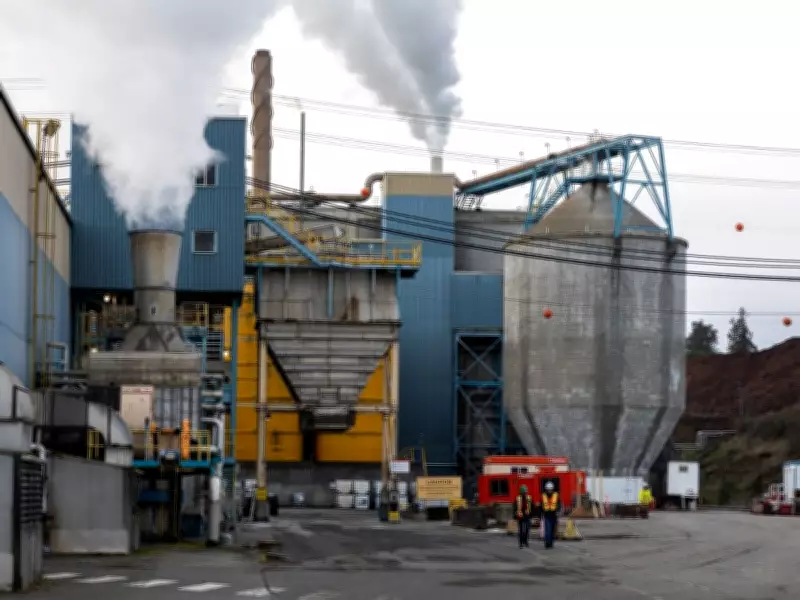
Recent employment data from Statistics Canada underscores the ongoing difficulties within British Columbia's resource sector, particularly in forestry, where job losses have persisted into 2026. The latest labour force survey reveals a troubling trend of declining employment in key industries, highlighting the economic pressures facing workers and communities across the province.
Year-Over-Year Employment Declines
According to Statistics Canada's February report, the natural resources sector, which encompasses forestry, fishing, mining, and oil-and-gas drilling, experienced a year-over-year loss of 9,300 jobs from February 2025 to February 2026. Similarly, the manufacturing classification, including lumber production, saw a decline of 12,200 jobs over the same period. These figures indicate a broader contraction in B.C.'s resource-based economy, with forestry bearing a significant brunt of the losses.
Detailed Job Losses in Forestry
While the labour force survey does not provide a granular breakdown by industry, separate payroll data from Statistics Canada offers more specific insights. Between December 2024 and December 2025, forestry-related jobs, such as logging and support roles, decreased by at least 1,200 positions, while sawmills reported a loss of at least 800 jobs. In contrast, mining and oil-and-gas extraction sectors recorded job gains, suggesting a divergent outlook within the natural resources landscape.

Impact of U.S. Tariffs and Mill Closures
Industry experts attribute the job losses in forestry to a combination of factors, including increased softwood lumber duties imposed by the United States. In August and September 2025, Canadian producers faced an average total duty of 35 per cent, with some companies like Canfor Corp. encountering rates as high as 48 per cent. Russ Taylor, an industry consultant, noted that the fourth quarter of 2025 was particularly severe, as the full impact of these duties and tariffs led to a sharp rise in job reductions.
The Council of Forest Industries reports that since 2023, B.C.'s forestry sector has witnessed 21 permanent or indefinite mill closures, contributing to an estimated 15,000 job losses since 2022. Recent examples include Aspen Planers halting operations in Merritt and Lillooet indefinitely, affecting numerous workers, and the Sinclar Group reducing production at mills in Prince George, Vanderhoof, and Fort St. James, impacting 350 employees. Additionally, West Fraser Timber Co. Ltd. permanently closed its sawmill in 100 Mile House in November 2025, resulting in the loss of 165 jobs by year-end.
Broader Economic Implications
The persistent job losses in forestry and manufacturing sectors raise concerns about the long-term viability of these industries in B.C. The data suggests that without significant policy interventions or market shifts, the sector may continue to face headwinds. The contrast with gains in mining and oil-and-gas highlights the uneven recovery within the resource economy, underscoring the need for targeted support for forestry workers and communities.
As 2026 progresses, stakeholders are closely monitoring employment trends, hoping for stabilization or recovery. However, the current outlook remains challenging, with ongoing closures and economic pressures likely to influence future job numbers. The situation calls for a comprehensive approach to address the structural issues affecting B.C.'s forestry sector, ensuring sustainable employment opportunities in the years ahead.