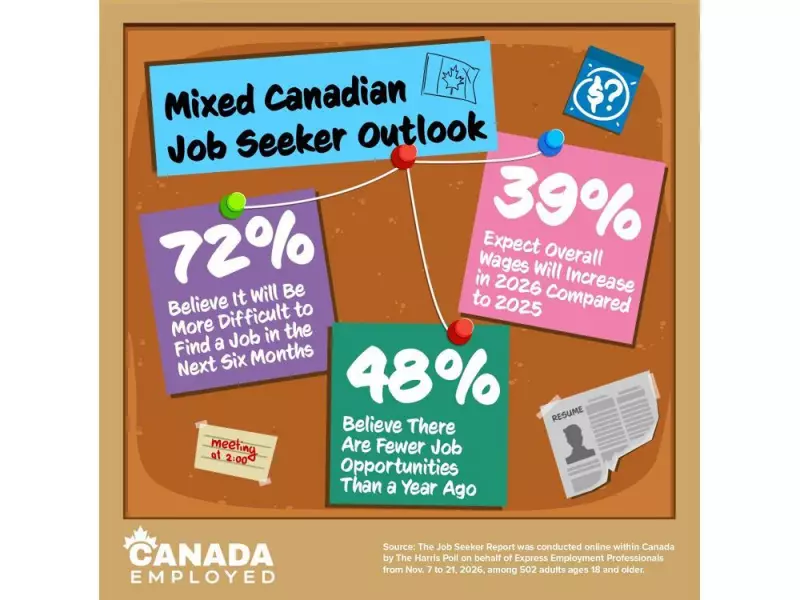
A new survey paints a picture of cautious and complex sentiment among Canadian job seekers as 2026 unfolds. While there is some optimism regarding potential wage growth, a significant majority believe securing new employment will be an uphill battle, according to the latest Express Employment Professionals-Harris Poll survey released in January 2026.
A Market of Heightened Caution
The data reveals a labour market where job seekers are tempering their expectations. Close to three-quarters (72%) of those seeking work anticipate it will be difficult to find a job in the next six months. This figure remains largely unchanged from six months prior (74%) but marks a notable increase from the same period last year, when 62% held that view.
Furthermore, half of all job seekers (48%) perceive fewer opportunities in their specific field compared to a year ago, a sentiment consistent with the previous year's findings (46%). This combination of factors suggests a prevailing atmosphere of prudence among those looking to change roles.

Wage Hopes and Job Search Realities
Amid the caution, there is a glimmer of optimism on compensation. Thirty-nine percent of job seekers expect overall wages to increase in 2026 compared to 2025, a slight uptick from the 37% who held that belief last year. The primary goal for most remains securing full-time work, with 78% willing to accept such positions.
However, flexibility appears to be growing. A notable 38% are open to part-time roles, 28% to contract or freelance work, and 22% to temporary or seasonal positions. Perhaps most telling of the market's tone is that 16% are now willing to accept a position below their most recent pay level, up from 11% the previous year, indicating a willingness to compromise in a challenging environment.
Shifting Search Intensity and Generational Divides
The intensity of the job hunt itself is evolving. Currently, only 29% of job seekers report actively and urgently looking for a new role, a significant drop from 39% last year. In contrast, the majority (71%) describe their activity as casual browsing without full commitment, underscoring the market's cautious dynamic.
The survey also uncovered stark generational differences in work patterns over the past year. While fewer employed job seekers overall reported working more than usual (47%, down from 58%), Gen Z workers were far more likely to have put in extra hours. Sixty-six percent of Gen Z respondents said they worked longer hours, compared to 45% of Gen X and just 27% of Baby Boomers. Similarly, 39% of Gen Z reported working more overtime, versus 17% of Gen X and 12% of Boomers.
What's Driving the Job Search?
For those employed but looking to move, key motivators are clear. The top reason cited by 41% is the need to negotiate better compensation. This is closely followed by the pursuit of a better work-life balance (38%) and a desire to simply keep an eye on the market (36%).
Concerns about staying in their current roles are equally telling. Forty percent worry about not receiving the salary increase they deserve, 27% fear a slowdown in future work opportunities, and 24% are concerned about potential job loss if the economy declines.
The survey, conducted for Express Employment Professionals by The Harris Poll, highlights a Canadian workforce navigating a period of mixed signals—balancing hope for better pay against the pragmatic realities of a competitive and uncertain job landscape in early 2026.