

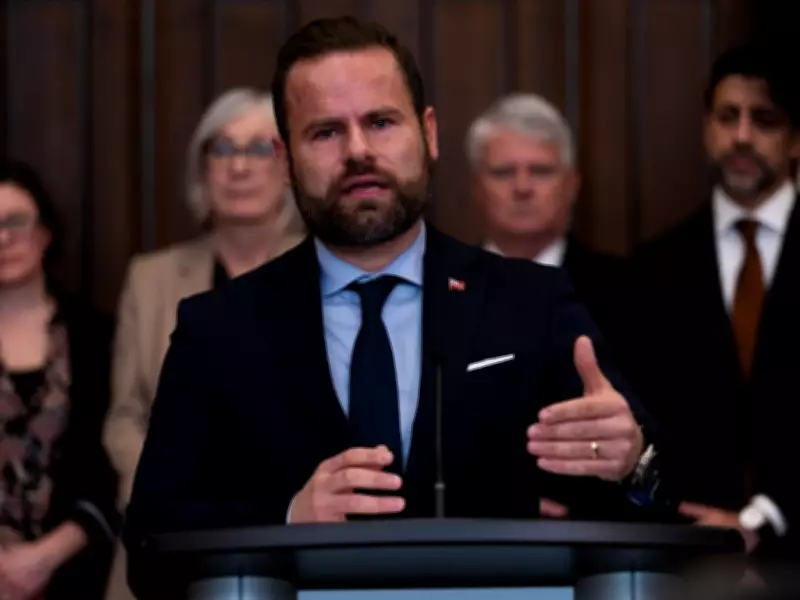
Ontario's minimum wage earners are poised to receive a significant pay increase this autumn, with the provincial government confirming a scheduled hike that will impact hundreds of thousands of workers. Labour Minister David Piccini announced on Wednesday that the annual adjustment will proceed as planned, raising the minimum wage by 35 cents to $17.95 per hour effective October 1, 2026.
Substantial Impact on Ontario's Workforce
This wage increase is projected to benefit more than 700,000 employees throughout Ontario, providing financial relief amid ongoing economic pressures. Minister Piccini emphasized the government's commitment to supporting workers and families while ensuring stability for businesses.
"Ontario workers are the engine of this province," Piccini stated. "By raising the minimum wage to one of the highest in Canada, our government is putting more money in the pockets of Ontario workers, supporting families through economic uncertainty and giving businesses the stability and predictability they need to plan and grow."

Mechanism Behind the Wage Adjustment
Ontario's minimum wage is intrinsically linked to the province's Consumer Price Index (CPI), a comprehensive measure tracking changes in the cost of living over time. This automatic adjustment mechanism aims to depoliticize wage decisions, though it has not always been consistently applied throughout Ontario's political history.
The province's approach to minimum wage has evolved significantly over the decades:
- Between 1996 and 2003, wages remained frozen during most of the Mike Harris Progressive Conservative government
- The Dalton McGuinty Liberal government subsequently increased the wage to $10.23
- Following the global financial crisis, minimum wage stayed at that level until 2014
- The Kathleen Wynne Liberal government then tied increases to CPI before controversially raising wages from $11.60 to $14.00 in January 2018
- The Doug Ford PC government initially cancelled a planned increase to $15 in 2019, freezing wages before resuming CPI-based adjustments in 2020
National Context and Provincial Comparisons
When the October increase takes effect, Ontario will possess the second-highest provincial minimum wage in Canada, trailing only British Columbia's rate of $18.25 per hour scheduled for June 1. The federal minimum wage for workers in regulated industries such as transportation, banking, and telecommunications recently increased to $18.15 per hour.
Other provincial minimum wages as of October 1 will include:
- Nova Scotia and Prince Edward Island: $17.00
- Alberta: $15.00 (with no planned increases)
Canada's territories maintain higher minimum wages, with Nunavut leading at $19.75 per hour, followed by Yukon at $18.51 and Northwest Territories at $16.95.
Expert Analysis and Historical Lessons
Rafael Gomez, an industrial relations professor at the University of Toronto, acknowledges that linking wage increases to CPI helps remove political considerations but questions whether this metric adequately reflects productivity measures.
"CPI is a cost of living measure and doesn't really have any connection necessarily to productivity measures, or some way in which the wage could be tied to something that reflects underlying productivity," Gomez explained.
The professor highlighted the political risks associated with minimum wage decisions, citing the Wynne government's 2018 wage hike as a cautionary tale. "The Wynne government broke its own commitment to depoliticization trying to get re-elected in their last election, which failed spectacularly—the Liberal Party lost party status and Wynne lost her seat," Gomez noted. "They tried to do an end-run around their own policy and jacked up minimum wages. It didn't work."
Gomez further observed that economic consensus suggests raising minimum wages can sometimes produce net negative effects on workers, as employers facing increased labor costs may respond by reducing services or eliminating positions to absorb the financial impact.

This latest wage adjustment represents Ontario's continued commitment to annually reviewing and adjusting minimum wage based on economic indicators, providing both predictability for businesses and financial support for the province's lowest-paid workers.





