

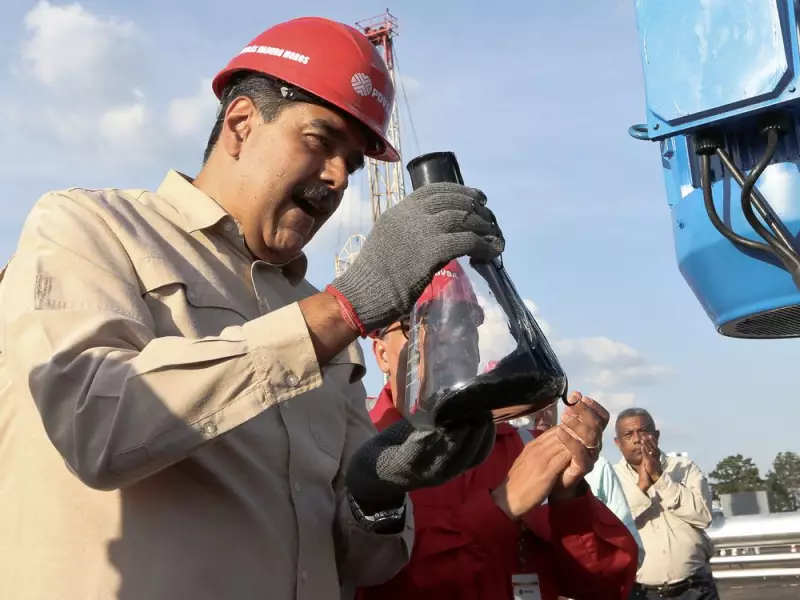
The dramatic removal of Venezuelan leader Nicolás Maduro by United States military forces represents a pivotal moment for international relations and global commerce. For Canadian business leaders, the event is less about Venezuela itself and more a stark signal of the new, unpredictable environment in which they must operate.
A Watershed Moment in Hemispheric Politics
While the United States has a history of interventions, such as in Panama, Grenada, and Iraq, the action in January 2026 against Maduro's regime is distinct. It follows a recent U.S. National Security Strategy and underscores a decisive break from the post-Cold War reliance on multilateral norms. According to former Canadian deputy prime minister John Manley, this marks a "watershed moment" where major powers like the U.S., China, and Russia are increasingly willing to act unilaterally to protect their core interests.
The justification offered by the U.S. administration was telling. Rather than framing the intervention as a mission for democracy, the focus was squarely on securing control over Venezuela's vast oil reserves. This raw pragmatism, Manley notes, sets a powerful precedent that businesses cannot ignore.

Geopolitical Risk Joins the Core Business Register
For decades, Canadian companies could plan with reasonable confidence in a rules-based international order. That assumption is now obsolete. The lesson from Venezuela is that geopolitical risk must be formally integrated into corporate strategy, standing alongside traditional concerns like interest rates, supply chain logistics, and cybersecurity.
"What happened in Venezuela can now happen anywhere," Manley warns. The pressing question for executives is no longer abstract but intensely practical: How does this instability affect investment decisions, trade routes, risk pricing, and long-term planning?
Implications for Canada's Energy Sector and Beyond
A direct impact is felt in the energy sector. Venezuela's heavy crude oil is similar to Canada's oil sands production. A revitalized Venezuelan industry could, in time, become a competitor for refinery capacity on the U.S. Gulf Coast. However, Manley cautions that "eventually" is the key term, as years of decay mean any recovery will be slow.
The broader lesson for Canada, however, is about vulnerability through dependence. Relying on a single market, even a historically friendly one like the United States, creates strategic weakness. In an unstable world, diversified market access, multiple transportation corridors, and a varied customer base become invaluable assets.
Canadian firms that will thrive are those demonstrating cost discipline, reliable supply chains, and credible strategies for the energy transition. Retreating from global markets is not the answer, Manley concludes. Instead, Canadian businesses must engage with the world—but with their eyes wide open to the new realities of power and risk. The fall of Maduro is a clarion call to prepare for a world where the geopolitical landscape can shift overnight.






