

U.S. Treasury Official Questions Canadian Prime Minister's Trade Policy Shift with China
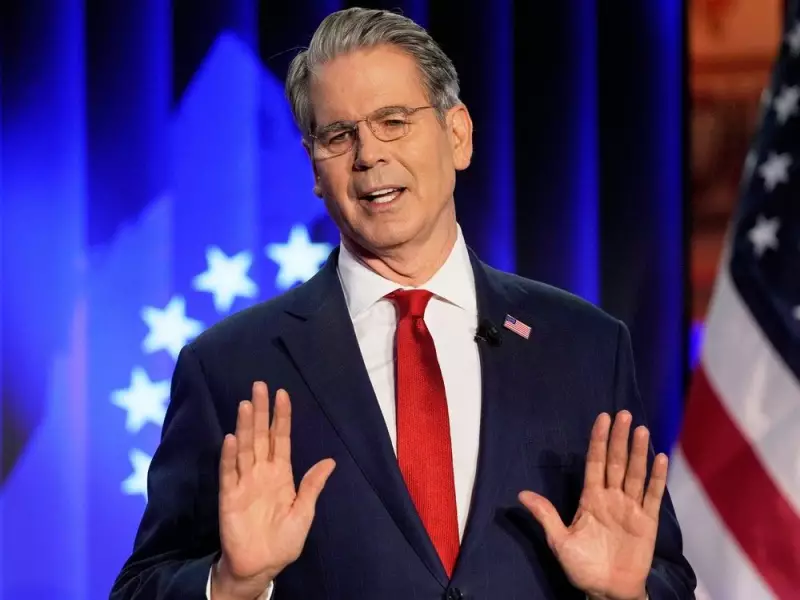
In a pointed critique of Canadian foreign economic policy, U.S. Treasury Secretary Scott Bessent has publicly questioned what he describes as Prime Minister Mark Carney's apparent "about-face" regarding trade relations with China. The comments come amid heightened tensions surrounding upcoming North American trade agreement negotiations and recent bilateral agreements between Ottawa and Beijing.
Trade Policy Reversal Allegations
During a Sunday appearance on ABC's This Week program, Bessent highlighted what he perceives as contradictory actions by the Canadian government. "The Canadians, a few months ago, joined the U.S. in implementing substantial steel tariffs against China due to concerns about dumping practices," Bessent stated. "European nations followed similar approaches. Now it appears Prime Minister Carney may have executed some form of policy reversal."
The Treasury Secretary's remarks reference Canada's recent agreement to reduce tariffs on approximately 49,000 Chinese electric vehicles from prohibitive levels to a more moderate six percent rate. This adjustment effectively eliminates a previously imposed 100 percent surtax as part of broader diplomatic efforts to rebuild economic ties with Beijing.

Potential Consequences and U.S. Concerns
Bessent articulated specific American apprehensions regarding the evolving Canada-China relationship, particularly emphasizing integrated North American supply chains. "Our markets maintain exceptionally close integration with Canada," he explained. "Goods frequently cross the border multiple times during manufacturing processes. We cannot permit Canada to become an entry point through which China channels artificially inexpensive products into United States markets."
The Treasury Secretary issued a stark warning regarding potential U.S. responses, stating that Canada could face 100 percent tariffs from American authorities if Ottawa pursues a comprehensive free-trade agreement with China. This position aligns with recent social media statements from former President Donald Trump, who cautioned against Canada becoming a "drop-off port" for Chinese goods destined for U.S. markets.
Political Context and Diplomatic Responses
Bessent's critique extended beyond trade mechanics to question Prime Minister Carney's political motivations. Referencing Carney's recent address at the World Economic Forum in Davos, where the Canadian leader advocated for middle powers to collaborate against "aggressive coercion" by global superpowers, Bessent suggested alternative interpretations. "I'm uncertain what Prime Minister Carney intends to accomplish here, beyond perhaps attempting to signal virtue to his globalist associates at Davos," the Treasury Secretary remarked.
Canadian officials have moved swiftly to clarify their position. Dominic LeBlanc, Minister responsible for U.S. trade relations, emphasized on Saturday that Ottawa is not actively pursuing a comprehensive free-trade agreement with China. According to LeBlanc, the agreements between Carney and Chinese President Xi Jinping primarily aim to resolve existing tariff disputes rather than establish new preferential trading frameworks.
Broader Implications for North American Trade
The emerging diplomatic friction occurs against the backdrop of scheduled renegotiations for the Canada-United States-Mexico Agreement (CUSMA), set to commence this summer. While Bessent acknowledged the impending negotiations, he did not specify how recent disagreements might influence the process. The situation creates additional complexity for what was already anticipated to be challenging discussions regarding North American economic integration.
Prime Minister Carney's meeting with President Xi in Beijing earlier this month yielded commitments beyond electric vehicle tariffs, including anticipated Chinese reductions on Canadian rapeseed tariffs. These developments illustrate Canada's continued efforts to balance relationships with both its dominant southern neighbor and the world's second-largest economy, navigating increasingly complex global trade dynamics.






