

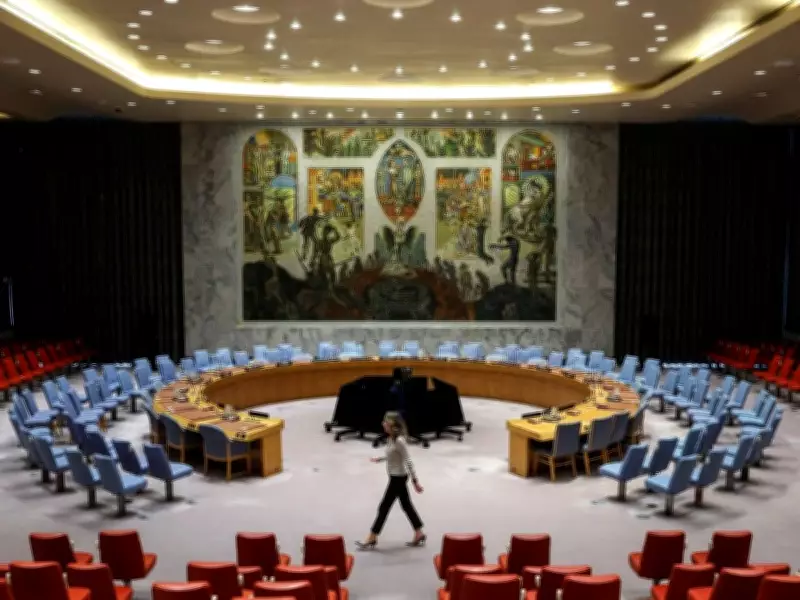
UN Secretary General Warns of Imminent Financial Collapse
United Nations Secretary General António Guterres has issued a stark warning that the global body faces imminent financial collapse due to the failure of member states to pay their mandatory dues. In a letter sent this week to all 193 UN ambassadors, Guterres described the current fiscal situation as categorically different from previous difficult periods and declared the trajectory untenable.
United States Leads List of Delinquent Nations
According to UN officials speaking anonymously under organizational rules, the United States owes nearly $2.2 billion in overdue and current assessments for the regular UN operating budget. This substantial debt dates back to the end of 2024 and includes hundreds of millions more in funds pledged or assessed to other UN programs.
Under the UN's assessment formula, which considers each nation's gross national income, population, and debt, the United States is responsible for 22 percent of the regular budget. For 2026, this amounts to $3.45 billion. China follows closely with a 20 percent assessment but had reportedly paid its dues until the beginning of this year.

Other Nations in Arrears and Consequences
The financial crisis extends beyond major powers. Venezuela owes approximately $38 million in arrears, resulting in the suspension of its voting rights in the General Assembly. According to the UN charter, any member state that fails to pay its dues for two consecutive years faces this automatic sanction.
Other nations have also accumulated significant unpaid assessments, though specific figures beyond the major delinquents were not detailed in the available information. The cumulative effect of these widespread payment failures has created what Guterres described as an unprecedented fiscal emergency for the international organization.
Political Context and U.S. Stance
The United States' substantial arrears reflect longstanding political tensions between Republican administrations and the UN. Successive Republican governments and lawmakers have criticized the organization as wasteful, liberal, and ineffective, leading to reduced or temporarily withheld payments in previous years.
The Trump administration has taken an especially hard line, refusing to pay UN assessments entirely. Although the administration has not officially informed the UN about future payment intentions, President Trump has expressed skepticism about the organization's effectiveness while acknowledging its potential. In an executive order signed earlier this month, Trump ordered U.S. withdrawal from 66 international organizations, nearly half of them UN-affiliated, citing concerns about undermining America's independence and wasting taxpayer dollars.
Broader Implications and Alternative Structures
The financial crisis coincides with growing concerns about the UN's future relevance. Trump's recently announced Board of Peace, originally designed to supervise implementation of his Gaza peace plan, has raised questions about whether the current administration intends to create alternative international structures.
In letters to 60 world leaders invited to join the Board of Peace (with 25 having officially signed up so far, none of them major U.S. allies), Trump described the initiative as a bold new approach to resolving Global Conflict. The President appointed himself as board chair with personal veto power over membership and virtually all board actions, suggesting a potential shift away from traditional multilateral institutions.
The Biden administration left office in January with its second-half 2024 assessment unpaid, continuing the pattern of delayed payments that has characterized U.S.-UN financial relations. While annual payments are typically due in January, many countries pay in tranches throughout the year, though the current level of arrears represents a significant departure from normal practice.

As the UN faces this unprecedented fiscal challenge, Secretary General Guterres emphasized that previous difficult periods of unpaid assessments had been managed, but the current situation represents a fundamental threat to the organization's operational viability and its ability to fulfill its global mandate.





