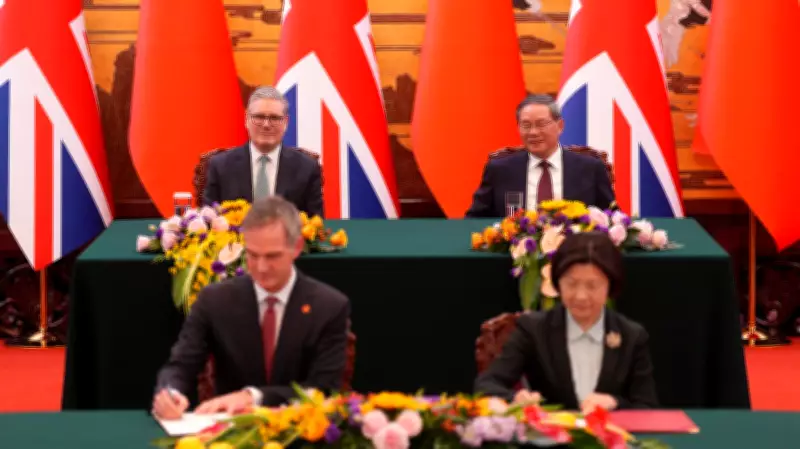
UK and China Announce Diplomatic Reset with Focus on Trade and Technology
In a significant development for international relations, Britain and China have officially hailed a reset in their bilateral ties following a high-level summit in Beijing. Prime Minister Keir Starmer and President Xi Jinping pledged greater cooperation across key sectors including trade, investment, and technology, aiming for mutual benefits that could reshape economic dynamics between the two nations.
Strategic Meetings and Concrete Agreements
Starmer's visit, the first by a British leader in eight years, culminated in several tangible outcomes. Beijing agreed to implement 30 days of visa-free access for British citizens and to halve Chinese tariffs on whisky imports. Additionally, UK pharmaceutical giant AstraZeneca announced a substantial $15 billion investment into China, signaling confidence in the renewed partnership.
The discussions between Starmer and Xi spanned approximately three hours, covering a wide range of topics from trade and security to the ongoing conflict in Ukraine. The leaders also engaged in lighter conversations, touching on shared interests such as soccer and the works of Shakespeare, which helped foster a more personal connection.

Economic Priorities and Global Context
For Starmer, whose centre-left Labour government has faced challenges in delivering promised economic growth, improving relations with China—the world's second-largest economy—has become a top priority. This move comes at a time when Western leaders are grappling with the unpredictability of U.S. President Donald Trump, whose trade tariff threats and geopolitical maneuvers have unsettled long-standing allies like Britain.
Starmer emphasized the need for a "more sophisticated relationship" with China, advocating for improved market access, lower tariffs, and new investment deals. He highlighted AstraZeneca's investment plan as a prime example of the potential benefits flowing from enhanced cooperation, while also acknowledging the importance of maintaining "frank dialogue" on areas of disagreement.
Addressing Security and Human Rights Concerns
The reset has not been without controversy. Critics, including some British and U.S. politicians, have raised concerns about China's alleged industrial espionage and human rights abuses. Starmer addressed these issues directly during his meeting with Xi, discussing the case of Jimmy Lai, a British citizen and former Hong Kong media tycoon convicted of national security crimes.
Despite these tensions, Starmer described the relationship as now being in "a strong place," expressing confidence in Xi as a partner he could work with effectively. The British premier was accompanied by over 50 business leaders, underscoring the economic focus of the visit.
Broader Implications and Future Collaborations
Beyond trade, the two nations agreed to collaborate on security matters, particularly in tackling gangs involved in trafficking illegal migrants. A joint plan aims to reduce the use of Chinese-made engines in small boats used for Channel crossings, with intelligence sharing and manufacturer cooperation to disrupt supply routes.
Chinese Commerce Minister Wang Wentao expressed Beijing's desire to deepen services trade and import high-quality UK products, while seeking a predictable investment environment in Britain. This reset marks a departure from the previous Conservative government's approach, which had seen relations deteriorate due to national security worries and concerns over Hong Kong.
As other Western leaders, including German Chancellor Friedrich Merz and potentially Trump himself, plan visits to China, Starmer's efforts to rebuild ties position Britain as an active player in navigating the complex global landscape. The outcome of this diplomatic reset will be closely watched for its long-term impact on international trade and geopolitical stability.