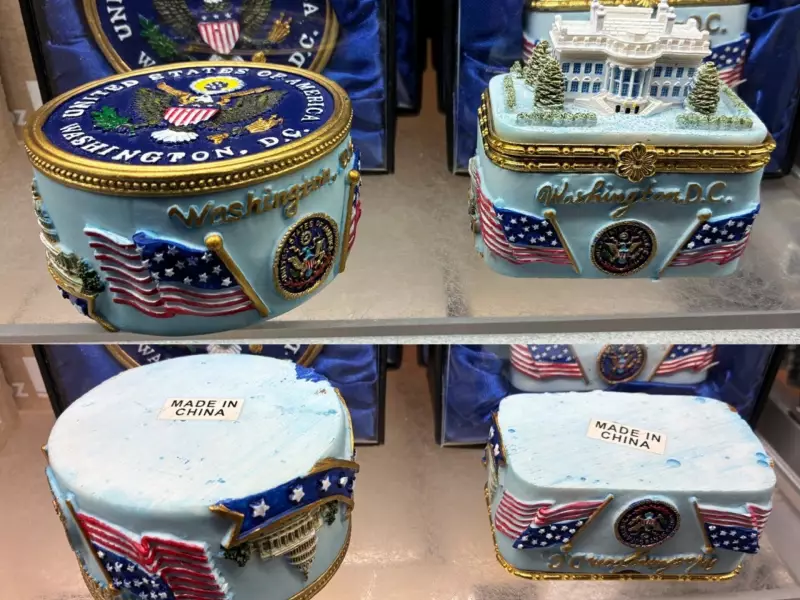
Trump's Trade Threats Against Canada Contrast with Chinese-Made U.S. Souvenirs
In a striking display of trade policy contradictions, U.S. President Donald Trump has issued stern warnings to Canada regarding potential trade agreements with China while Chinese-manufactured White House souvenirs continue to be sold in American gift shops. This juxtaposition reveals what critics are calling a significant double standard in international trade relations.
The Presidential Warning to Canada
President Trump has taken to social media platforms to express strong opposition to Canada pursuing trade arrangements with China. In a recent statement, Trump declared, "If Canada makes a deal with China, it will immediately be hit with a 100% Tariff against all Canadian goods and products coming into the U.S.A." This aggressive stance represents a significant escalation in trade tensions between the two North American neighbors.
The President further elaborated on his concerns, stating, "The last thing the world needs is to have China take over Canada. It's NOT going to happen, or even come close to happening." These comments come amid ongoing discussions about Canada's trade relationships and their potential impact on the broader North American economic landscape.

Chinese Souvenirs in the Heart of American Power
While issuing these warnings to Canada, evidence of America's own trade relationship with China is readily available in Washington D.C. itself. At Reagan National Airport gift shops, located just minutes from the White House, souvenir models of iconic American landmarks bear clear "Made in China" labels.
These include miniature replicas of the White House, the Capitol Building, and official American seals - all manufactured in China despite representing symbols of American democracy and governance. The presence of these items highlights the complex reality of global supply chains that even the most symbolic American products navigate.
The $600-Billion Context
This apparent contradiction becomes even more pronounced when considering the broader trade relationship between the United States and China. Many items available in American retail establishments originate from China as part of the substantial $600-billion trade agreement that President Trump himself negotiated with Chinese leader Xi Jinping in October 2025.
This agreement continues to facilitate the flow of Chinese-manufactured goods into American markets, even as the administration criticizes other nations for pursuing similar trade relationships. The situation raises fundamental questions about consistency in trade policy application across different international partnerships.
Broader Implications for Canada-U.S. Relations
The President's warnings extend beyond simple tariff threats. Trump has specifically cautioned that Canada's "general way of life" could be affected by entering into trade arrangements with China. This represents a significant escalation in rhetoric that goes beyond economic considerations to touch on matters of national sovereignty and cultural identity.
These developments occur against a backdrop of ongoing trade discussions and geopolitical positioning in North America. The contrasting approaches to China trade relationships between the United States and Canada highlight different strategic priorities and economic philosophies that continue to shape continental relations.
The situation presents a complex diplomatic challenge for Canadian policymakers as they navigate between maintaining positive relations with their largest trading partner while pursuing independent trade policies that serve national economic interests.