

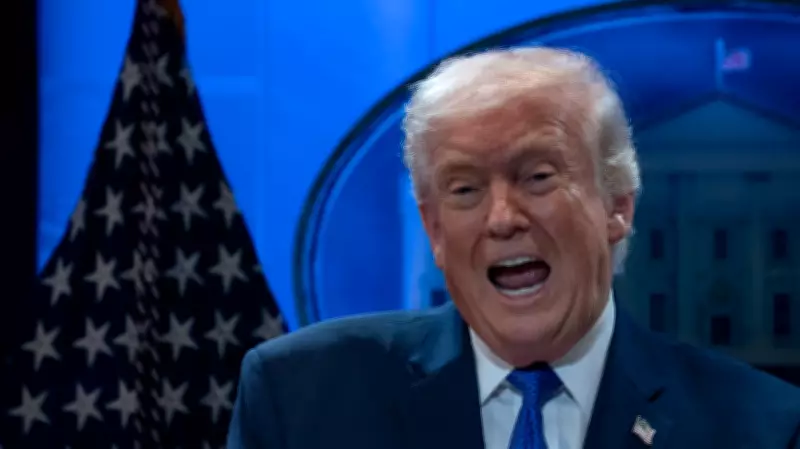
Trump's Replacement Tariffs Spark Immediate Legal Doubts
Just hours after the Supreme Court struck down President Donald Trump's "Liberation Day" tariffs as illegal on Friday, he unveiled a new global tariff at a press conference. Initially set at 10%, it was increased to 15% the following day. This move relies on Section 122 of the Trade Act of 1974, a provision never before used by any president, granting authority to impose tariffs to address fundamental international payments problems.
Legal Experts Question the Basis of the New Tariffs
However, skepticism about the legality of this action is widespread. Ilya Somin, a law professor at George Mason University who represented plaintiffs in the case that overturned Trump's emergency tariffs, stated, "It is very likely that challenges will be filed against the Section 122 tariffs." The concern centers on whether the U.S. truly faces a balance-of-payments deficit, as required by the law, rather than just a trade deficit.
Section 122 allows tariffs to combat issues such as large U.S. balance-of-payments deficits, imminent dollar depreciation, or international disequilibrium. While the U.S. has a trade deficit, many experts argue it lacks a balance-of-payments deficit, which includes broader monetary transactions like foreign-held dollars and investment flows. The dollar remains the world's reserve currency, with ongoing foreign investment and debt financing.

Internal and External Criticism Mounts
Criticism isn't limited to external observers. The Trump administration's own Justice Department previously argued in a 2025 brief that Section 122 doesn't apply to trade deficits, stating they are "conceptually distinct from balance-of-payments deficits." This past stance could undermine the administration's credibility in future court cases, as Somin noted.
Historically, the 1974 law was enacted after President Richard Nixon imposed tariffs during a balance-of-payments crisis linked to the gold standard. Today, with a floating exchange rate, experts like Milton Friedman have argued that such crises are impossible. Gina Gopinath, former IMF chief economist, emphasized on social media that the U.S. lacks a payments problem as long as demand for its debt and equities remains strong.
Divergent Views on Economic Definitions
Despite this, some, like Brian Setser of the Council on Foreign Relations, contend that trade deficits could constitute a balance-of-payments issue. The Court of International Trade has previously suggested Section 122 might address trade imbalances, adding complexity to the legal debate. Todd Tucker of The Roosevelt Institute pointed out that courts may avoid delving into "subtle macroeconomic questions," potentially affecting the outcome.
Practical hurdles also loom. Section 122 tariffs are limited to 150 days without congressional extension, and legal proceedings are unlikely to conclude within that timeframe. This leaves the policy's fate uncertain, with ongoing lawsuits expected to challenge its foundation.
In summary, Trump's new tariffs, while aimed at preserving his trade agenda, face robust legal and economic scrutiny, highlighting deep divisions over presidential authority and economic definitions in U.S. trade policy.






