Donald Trump's recent threat to impose escalating tariffs on key European allies unless Denmark agrees to sell Greenland serves as stark evidence that global policy cannot hinge on the unpredictable actions of the U.S. president. This move underscores the futility of attempting to negotiate with the current White House administration.
A Pattern of Unpredictable Trade Policy
Last week, following Prime Minister Mark Carney's deal with Chinese President Xi Jinping to lower tariffs on some Canadian agricultural products in exchange for reduced restrictions on Chinese electric vehicles, many analysts predicted it would provoke Trump's ire. However, the president, who struck his own agreement with Xi in the fall and is famously deal-obsessed, offered a surprising response. On Friday, January 20, 2026, Trump stated, "Well, it's OK. That's what he should be doing. If you can get a deal with China, you should do that."
Critics argue Carney should instead focus on strengthening trade ties with more ideologically aligned nations. While Carney was in Qatar seeking investment, European Commission President Ursula von der Leyen was in South America finalizing a landmark free-trade agreement with the Southern Common Market (Mercosur), a bloc including Argentina, Brazil, Paraguay, Uruguay, and Bolivia. Canada currently lacks trade pacts with these hemispheric neighbors.

The Greenland Gambit and Transatlantic Fallout
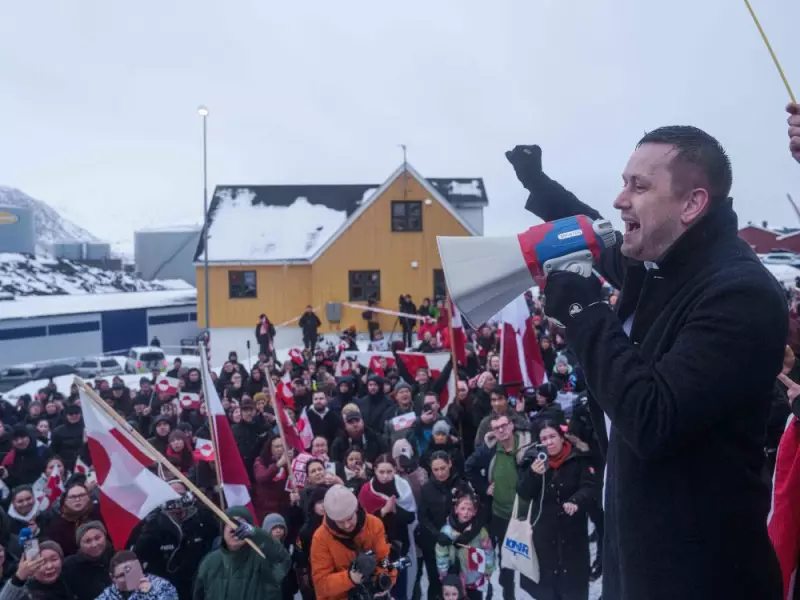
The backdrop to von der Leyen's announcement was dramatically altered when Trump issued his latest ultimatum. He threatened to impose 10 per cent tariffs on Denmark, Norway, Sweden, France, Germany, the United Kingdom, the Netherlands, and Finland. These tariffs are set to rise to 25 per cent on June 1, 2026, unless Copenhagen agrees to part with Greenland. The targeted nations are all participants in upcoming NATO exercises in Greenland.
This single action not only jeopardizes an eight-decade-old transatlantic alliance but also exposes Europe's strategy of appeasing Trump as a failed and foolhardy endeavor. Earlier attempts at conciliation have consistently backfired.
The Failed Strategy of European Appeasement
In the spring, while Carney was adopting an aggressive stance, British Prime Minister Keir Starmer brokered a trade truce with Washington. This agreement capped tariffs at 10 per cent but ultimately left the U.K. in a worse position than before Trump's "Liberation Day" announcement.
The pattern continued in July 2025, when von der Leyen agreed to a lopsided trade pact with the U.S., accepting a 15 per cent tariff on EU goods entering America while removing all tariffs on American products. She justified it as a move that "creates certainty in uncertain times."
That certainty proved illusory. By August, the Trump administration had expanded its list of metal products subject to a 50 per cent tariff. The new threat against multiple EU member states validates warnings that attempts to appease Trump only serve to embolden him further.
This evolving situation suggests that while Trump's Greenland-focused tariffs spell trouble for Europe, they may inadvertently create strategic openings for Canada, provided it navigates the volatile landscape with caution and a clear-eyed assessment of its own national interests.