

Trump Escalates Trade Tensions with Canada Over Aircraft Certification
In a significant escalation of trade tensions between the United States and Canada, President Donald Trump has announced a potential 50 percent tariff on all aircraft from Canada sold in the U.S. This move comes alongside a threat to decertify all planes manufactured in Canada until Ottawa agrees to approve specific jet models produced by the American aerospace company Gulfstream Aerospace Corp.
Certification Dispute at the Heart of the Conflict
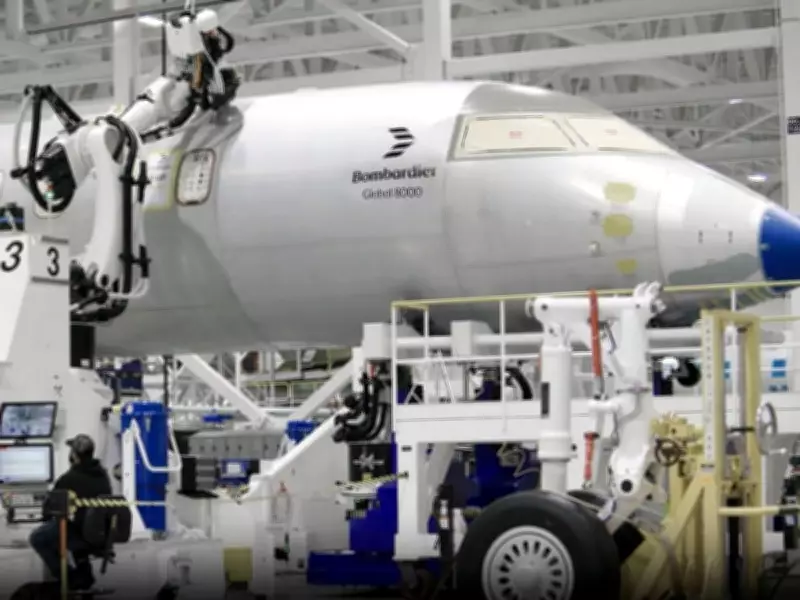
Trump made these declarations in a social media post on Thursday, accusing Canada of having "wrongfully, illegally, and steadfastly refused to certify the Gulfstream 500, 600, 700, and 800 Jets." He asserted that this refusal effectively prohibits the sale of Gulfstream products within Canada through the certification process. In retaliation, Trump stated that the U.S. would decertify "Bombardier Global Expresses, and all Aircraft made in Canada, until such time as Gulfstream, a Great American Company, is fully certified."
The President emphasized the immediacy of the situation, warning, "If, for any reason, this situation is not immediately corrected, I am going to charge Canada a 50% Tariff on any and all Aircraft sold into the United States of America." This threat specifically targets Canadian aircraft manufacturers, including Bombardier, which produces the Global 8000 business jet at its plant in Toronto.

Broader Context of U.S.-Canada Trade Relations
This latest development is part of a broader pattern of escalating trade disputes between the two nations. Trump has recently threatened to impose a 100 percent tariff on Canadian goods if the country enters into a trade agreement with China. The tension has been further fueled by comments from Canadian Prime Minister Mark Carney at the World Economic Forum in Davos, which were seen as an implicit criticism of Trump's economic and foreign policies.
Additionally, Canada and China have agreed to a modest trade pact that involves swapping canola sales to China for a quota of electric vehicle sales to Canada, a move that has likely contributed to the current friction. The two leaders spoke earlier this week, with Carney standing by his Davos remarks and explaining Canada's efforts to diversify its trade partnerships.
Implications for CUSMA and Key Sectors
The back-and-forth occurs as both countries prepare to renegotiate the Canada-United States-Mexico Agreement (CUSMA), which Trump agreed to during his first term. Currently, Trump is not applying tariffs to most goods traded under CUSMA, with exceptions in sectors like automotive. This means a large portion of Canadian exports enter the U.S. duty-free, though significant tariffs remain on critical industries such as steel and aluminum.
Earlier on Thursday, Trump also threatened to tariff countries that provide or sell oil to Cuba, a move that could subject Mexico to higher levies, indicating a broader strategy of using trade measures to advance political and economic objectives. The aircraft tariff threat underscores the volatile nature of current U.S.-Canada relations and the potential for further disruptions in cross-border trade.






