

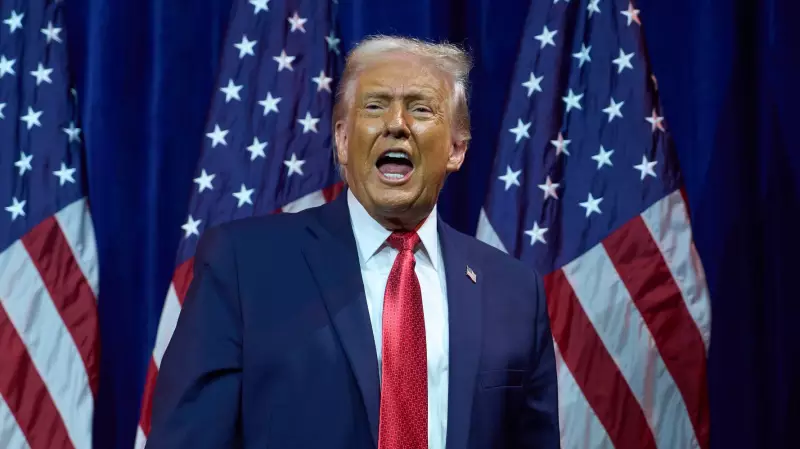
In a significant escalation of rhetoric, former U.S. President Donald Trump has suggested he might impose tariffs on countries that do not support American control over Greenland. This statement, made on Friday, introduces a new economic dimension to a longstanding geopolitical desire and risks straining relations with a key NATO ally.
A Tariff Threat for Arctic Territory
The controversial proposal came as a U.S. Congressional delegation was actively working to ease tensions during meetings with Danish and Greenlandic officials in Copenhagen. Trump has insisted for months that the United States should control Greenland, a vast, semi-autonomous Arctic territory belonging to Denmark. Earlier in the week, he declared that anything less than U.S. ownership of the island would be "unacceptable."
"I may put a tariff on countries if they don't go along with Greenland," Trump stated, though he provided no specific details. He framed the demand as a matter of national security, asserting, "We need Greenland for national security." This marks the first time he has publicly linked the potential use of punitive trade measures to this territorial ambition.

Diplomatic Efforts Amid Deep Divisions
The tariff threat follows a high-level meeting in Washington earlier this week between U.S. Vice President JD Vance, Secretary of State Marco Rubio, and the foreign ministers of Denmark and Greenland. While that encounter did not resolve the fundamental disagreements, it did lead to an agreement to establish a working group.
However, the purpose of this group immediately became a point of public contention. Denmark and the White House offered sharply diverging interpretations of what the group would discuss, highlighting the persistent gap in their positions. Greenland maintains its status as a self-governing part of the Kingdom of Denmark, a founding member of NATO.
Broader Implications for Alliances and Trade
The situation places the United States in a rare diplomatic confrontation with a close European ally over a core sovereign issue. The use of tariffs as a tool for geopolitical coercion represents a significant shift in approach, potentially setting a precedent for how future disputes with allies are managed. For Canada, a fellow Arctic nation with significant interests in the region's stability and sovereignty norms, these developments are of particular concern.
The push for Greenland is driven by its strategic location in the Arctic, which is becoming increasingly accessible and contested due to climate change. The island is seen as critical for military positioning and resource exploration. Trump's latest comments ensure that this issue will remain a sensitive and volatile topic in transatlantic relations.






