

Trump Escalates Trade Dispute with Canada, Targeting Bombardier and Quebec Aerospace Sector
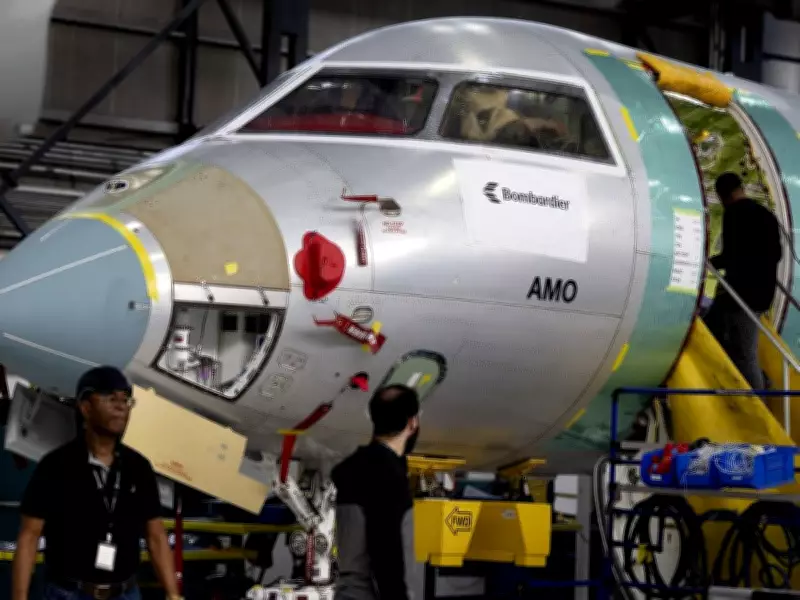
U.S. President Donald Trump has launched a new offensive in his ongoing trade dispute with Canada, directly threatening the country's vital aerospace industry. In a significant escalation, Trump is proposing to impose a substantial 50 percent tariff on all Canadian-made aircraft entering the United States. Furthermore, he has threatened to decertify planes manufactured in Canada, a move that would ground them from U.S. operations.
Leveraging Certification for U.S. Jet Approval
The president's aggressive stance is explicitly tied to Ottawa's refusal to certify a series of Gulfstream business jets produced by a prominent American manufacturer. Trump articulated his position forcefully on his Truth Social platform, accusing Canada of "wrongfully, illegally and steadfastly" blocking the certification of what he described as "one of the greatest, most technologically advanced airplanes ever made."
"Based on the fact that Canada has refused to certify the Gulfstream 500, 600, 700 and 800 jets, we are hereby decertifying their Bombardier Global Expresses — and all aircraft made in Canada — until such time as Gulfstream, a great American company, is fully certified," Trump declared in his post. He issued a stark warning that if the situation is not "immediately corrected," Washington would proceed with the punitive 50 percent tariff on all aircraft sold into the United States.

Significant Risks for Quebec's Economic Engine
This threat poses a direct and severe risk to Quebec's aerospace sector, a cornerstone of the provincial economy. The primary target is Montreal-headquartered Bombardier, one of the world's largest producers of business aircraft and a company listed on the Toronto Stock Exchange with a market capitalization of approximately $25 billion. The potential tariffs and decertification could cripple a major export industry.
Recent trade data underscores the sector's importance and its existing vulnerabilities. Aircraft exports from Quebec to the United States have already declined year-over-year. In 2025, the cumulative value of these exports was $3.75 billion, according to Statistics Canada. This figure is supplemented by $3.5 billion in aircraft engine exports and another $1.75 billion in aircraft parts, highlighting the deep integration and economic value of the cross-border aerospace supply chain.
Broader Context of Escalating Canada-U.S. Trade Tensions
Trump's latest salvo is not an isolated incident but part of a pattern of escalating trade rhetoric aimed at Canada. He recently warned that Canadian goods could face tariffs of up to 100 percent if Ottawa were to deepen its trade ties with China. This threat follows a modest Canada-China agreement that expanded Canadian canola exports in exchange for limited access for Chinese electric vehicles to the Canadian market.
The comments also arrive in the wake of Prime Minister Mark Carney's remarks at the World Economic Forum in Davos, which were widely interpreted as a veiled criticism of Trump's trade and foreign policy approaches. Following the forum, Carney spoke with Trump and reportedly stood by his comments. The Prime Minister has not yet issued a public response to this specific threat against the aerospace industry.
Internal Canadian Political Dynamics and Unity Concerns
The external trade pressure coincides with internal political discussions about national unity. In Ottawa this week, Ontario Premier Doug Ford and New Brunswick Premier Susan Holt cautioned that Canada cannot afford internal divisions. Their comments pushed back against Quebec's sovereignist Parti Québécois, which leads in opinion polls despite its pledge to hold a third independence referendum—a proposal that remains unpopular among most Quebecers.
Concerns over unity were further amplified after a Financial Times report revealed that an Alberta separatist group has been holding covert contacts with members of Trump's administration as part of efforts to push for provincial secession. British Columbia Premier David Eby condemned this outreach as "treason," stating it was "completely inappropriate" to seek foreign assistance to weaken or break up the country.

Implications for the USMCA and Future Negotiations
This developing crisis sets a tense backdrop for the upcoming renewal talks of the United States–Mexico–Canada Agreement (USMCA), the continental trade pact that Trump signed during his first term. While most goods traded under the agreement continue to enter the U.S. duty-free, significant tariffs remain on key sectors like steel, aluminum, and parts of the auto industry. The aerospace sector now appears to be the latest front in this complex and often contentious trade relationship, with Quebec's economic fortunes hanging in the balance.





