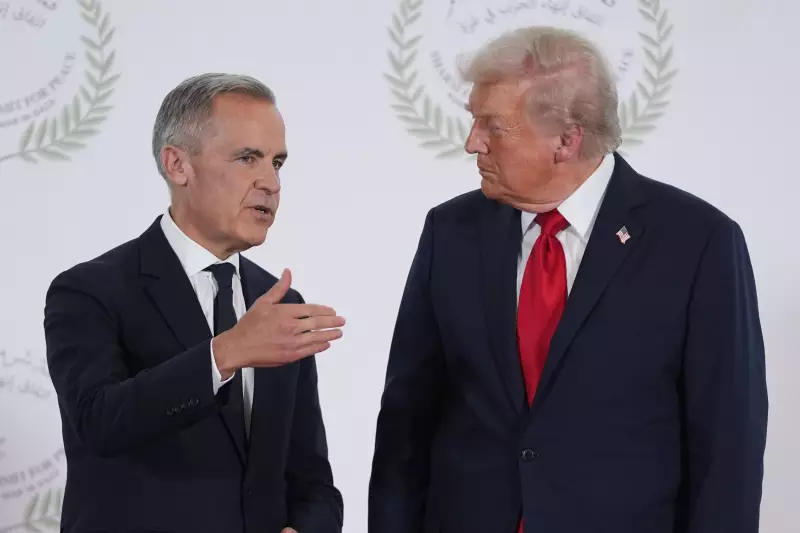
Trump's Mixed Signals on Canada-China Trade Agreement Spark Analysis
In a notable development for North American trade dynamics, former U.S. President Donald Trump has publicly described the Canada-China trade deal as "good," according to political analyst Eric Ham. However, this endorsement appears to be met with significant uncertainty and skepticism from within Trump's own circle of advisors, creating a complex diplomatic landscape as Canada asserts its economic independence on the global stage.
Diverging Views Within the Trump Camp
While Trump's positive assessment of the agreement suggests a potential alignment with Canadian trade interests, sources indicate that key advisors are expressing reservations. This internal division highlights the unpredictable nature of U.S. trade policy under a potential future Trump administration and raises questions about the consistency of American support for Canada's bilateral agreements with major economic partners like China.
Canada's Assertive Davos Presence
The analysis comes amid Canada's pointed speech at the World Economic Forum in Davos, where former Bank of Canada governor Mark Carney delivered what has been described as "the best speech by a world leader ... in a very long time." Carney's address, which drew global attention, emphasized Canada's economic sovereignty and its strategic trade relationships, including with China.

This diplomatic assertiveness occurs while Trump continues to focus attention on Greenland, a territory he has previously expressed interest in acquiring for the United States. The juxtaposition of Canada's confident international engagement with Trump's Greenland fixation creates a striking contrast in North American leadership priorities.
Implications for Cross-Border Relations
The divergence between Trump's personal approval and his advisors' skepticism regarding the Canada-China deal introduces potential complications for future U.S.-Canada relations. As Canada strengthens its trade partnerships beyond North America, the United States faces decisions about how to respond to its neighbor's expanding economic network.
Eric Ham's analysis suggests that while Trump's positive comments might initially appear supportive of Canadian interests, the underlying uncertainty within his advisory team could signal future policy shifts that might affect the implementation or perception of the Canada-China agreement from an American perspective.
Broader Context of Canadian Economic Strategy
This development occurs alongside other significant Canadian economic news, including Saskatchewan Premier Scott Moe's statement that the Canada-China trade deal "means billions for producers at home." Meanwhile, Canada continues to navigate complex trade relationships, with the Trade Minister calling for expanded engagement with India, indicating a multifaceted approach to international commerce.
The mixed signals from the United States regarding Canada's trade agreements underscore the challenges Ottawa faces in balancing relationships with its southern neighbor while pursuing independent economic partnerships that serve Canadian interests in an increasingly multipolar global economy.