Trump Downplays European Backlash Over Greenland Ambitions
President Donald Trump expressed unwavering confidence that the European Union would maintain its investment commitments to the United States, even as he threatened new tariffs related to his controversial pursuit of acquiring Greenland. The proposal has sparked significant diplomatic tension with European leaders who view the move as a direct challenge to established international agreements.
European Leaders Voice Strong Opposition
European Commission President Ursula von der Leyen characterized Trump's tariff threats as a "mistake" that would violate the trade agreement forged between the United States and the European bloc just last year. European officials have reportedly begun drafting retaliatory measures, potentially triggering a damaging tit-for-tat escalation that could unravel the carefully negotiated accord.
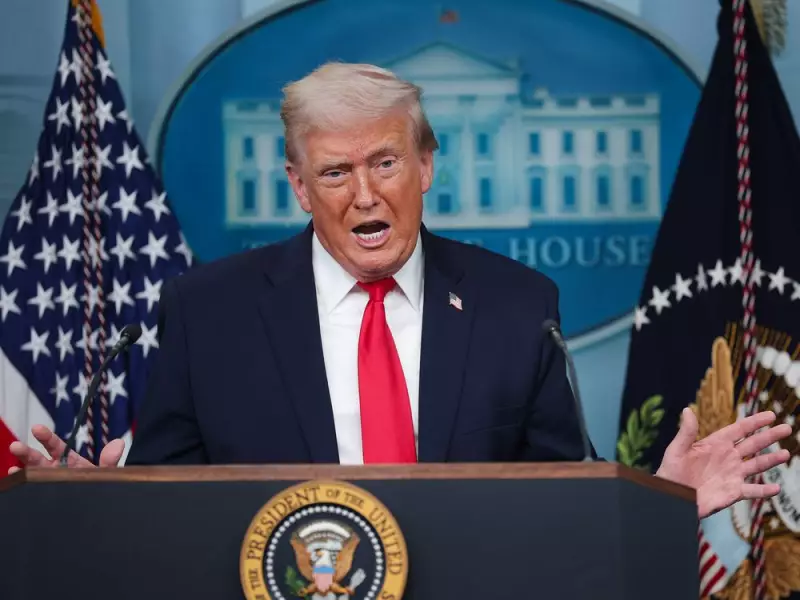
"I doubt it," Trump stated during a White House press conference on Tuesday when questioned about whether his Greenland-related tariffs might prompt the EU to withdraw from investment pledges. "They need that agreement very badly with us. They really do, they fought very hard to get it. So I doubt that."

Specific Tariff Threats Announced
The U.S. president announced concrete measures: a 10 percent tariff on goods from eight European countries beginning February 1, escalating to 25 percent in June unless he secures a deal for the "purchase of Greenland." The targeted nations include Denmark (Greenland's sovereign power), Norway, Sweden, France, Germany, the United Kingdom, the Netherlands, and Finland.
When pressed about how far he would go to secure the semi-autonomous Arctic territory, Trump offered a characteristically cryptic response to reporters: "you'll find out."
Davos Gathering Overshadowed by Transatlantic Rift
Trump's rare appearance in the White House briefing room preceded his departure for the World Economic Forum in Davos, Switzerland, where he faced European leaders furious over his bid to acquire territory from Denmark, a fellow NATO ally and EU member state.
"The European Union and the United States have agreed to a trade deal last July," von der Leyen emphasized. "In politics as in business, a deal is a deal. And when friends shake hands, it must mean something."
The transatlantic conflict over Trump's Greenland ambitions has cast a shadow over the annual gathering of global financial and political elites, further straining Washington's relationships with key European allies at a delicate geopolitical moment.
Market Reactions and Broader Implications
Trump's tariff threats have already begun affecting financial markets, with stocks and the U.S. dollar experiencing declines following his announcements. Gold prices reached record highs as investors sought safe-haven assets amid the growing uncertainty.
Despite the mounting criticism from European leaders including France's Emmanuel Macron and the United Kingdom's Keir Starmer, Trump remained optimistic about his upcoming diplomatic engagements. "They always treat me well," he remarked. "They get a little bit rough when they're — you know, when I'm not around, but when I'm around, they treat me very nicely."
The president broadly predicted that during "lots of meetings scheduled on Greenland" throughout the Davos forum, "things are going to work out pretty well, actually." His comments suggest a continued belief in personal diplomacy to overcome the substantial policy differences that have emerged over his longstanding interest in acquiring Greenland, an ambition dating back to his first presidential term.