

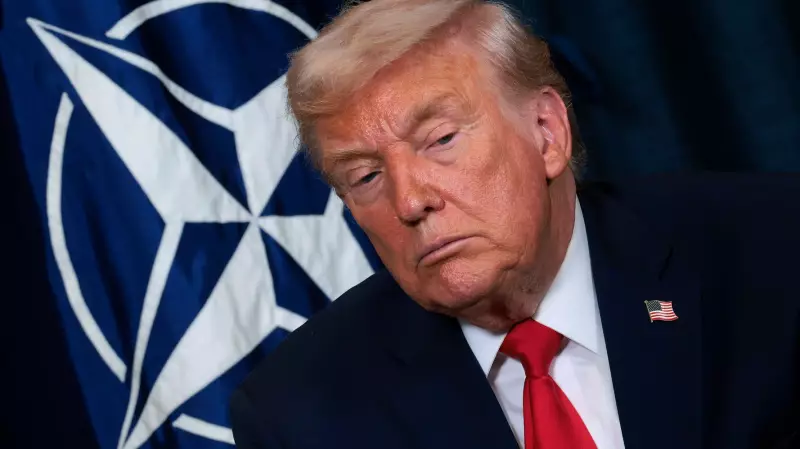
Trump Abandons Greenland Trade Threats, Announces NATO Framework Agreement
President Donald Trump has reversed course on his threatened trade war over Greenland, withdrawing proposed tariffs against Denmark and several NATO allies while declaring victory through what he calls a "framework of a future deal" regarding the Arctic region. The announcement came after a high-stakes meeting at the World Economic Forum in Davos, Switzerland, where Trump had been attending the annual gathering of global leaders and business executives.
From Tariff Threats to Diplomatic Framework
In a social media post from Davos, Trump announced: "Based upon a very productive meeting that I have had with the Secretary General of NATO, Mark Rutte, we have formed the framework of a future deal with respect to Greenland and, in fact, the entire Arctic Region. This solution, if consummated, will be a great one for the United States of America, and all NATO Nations. Based upon this understanding, I will not be imposing the Tariffs that were scheduled to go into effect on February 1st."
The president had previously threatened to impose 10% tariffs on imports from Denmark and seven other NATO allies who participated in joint military exercises in Greenland. Those tariffs were scheduled to increase to 25% by June 1 if Denmark refused to transfer control of the semi-autonomous territory to the United States.

Longstanding Obsession with Greenland
Trump's fascination with Greenland dates back to his first term, when he initially attempted to purchase the territory from Denmark. During that period, traditional Republican advisors with substantial foreign policy experience managed to dissuade him from pursuing the matter after Denmark expressed no interest in relinquishing control.
In his current term, however, Trump has surrounded himself with staff members who more readily support his initiatives. This shift in personnel has coincided with a foreign policy approach that emphasizes unilateral action over established international norms.
Davos Remarks and Diplomatic Maneuvering
During his speech at the World Economic Forum, Trump expressed regret about historical decisions regarding Greenland: "After the war, we gave Greenland back to Denmark. How stupid were we to do that? But we did it. But we gave it back. But how ungrateful are they now?"
The Greenland issue resurfaced after Trump's 2024 election victory and intensified when Vice President JD Vance planned a March trip to the territory. Although that visit failed to produce substantive meetings with local officials, Trump reignited the controversy in January by telling The New York Times, "we are going to do something on Greenland, whether they like it or not," creating a two-week diplomatic crisis that threatened NATO cohesion.
European Reactions and Diplomatic Resolution
The tariff reversal followed a private meeting between Trump and NATO Secretary General Mark Rutte, one of the few European leaders who continues to employ flattery and praise in dealings with the American president. This approach had become less common among European officials after similar tactics failed to prevent Trump from ending U.S. military assistance to Ukraine following Russia's invasion four years ago.
Other world leaders at Davos, including French President Emmanuel Macron and Canadian Prime Minister Mark Carney, have been openly critical of Trump's Greenland ambitions and broader foreign policy decisions.
Vague Details and Future Negotiations
In his announcement, Trump claimed the NATO agreement would facilitate construction of a massive missile defense shield for the United States but provided no specific details about how this would be accomplished. He also mentioned ongoing discussions about "The Golden Dome" in relation to Greenland, promising additional information as negotiations progress.
The president designated Vice President JD Vance, Secretary of State Marco Rubio, Special Envoy Steve Witkoff, and other officials to lead future negotiations, stating they would report directly to him. This diplomatic retreat marks the latest chapter in Trump's unconventional approach to international relations and Arctic policy, leaving many questions unanswered about the actual substance of the claimed framework agreement.






