

U.S. Supreme Court Delivers Major Blow to Trump's Global Tariff Strategy
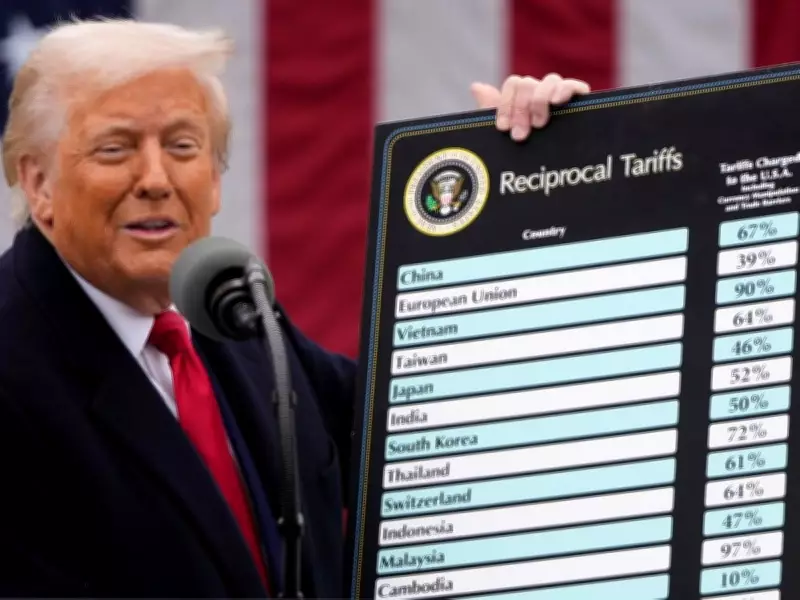
The United States Supreme Court issued a landmark ruling on Friday, declaring that former President Donald Trump overstepped his executive authority by invoking federal emergency powers to impose sweeping global tariffs. In a decisive 6-3 vote, the court determined that Trump's use of the International Emergency Economic Powers Act to enact what he termed "reciprocal" tariffs worldwide, including targeted import taxes aimed at combating fentanyl trafficking, was unlawful.
Mixed Reactions from British Columbia Business Community
For many businesses in British Columbia that have been operating under a persistent cloud of trade-related uncertainty, the court's decision brings a measure of reassurance while simultaneously necessitating continued vigilance. Experts characterize the ruling as Trump's most significant legal defeat since his return to the White House, potentially reshaping the international trade landscape.
David Williams, Vice-President of Policy at the Business Council of British Columbia, highlighted the broader implications of the decision. "It's one less tool that the president has to use," Williams stated. "He has other tools that he could fall back on, but clearly this was a big one for the world. For the European Union, for Japan, the United Kingdom—about 60 percent of the tariffs imposed globally over the last year now disappear. That's unequivocally good news."

Williams further noted that this development could strengthen Canada's negotiating position ahead of the scheduled review of the United States-Mexico-Canada Agreement (USMCA) in July.
Persistent Challenges for Key B.C. Industries
Despite the positive ruling, Williams and other officials were quick to temper expectations. The court's decision does not affect the steep, long-standing tariffs on critical British Columbia exports such as softwood lumber, steel, aluminum, or copper, which are subject to separate duties and designations.
"The bigger impact on B.C. businesses has been the profound uncertainty and the perpetual threat hanging over our heads," Williams explained. "It's like the Sword of Damocles looming over every strategic decision about where to base and build operations. That underlying anxiety doesn't simply vanish with this ruling."
Political Response and Continued Uncertainty
British Columbia Premier David Eby acknowledged the court's decision as a victory, suggesting it might signal "a thawing in some of the challenges" the province faces in its trade relationship with the United States. "Canadians knew, British Columbians knew, people around the world knew that this process was wrong," Eby remarked.
However, Eby cautioned that the ruling would have a limited immediate, meaningful impact on provincial businesses due to the tariffs that remain firmly in place on softwood lumber, wood products, and aluminum. He suggested the decision could pave the way for future legal challenges, including potential actions against the national security tariffs imposed on softwood lumber.
The political fallout was immediate. Former President Trump expressed sharp criticism, stating he was "absolutely ashamed" of the justices who voted against his tariffs and labeling the decision "deeply disappointing." In a swift response, Trump announced his intention to impose an alternative global 10 percent tariff.
Premier Eby characterized this reaction as indicative of the ongoing instability. "The imposition of another 10 percent tariff, literally on the same day the Supreme Court declared the previous tariffs illegitimate, is a prime example of the chaos and disruption we are witnessing," Eby said. Despite this, he expressed cautious optimism that the judiciary is moving in the right direction by ruling the original tariffs illegal.
The ruling specifically addressed tariffs initially targeting Canada and Mexico, which were among the first nations subjected to Trump's use of the emergency powers act over a year ago. For British Columbia's business community, the path forward remains one of cautious optimism, navigating between a significant legal victory and the reality of persistent trade barriers and political unpredictability.






