

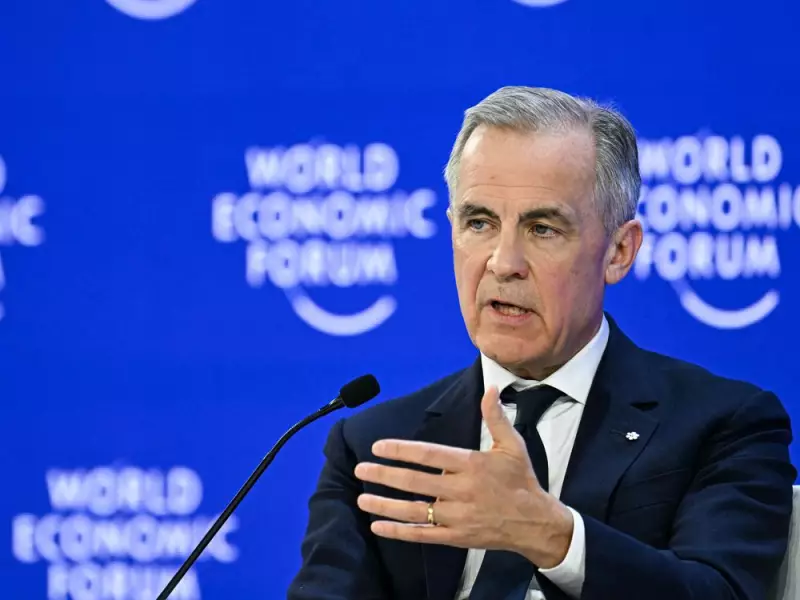
Economic Research Contradicts Carney's Assessment of Global Trade System
Prime Minister Mark Carney's recent declarations about the permanent demise of the old rules-based international order face significant challenge from new economic research. While Carney's Davos speech presented a vision of "values-based realism" as the new global framework, a comprehensive study suggests the previous system delivered substantial benefits that current revisionist narratives may be underestimating.
Questioning the Premise of Irreversible Change
Carney's assertion that the pre-2024 international trade architecture is gone for good appears premature according to historical precedent. The protectionist Smoot-Hawley Tariff Act of 1930 was followed just four years later by Franklin Roosevelt's Reciprocal Trade Agreements Act, which initiated eight decades of progressive trade liberalization. This historical pattern suggests that current protectionist trends might represent a temporary deviation rather than a permanent transformation of global economic relations.
New Economic Analysis Reveals Widespread Benefits
A significant study conducted by economists from MIT, Princeton, and the University of Chicago provides compelling evidence about the effectiveness of the previous international trade system. The research team, including prominent economists Dave Donaldson, Arnaud Costinot, John Sturm Becko, and Rodrigo Adão, examined tariff structures from 2001 - considered the peak of World Trade Organization influence following full implementation of Uruguay Round agreements.

The study's methodology involved analyzing how individual countries' tariff policies affected their trading partners' exports and incomes. Researchers investigated whether nations adjusted their tariffs considering these spillover effects, rather than pursuing purely self-interested policies as some contemporary approaches suggest.
Altruistic Outcomes from Structured System
The research findings indicate that the rules-based international order generated benefits across participating nations, with outcomes that approached what might be described as altruistic in their distribution. This contrasts with Carney's characterization of the system as partially fictional or comparable to the false narratives of communist regimes.
The economists calculated what tariffs would look like if countries followed purely self-interested strategies focused solely on improving their own terms of trade - similar to approaches advocated by protectionist movements. The comparison reveals that the structured, multilateral approach of the previous system produced superior outcomes for global economic welfare.
Balancing Pragmatism with Historical Perspective
While Carney's "values-based realism" framework acknowledges Canada's prosperity under the previous international order, his dismissal of its continued relevance may overlook important historical patterns and economic evidence. The new research suggests that the benefits of structured international cooperation in trade policy were both real and substantial, challenging narratives that minimize their significance.
As global economic relations continue to evolve, this study provides important context for evaluating both past achievements and future directions in international trade policy. The findings suggest that elements of the previous system may retain relevance even as new approaches develop, particularly given the demonstrated capacity for rapid policy shifts in international economic relations.






