

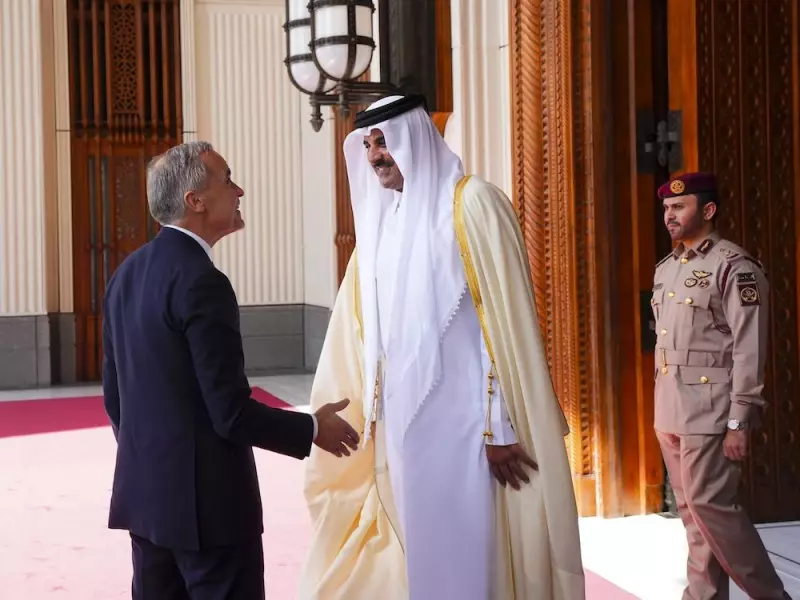
As Prime Minister Mark Carney concludes another whirlwind international tour, a compelling, if perhaps unflattering, comparison comes to mind. Observers might picture him as a contemporary version of Arthur Miller's tragic salesman, Willy Loman, traversing the globe with a case full of Canadian goods. Yet, this is no tale of defeat, but a necessary and strategic response to a world order upended.
A New Global Marketplace Demands New Footwork
Over the past year, Prime Minister Mark Carney has embarked on a diplomatic marathon, leaving few potential economic doors unknocked. His itinerary has stretched beyond traditional allies in France, Britain, and the European Union to include less frequented stops like Egypt, Latvia, Malaysia, and South Africa. The mission is clear: to secure Canada's economic future in an increasingly unpredictable landscape.
This push recently included a historic first visit by a sitting Canadian prime minister to Qatar on Sunday, January 18, 2026, meeting with Emir Tamim bin Hamad al-Thani. The trip underscored a recognition that Canada can no longer afford to overlook emerging power centers, having long relied on the comfortable, dominant market to the south.

The China Conundrum: Trading Principles for Pragmatism
The most contentious leg of this new strategy has been the overture to Beijing. This move comes despite widespread Canadian anger over China's detention of Michael Spavor and Michael Kovrig, its record on intellectual property theft, democratic interference, and human rights. Carney's deal, which trades greater access for Chinese electric vehicles against eased tariffs on Canadian canola seeds, represents a stark pragmatic pivot.
Analysts view this as an unequivocal admission: in a world where the old rules are shredded, Canada must sometimes hold its nose to secure vital deals. The calculus is cold but clear. If stable trade with the United States under a potential Donald Trump administration is uncertain, alternative partners must be cultivated, even if it means closer ties with President Xi Jinping's China.
Moving Beyond "Moralistic Lecturing" to Economic Survival
The driving force behind this frantic global courtship is the profound uncertainty unleashed by the shifting American political scene. The cozy, dependable trade relationship of the past is gone, potentially for good. In its place is a frantic scramble to establish new alliances and secure supply chains, even if it means doing business in neighborhoods previously avoided.
This represents a significant philosophical shift for Ottawa. The era of riding America's economic coattails while delivering moral lectures appears over. The new reality demands that Canada peddle more than just softwood lumber and maple syrup; it must sell itself as a serious, adaptable partner in a multipolar world. For Saskatchewan's farmers and other export-dependent sectors, this isn't about celebration, but economic necessity.
While the image of a prime minister as a perpetual salesman may lack grandeur, it reflects the hard work required in a fractured global economy. Mark Carney's battered suitcase is a symbol not of decline, but of a Canada pragmatically, and urgently, seeking its place at new tables.






