

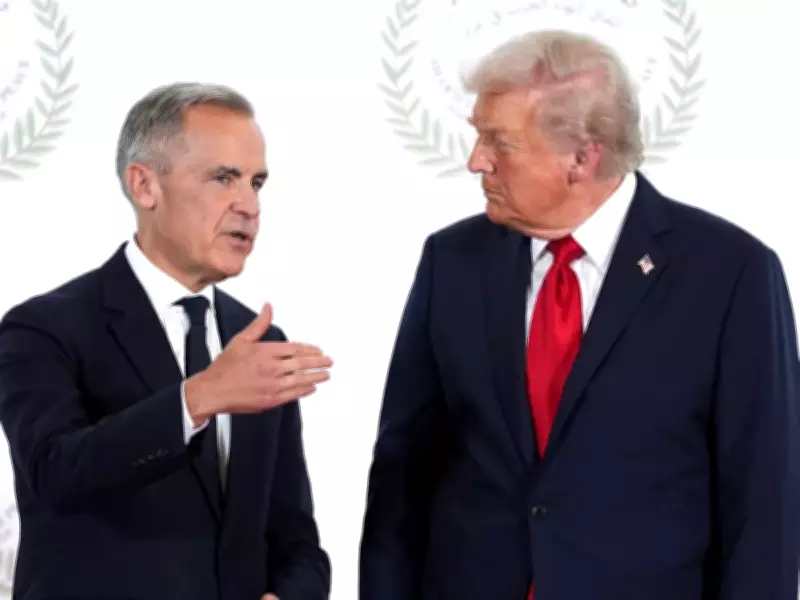
Liberals' Evolving Position on CUSMA Creates Trade Policy Confusion
Over the past year, Prime Minister Mark Carney and his Liberal government have taken Canadians on what can only be described as a policy roller coaster regarding the future of the Canada-U.S.-Mexico Agreement (CUSMA). With the crucial trade pact scheduled for renegotiation this year, the government's shifting positions have created significant uncertainty about Canada's trade strategy with its most important economic partner.
From Aggressive Stance to Strategic Retreat
The Liberals' approach has undergone dramatic transformation since Carney took office. Initially, the government promised an "elbows up" strategy that would match American tariffs dollar-for-dollar in any trade dispute. This aggressive posture has since given way to a more pragmatic approach, with Canada dropping many of its tariffs against the United States.
The rationale behind this strategic retreat reflects economic reality: the American economy is approximately ten times larger than Canada's, making a tariff war unwinnable for Canadian interests. Government officials have acknowledged that maintaining tariffs primarily served to increase living costs for Canadian consumers without providing meaningful leverage in negotiations.

Contradictory Statements and Moving Goalposts
Throughout the negotiation process, Liberal officials have delivered conflicting messages about the state of discussions with American counterparts. At various points, government representatives have claimed:
- Negotiations were nearing completion
- Significant gaps remained between positions
- The new agreement would be inferior to the existing pact
- Canada's current deal represents the best arrangement compared to other nations
- No agreement would be preferable to a bad deal
This inconsistent messaging has made it difficult for businesses, investors, and provincial governments to plan for the future of North American trade relations.
Trump's Influence and Canadian Vulnerability
Adding to the uncertainty are regular threats from U.S. President Donald Trump to either terminate negotiations with Canada or impose new tariffs based on Canadian policy decisions. The mercurial nature of American trade policy under the Trump administration has created additional challenges for Canadian negotiators seeking stable, predictable arrangements.
Complicating matters further is the structure of CUSMA itself, which allows any party to withdraw from the agreement by providing just six months' written notice. This relatively low barrier to exit increases Canada's vulnerability in negotiations, particularly given that approximately 70-75% of Canadian trade flows to the United States.
Historical Perspective and Political Implications
Recent comments from former Liberal deputy prime minister and finance minister John Manley have added another layer to the debate. Manley suggested to CBC that while a trade deal would be desirable, Canada managed effectively before implementing the original free trade agreement with the United States in 1989.
This historical perspective raises questions about whether the Carney government shares similar views as it enters scheduled CUSMA reviews. However, most trade experts agree that in today's interconnected global economy, predictable trading relationships with the United States remain crucial for Canadian prosperity.
The political stakes are particularly high for Prime Minister Carney, who campaigned on his expertise in managing Canada-U.S. relations and his ability to negotiate effectively with the Trump administration. As the renegotiation process continues, Canadians will be watching closely to see whether the Prime Minister can deliver on his promise of securing Canada's economic interests while navigating increasingly complex trade waters.






