

Former Diplomat Michael Kovrig Raises Alarm Over Canada-China Trade Agreement
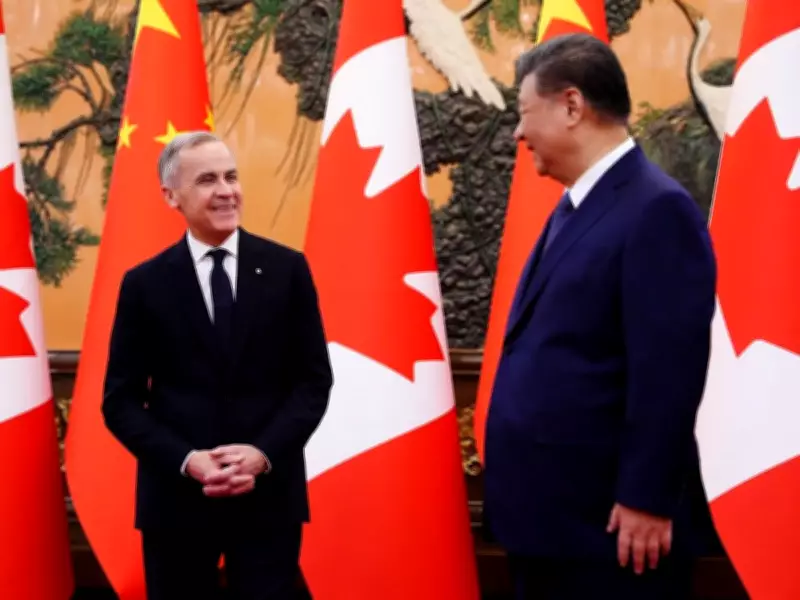
Prime Minister Mark Carney's recently negotiated trade deal with China has generated substantial controversy, particularly in Washington, D.C., where concerns about potential exploitation and retaliation have overshadowed discussions of increased trade opportunities. The agreement, which includes provisions for canola exports and electric vehicle components, has prompted serious questions about whether the economic benefits justify the strategic risks involved.
Kovrig's Personal Experience Informs Critical Perspective
Michael Kovrig, a former Canadian diplomat who endured nearly three years of wrongful detention in China following the arrest of Huawei executive Meng Wanzhou in Vancouver, brings unique insight to this discussion. Having experienced China's coercive tactics firsthand, Kovrig has consistently warned that Beijing employs economic and political pressure as standard tools in international relations. His perspective carries particular weight given his direct encounter with China's retaliatory measures against Canadian interests.
Strategic Concerns About Chinese Communist Party Intentions
Kovrig emphasizes a fundamental reality that Western nations must acknowledge: the Chinese Communist Party operates as a strategic and systemic rival to democratic countries. The CCP actively seeks to undermine Western nations while simultaneously increasing other countries' dependence on China, all while diversifying its own economic dependencies. This creates an inherent power imbalance in any negotiation, with Beijing consistently pursuing agreements that primarily benefit its own strategic objectives.

"Any deal the CCP agrees to, it presumably considers advantageous," Kovrig notes. "So why make any deals with China that benefit the CCP, unless the assessment is that the net benefit to Canada is greater? Otherwise, you're just selling them more of the rope they want to hang you with."
Analyzing the Canola-Electric Vehicle Agreement
The specific components of Carney's trade deal reveal both potential benefits and significant vulnerabilities:
- Canola farmers have regained partial market access in China, providing economic relief to an important agricultural sector
- The agreement generates political capital for the Liberal Party in Western Canada
- Electric vehicle components represent a growing sector for Canadian exports
However, Kovrig warns that these gains come with substantial risks. Canadian producers remain vulnerable to future economic coercion, with China having demonstrated its willingness to weaponize trade relationships for political leverage. The former diplomat suggests that if he were placing bets, he would wager on China eventually using this trade relationship as leverage again.
Questioning the Underlying Motivations
Kovrig offers psychological insight into what might be driving Carney's approach to China relations. He suggests the Prime Minister may be reacting to "an emotional and political aversion to Trumpian chaos on one side, and a Davos elite's affinity for the technocratic order of the Chinese Communist Party on the other." This perspective, combined with what Kovrig characterizes as a banker's mentality focused on financial outcomes rather than strategic considerations, may be influencing Canada's China policy.
The Path Forward: Diversification and Vigilance
Looking ahead, Kovrig emphasizes the importance of strategic planning to mitigate risks. He recommends that Canadian producers and policymakers:

- Develop and implement diversification strategies for both production and markets
- Reduce dependence on any single trading partner, particularly one with demonstrated willingness to use economic leverage
- Establish regular monitoring mechanisms to track progress toward reduced vulnerability
The fundamental question remains whether temporary economic gains justify long-term strategic vulnerabilities. While Kovrig acknowledges that the deal might work out favorably under certain conditions, his overall assessment leans toward caution. The uncertainties surrounding how China, the United States, and Canada will manage the relationship moving forward create significant unpredictability that could undermine even well-intentioned agreements.
As Canada navigates this complex relationship, Kovrig's warnings serve as a crucial reminder that economic partnerships with strategic rivals require careful consideration of both immediate benefits and long-term consequences. The balance between pragmatic engagement and strategic self-protection remains delicate, with significant implications for Canada's economic future and international standing.





