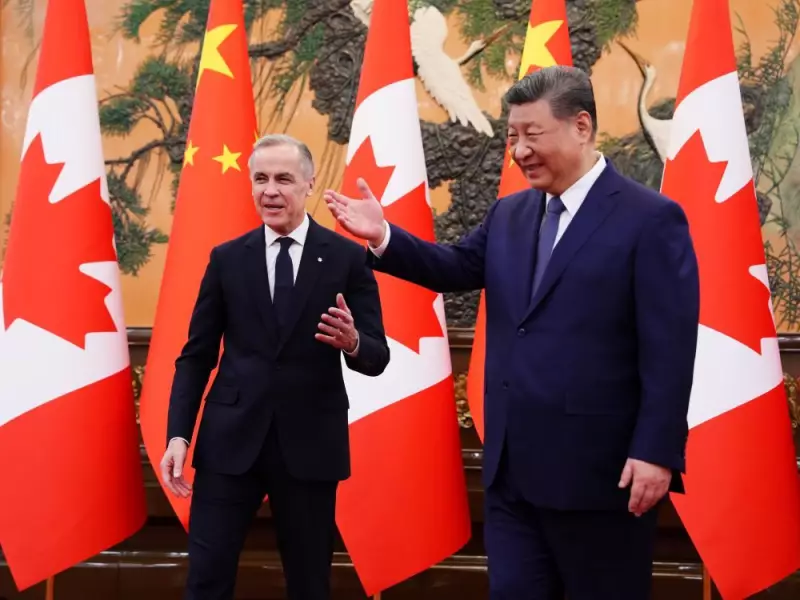
Former Canadian diplomat Michael Kovrig, who endured over three years of detention in China, has issued a stark warning about the newly announced trade arrangements following Prime Minister Mark Carney's high-stakes visit to Beijing. Kovrig asserts the trip, the first by a Canadian prime minister since 2018, carried far greater strategic weight than mere diplomatic formality.
The Deal: EVs for Canola and Seafood
On Friday, January 16, 2026, Prime Minister Mark Carney announced a significant shift in trade policy with China. The deal, struck after meetings with President Xi Jinping, will allow 49,000 Chinese-manufactured electric vehicles (EVs) into Canada annually at a drastically reduced tariff rate of six per cent. This marks a sharp departure from the 100 per cent tariff imposed by the previous Liberal government, which had aligned with U.S. policy at the time.
In exchange, China agreed to reduce tariffs on select Canadian exports. Tariffs on some canola products, excluding canola oil, and certain seafood items will drop from rates as high as 25 to 85 per cent down to either zero or 15 per cent. The agreement aims to provide relief to Canadian farmers and fisheries who have faced significant trade barriers.

Kovrig's Analysis: A Strategic 'Rope-a-Dope'
In a series of social media posts on Saturday, January 17, Kovrig dissected the visit's implications. He characterized President Xi's framing of the trip as a "turning point" as a clear signal that China sought concrete concessions. "This was never just a courtesy call," Kovrig stated. He identified China's primary goals as securing market access for its heavily subsidized EVs, locking in stable energy supplies, and gaining political cooperation.
Kovrig suggested China capitalized on a moment of perceived Canadian vulnerability. "With Canada–U.S. relations under strain, the General Secretary smelled blood in the water and seized a moment of increased leverage," he wrote. He described the dynamic as akin to a "rope-a-dope" boxing strategy, where one player absorbs short-term blows to secure a long-term advantage.
Long-Term Risks and a Call for Caution
The core of Kovrig's warning centres on the long-term strategic risks he believes outweigh the short-term economic benefits. He acknowledged that Carney secured "limited relief for farmers and reopened dialogue channels," but cautioned that Xi Jinping retained his "pressure tools" and is likely to keep using them.
Kovrig expressed concern over the potential for "elite capture" and accumulating political leverage. "That’s how pressure and elite capture accumulates — quietly, agreement by agreement, not through one dramatic concession," he explained. He urged the Canadian government to diversify exports for vulnerable sectors and to develop robust plans to protect the domestic automotive industry and national cybersecurity defences amidst the influx of Chinese EVs.
He outlined a framework for future engagement, advising Canada to: start with small, reversible deals; staunchly protect its industrial base; and draw unambiguous red lines around national security, foreign interference, coercion, and human rights abuses. Kovrig emphasized that Canada should be able to trade commodities like food and energy with China without compromising its fundamental security interests.
The former detainee also pointedly questioned China's commitment to a "proper way" for states to interact, a phrase used by Xi during the meetings. In a poignant post referencing his own ordeal, Kovrig asked if the "proper way" now excludes taking citizens hostage to coerce policy changes.
Prime Minister Carney's visit, which included an official welcome in Beijing on January 14 and the key meeting with Xi on January 16, has undoubtedly reopened a strained diplomatic channel. However, as Michael Kovrig's analysis underscores, the path forward is fraught with complex trade-offs between immediate economic needs and enduring national security priorities.