

Ontario Premier Doug Ford has issued a direct appeal to Prime Minister Mark Carney, urging the federal government to maintain its tariffs on electric vehicles imported from China. The call comes amid broader international trade tensions and concerns over the future of Canada's domestic automotive manufacturing sector.
A Firm Stance on Fair Competition
Premier Ford's message, delivered with the declaration "We can’t back down," underscores a significant point of provincial-federal alignment—or potential friction—on trade policy. The context for this appeal is a rapidly evolving global auto industry, where Chinese manufacturers are becoming increasingly dominant in the EV market, often supported by substantial state subsidies.
Ford's position is rooted in protecting Ontario's industrial heartland, which is central to Canada's automotive production. The Premier argues that allowing a flood of subsidized Chinese electric vehicles into the Canadian market would undercut domestic manufacturers and jeopardize thousands of jobs. This stance aligns with policies in other Western economies, including the United States and European Union, which have also implemented or are considering similar protective measures.

The Broader Political and Economic Landscape
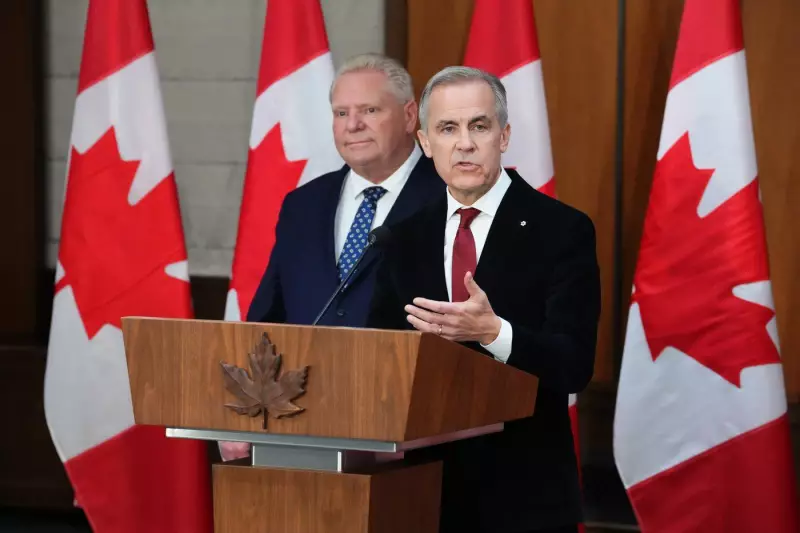
The public appeal from Premier Ford to Prime Minister Carney follows a joint press conference the two leaders held in Ottawa on Thursday, December 18, 2025. While the press conference covered broader topics, the issue of international trade and economic sovereignty remains a pressing file for both levels of government.
Analysts suggest that Carney's government must carefully balance several competing interests. On one hand, there is pressure from allies and domestic producers to present a united front against what is often described as unfair trade practices. On the other, there is a desire to avoid escalating trade conflicts and to maintain diplomatic channels with China, a major global economic player. The Prime Minister is also navigating the ongoing negotiations surrounding the Canada-United States-Mexico Agreement (CUSMA), where coordinated North American trade policy is crucial.
What's at Stake for Canada's Auto Future
The outcome of this policy decision carries substantial weight for Canada's economic future. The automotive sector is a cornerstone of Ontario's economy and a significant contributor to the national GDP. A decision to remove or weaken the tariffs could expose Canadian automakers and their extensive supply chains to intense price competition.
Conversely, maintaining the tariffs could lead to higher prices for consumers in the short term and potentially invite retaliatory trade measures. The federal government's choice will signal its strategic approach to the dual challenges of fostering a competitive green economy and protecting existing industrial jobs during a period of profound technological transition.
As Prime Minister Carney's government deliberates, the clear and public pressure from Ontario's premier highlights the high-stakes nature of international trade policy. The decision on Chinese EV tariffs will be a key indicator of how Canada intends to navigate the new global political and economic order, balancing domestic industrial priorities with complex international relationships.






