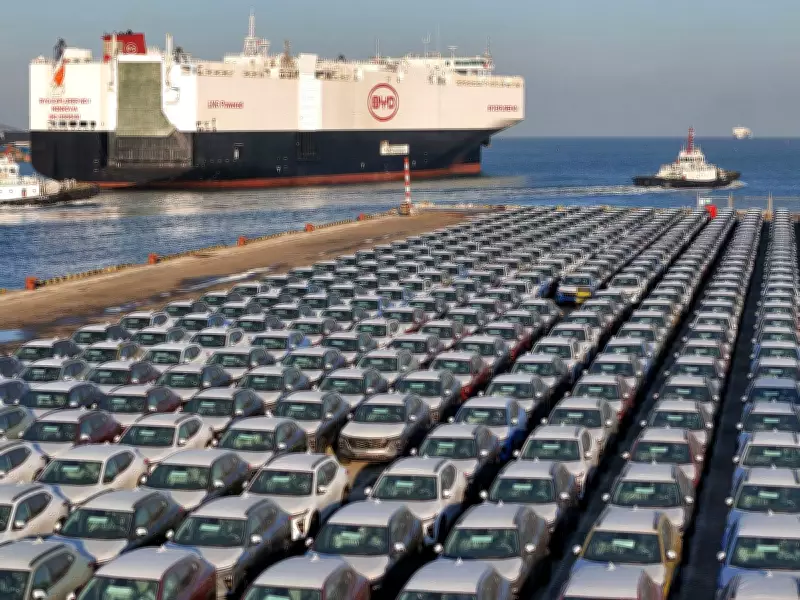
Chinese-made electric vehicles are beginning to arrive in Canada under a new arrangement that Prime Minister Mark Carney agreed to in January during a visit with China's President Xi Jinping. The cars will be the first to be imported by Canada under a deal that allows as many as 49,000 Chinese EVs in a 12-month period at a tariff rate of around 6 per cent. Prior to this year, Canada had a tariff of more than 100 per cent on those products, effectively shutting them out.
In recent days, hundreds of Tesla Inc. cars made at the U.S. automaker's Shanghai factory have started to show up under the new low-tariff regime, according to a person familiar with the matter, asking not to be identified because they are not authorized to speak publicly. A vehicle carrier called Glovis Treasure with cargo including a small number of Chinese-made Lotus luxury brand cars has been moored outside the Port of Vancouver since Sunday. The ship departed Shanghai in early May, according to shipping data compiled by Bloomberg.
U.S. Lawmakers Push for Ban on Chinese-Connected Vehicles
The Canada-China deal will be closely watched by U.S. automakers, which have historically held a dominating position in the Canadian market. Executives including General Motors Co. chief executive Mary Barra have questioned the Carney government's decision to ease barriers to Chinese electric cars. U.S. policymakers, including President Donald Trump himself, have been sharply critical of Carney for cutting a deal with Xi on electric cars in return for a lowering of Chinese tariffs on Canadian agricultural products. Earlier this week, U.S. Representative Haley Stevens and Senator Elissa Slotkin — both from Michigan — announced a proposal to ban “Chinese connected vehicles” from entering the U.S. That would apply to drivers owning them in Canada, and in Mexico, where BYD and rivals have already gained significant market share.

Background of the Trade Shift
Until recently, Canada's policy on Chinese electric vehicles was similar to the U.S. — use high tariffs to keep them out, a stance which prompted retaliatory levies on Canadian farm goods from Beijing. But last year, President Trump imposed large tariffs on foreign autos, resulting in production declines and job losses at Canadian factories. Squeezed between both markets, Carney's government reviewed its approach to the sector.
The quota of 49,000 cars represents less than 3 per cent of the Canadian new-vehicle market, and it's similar to the annual pace of Chinese-made EV imports — primarily Teslas — before October 2024, when then-Prime Minister Justin Trudeau imposed a 100 per cent surtax. However, the cap is set to rise year by year, and China's domestic EV sector is surging, disrupting global auto markets. Canada's government expects that the new trade arrangement will result in some Chinese-owned automakers entering the Canadian market for the first time. BYD Co. is planning some 20 sales locations with partners in Canada, according to an adviser to BYD who spoke with Bloomberg News last month.