

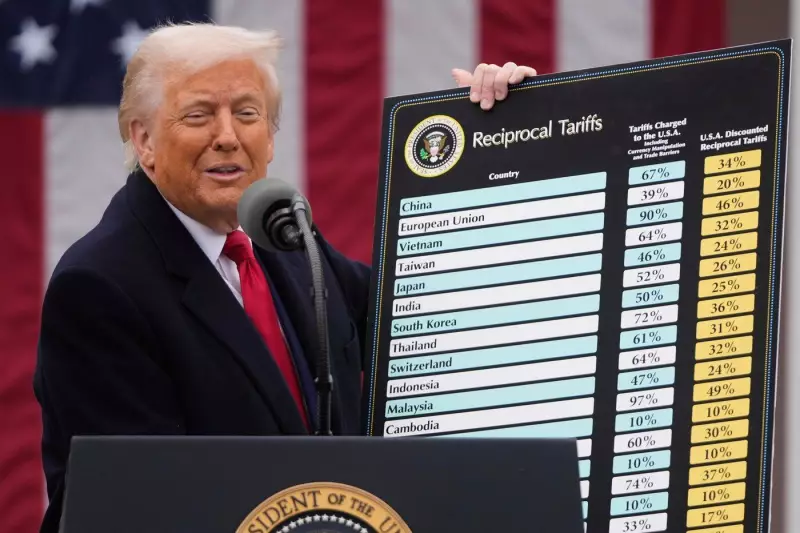
A recent decision by the United States Supreme Court to delay its ruling on the legality of tariffs imposed during the Trump administration provides no indication of how the justices will ultimately decide, according to a leading legal expert. The case, which has significant ramifications for cross-border trade with Canada, remains in limbo as the court deliberates.
Legal Expert Analyzes the Court's Silence
Jeremy Paul, a professor of constitutional law, stated that the timing of the court's action should not be interpreted as a signal of its final judgment. "The Supreme Court's decision to postpone its ruling is a procedural step," Paul explained. "It does not offer a clue to the court's internal deliberations or the likely outcome of this highly consequential case." The tariffs in question, a centerpiece of the previous U.S. administration's trade policy, have been a persistent source of tension between the two nations.
Broader Context of Canada-U.S. Relations
The legal challenge unfolding in Washington occurs against a backdrop of other notable frictions, as highlighted by recent reports. Some Canadian snowbirds have reported altering travel plans, citing perceptions of heightened tensions. Furthermore, Greenland's political leaders have firmly rejected former President Trump's renewed push for U.S. control of the island, an issue that reverberates across Arctic policy discussions involving Canada.

Economically, the uncertainty extends beyond tariffs. Former Canadian UN ambassador has criticized U.S. ambitions regarding Greenland, while markets react to policy proposals like potential caps on credit card interest rates. For Canadian businesses and exporters, the pending Supreme Court decision represents a critical unknown, affecting long-term planning and investment in the integrated North American market.
Implications for Trade and Policy
The Supreme Court's eventual ruling will have direct and immediate effects on the flow of goods across the Canada-U.S. border. A decision to uphold the tariffs could reinstate or validate trade barriers that have been challenged for years. Conversely, a ruling against them would provide relief to numerous industries but could also ignite further political debate in the United States.
Professor Paul emphasized that such landmark cases often follow their own timeline, independent of external speculation. "The judiciary operates on a different calendar," he noted. "Stakeholders on both sides of the border must wait for the formal opinion. The delay itself is not a message." As legal experts, government officials, and business leaders await the decision, the focus remains on the profound impact it will have on the framework of international trade law and the economic relationship between Canada and its largest trading partner.






