

A senior European Union official has publicly questioned the trustworthiness of former U.S. President Donald Trump, following his recent threat to impose tariffs on Greenland. The remarks, made on Tuesday, January 20, 2026, underscore the lingering diplomatic tensions between the United States and its European allies.
Davos Speech Sparks Diplomatic Row
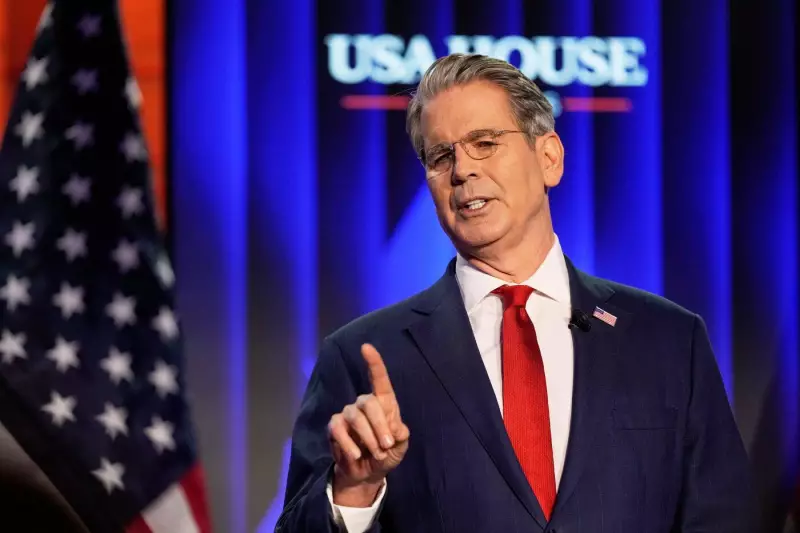
The controversy emerged against the backdrop of the World Economic Forum in Davos, Switzerland. On that same Tuesday, U.S. Secretary of the Treasury Scott Bessent delivered a speech at the USA House. While the content of Bessent's address was separate, the event's global stage amplified the EU's critical response to Trump's economic threats toward the autonomous Danish territory.
The unnamed EU official's central critique was clear: the former president's approach to international diplomacy, exemplified by the tariff threat, makes him an unreliable partner. The official suggested that such unilateral actions undermine long-standing alliances and create instability in global trade frameworks.

The Core of the Greenland Dispute
While the original report did not specify the exact nature of the tariffs threatened by Trump, the move is seen as part of a broader pattern of leveraging economic pressure to achieve political goals. Greenland, which handles its own mineral resources but relies on Denmark for foreign and security policy, has become an unexpected flashpoint in transatlantic relations.
The EU official's statement implies a deep-seated concern that the "America First" policies associated with Trump's previous administration could resurface, challenging the rules-based international order. This public airing of distrust is a significant diplomatic signal from Brussels to Washington.
Broader Implications for Canada and Allies
This exchange has ripple effects beyond Europe and the United States. For Canada, a close neighbor to Greenland and a key NATO ally, such disputes complicate continental security and economic cooperation. The questioning of a former U.S. president's reliability by a major ally adds a layer of uncertainty to North American and Atlantic partnerships.
The incident highlights how trade and tariff threats, even from a former leader, can quickly escalate into questions about fundamental trust and the stability of international agreements. It serves as a reminder of the fragile nature of diplomatic relationships in an era of shifting geopolitical priorities.
As of January 20, 2026, there has been no direct public response from Donald Trump or his representatives to the EU official's comments. The situation continues to develop, with observers watching for any further escalation or clarification from either side of the Atlantic.






