

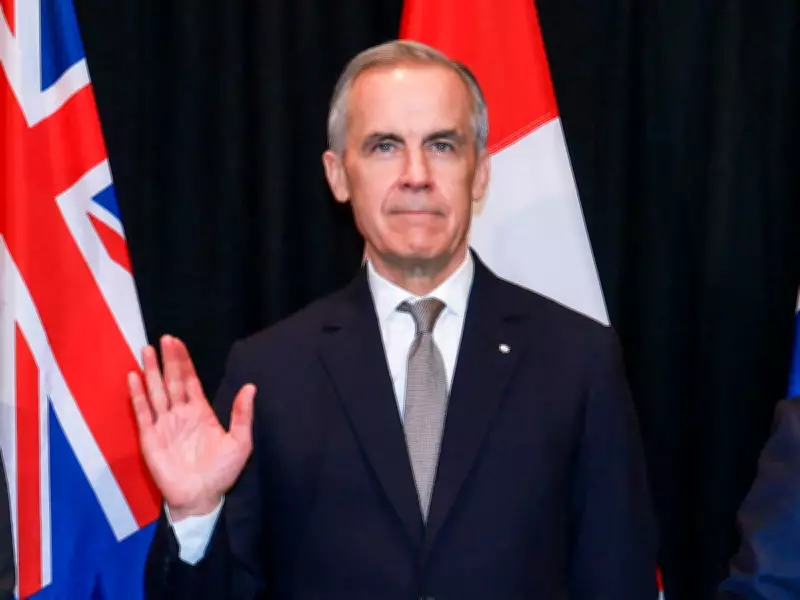
Carney's Global Trade Ambitions Meet Reality Check
Prime Minister Mark Carney's whirlwind international tour continues to generate headlines and memorandums of understanding, but growing skepticism surrounds whether these paper agreements will translate into tangible economic benefits for Canada. As the government announces fresh deals with China, Qatar, Luxembourg, India, and Australia in 2026 alone, critics are urging caution until concrete results materialize.
The Pygmalion Effect in Politics
The psychological phenomenon known as the Pygmalion effect suggests that higher expectations can lead to improved performance. However, political observers question whether wishful thinking alone can sustain effective governance. After a decade under Justin Trudeau's leadership, Canadian voters have demonstrated limited patience for capriciousness and government-by-announcement tactics.
The sheer volume of international agreements is staggering. According to government figures, Canada has signed approximately $85 billion worth of global investment agreements in just the past ten months. This number becomes particularly significant when compared to last year's foreign direct investment in Canada, which reached a twenty-year high of $96.8 billion.

Conservative Criticism and Implementation Concerns
Adam Chambers, the Conservative critic on international trade, has voiced serious reservations about the prime minister's approach. "The prime minister has no problems setting expectations very high on the world stage," Chambers stated. "However, the risk he faces is one of results. These memorandums of understanding and agreements to agree generally do not guarantee actions or results."
Chambers pointed to Carney's background as a central bank governor and international finance official, noting that heavily negotiated communiques often get discarded when parties return to their home countries. "Success should be measured by results achieved—not on promises to deliver something in the future," he emphasized.
From Paper to Practice: The Implementation Challenge
Former Liberal foreign affairs minister Stéphane Dion has offered direct advice to the prime minister based on his experience. Dion warned that despite officials working diligently to conclude agreements, "the danger is that they stay on the paper."
Dion recommended that Carney appoint a publicly responsible official specifically tasked with implementation oversight. "If he wants to convert paper gains into jobs, he needs to appoint an official to be publicly responsible for implementation," Dion advised, suggesting the prime minister should urge foreign counterparts to take similar measures. "Otherwise, the danger of it staying on paper is very high."
While Carney has appointed former clerk of the Privy Council John Hannaford as his personal representative to the European Union, similar appointments for tracking commitments with China and India appear absent despite the significant agreements signed with these nations.
The Reality of International Trade Negotiations
Government press releases from recent negotiations, including those from New Delhi, tout "commercial agreements that will create thousands of careers in Canada, boost bilateral investment and secure new opportunities for Canadian workers." However, experienced trade professionals understand that reality often frustrates even the best intentions in international diplomacy.
As Prime Minister Carney continues his global travels pursuing trade opportunities, his government's memorandums of understanding accumulate rapidly. The critical question remains whether these agreements will produce measurable economic benefits or simply add to what critics describe as a growing pile of paper promises.
The Canadian public's appetite for announcements without corresponding action has diminished significantly. After years of political promises, voters increasingly demand evidence that international agreements translate into domestic prosperity, job creation, and economic stability.






