

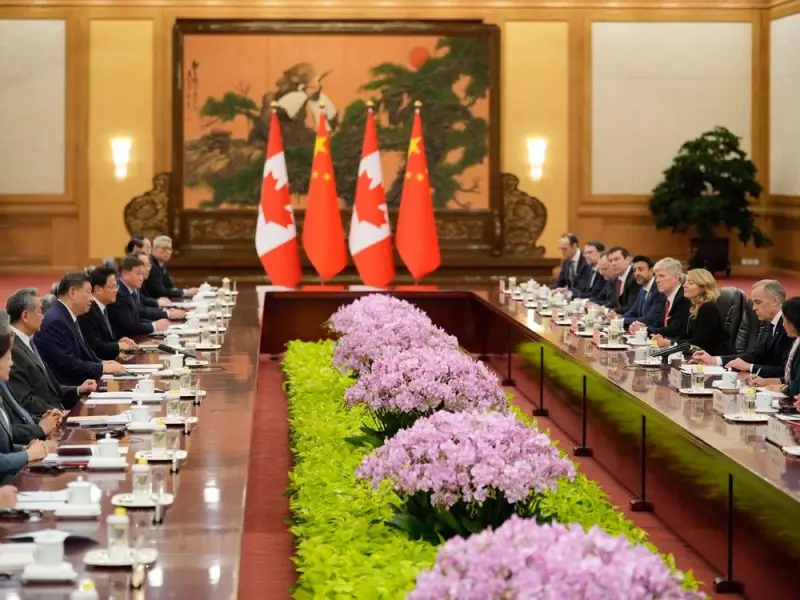
Carney Forges Canola Agreement as Global Trade Landscape Shifts Dramatically
The ongoing tariff conflicts have escalated to unprecedented levels, presenting critical challenges to Canada's economic stability and way of life. In a significant development, Prime Minister Mark Carney has successfully negotiated a breakthrough trade agreement with China that promises to revitalize Canada's canola exports while navigating increasingly complex international relations.
A Watershed Moment in Global Politics
Pulitzer Prize-winning journalist David Shribman recently characterized January 20, 2025, as a historical turning point comparable to momentous events like the signing of the U.S. Declaration of Independence and the assassination of Archduke Franz Ferdinand. This perspective underscores the profound transformation occurring in global affairs, particularly following Donald Trump's second inauguration as U.S. President.
The post-World War II international order that has long benefited Canada and other Western nations appears to be undergoing fundamental restructuring. Prime Minister Carney addressed this reality directly during his appearance at the World Economic Forum in Davos, Switzerland, exactly one year after Trump's 2025 inauguration.

Carney's Davos Declaration Receives Historic Recognition
"We are in the midst of a rupture, not a transition," Carney told the assembled global leaders at Davos. His stark assessment of the current geopolitical climate resonated so powerfully that he received a standing ovation—an honor previously extended only to Nelson Mandela and Volodymyr Zelenskyy at the prestigious forum.
While Trump represents a significant disruptive force in Western politics with his tariff policies, territorial ambitions regarding Greenland, suggestions about Canada becoming a 51st state, and domestic human rights concerns, Carney emphasized that broader global instability extends beyond any single leader. The Russian geopolitical stance exemplifies the widespread nature of these international tensions.
Strategic Trade Agreement with China
Against this backdrop of global uncertainty, Carney traveled to Beijing to secure a vital trade agreement with Chinese President Xi Jinping. The landmark deal reduces Chinese tariffs on Canadian canola seeds from 84 percent to 15 percent, among other tariff reductions. In exchange, Canada will lower tariffs on Chinese electric vehicles from 100 percent to 6.1 percent.
The agreement includes specific provisions requiring that at least half of the approximately 49,000 potential electric vehicle imports—representing a modest portion of Canada's automotive market—be priced at $35,000 or less. This balanced approach addresses both agricultural and automotive sectors while maintaining consumer affordability considerations.
Economic Implications for Canadian Agriculture
The surprise agreement has generated cautious optimism among Prairie farmers and throughout the canola supply chain. Under normal trading conditions, Canada exports approximately $5 billion worth of canola products to China annually. However, since the implementation of previous tariff measures, these exports have been reduced by approximately fifty percent.
This strategic trade development represents more than mere economic negotiation—it signifies Canada's proactive approach to safeguarding national interests amid global turbulence. As Carney emphasized at Davos, maintaining Canada's standard of living and peaceful existence now requires active engagement and strategic response rather than passive observation of international developments.
The canola agreement demonstrates how targeted trade diplomacy can create tangible benefits for specific economic sectors while navigating broader geopolitical challenges. This approach reflects Canada's commitment to finding practical solutions within an increasingly complex global environment where traditional alliances and trading patterns face unprecedented pressure.






