

Carney's Political Posturing Overshadows Canada's National Interests Amid Trump Tariff Threats
Prime Minister Mark Carney is facing mounting criticism for what observers describe as prioritizing political theatre over Canada's national interests, particularly in his handling of escalating tensions with the United States. The controversy centers on Carney's response to Donald Trump's recent threats to impose crippling tariffs should Ottawa proceed with a comprehensive trade agreement with China.
Trump's Coercive Tactics Mirror Chinese Behavior
U.S. President Donald Trump's approach to international relations has taken an increasingly aggressive turn during his second term. While his administration has achieved some foreign policy successes, these have been overshadowed by what critics call bullying tactics against traditional American allies. Trump's recent fixation on annexing Greenland, which belongs to NATO ally Denmark, exemplifies this pattern of coercion.
European powers that objected to this proposed landgrab were warned by Washington to remain silent or face retaliatory tariffs. Although these specific threats were eventually withdrawn, the precedent of using economic pressure to silence allies remains deeply concerning for Canada's diplomatic community.

Carney's Davos Speech: Strategic Assessment or Political Performance?
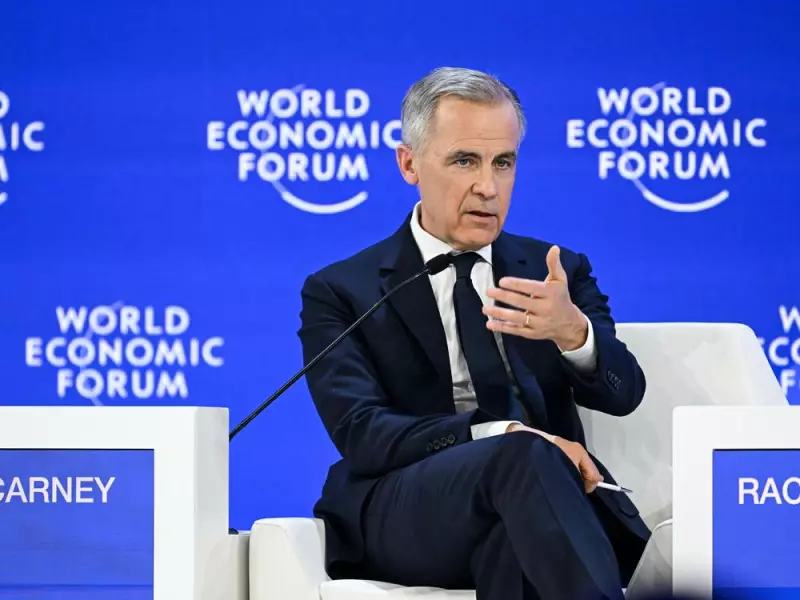
Prime Minister Carney's recent address at the World Economic Forum in Davos presented a clear-eyed assessment of the challenges facing middle powers in a multipolar world. While he didn't mention Trump by name, his implicit denunciation of the American president's coercive tactics was unmistakable to attendees and observers alike.
The speech garnered Carney significant positive media coverage both domestically and internationally, representing what many saw as a political victory for the Liberal leader. However, critics argue that the unnecessarily abrasive tone of the address went beyond simply standing up to American pressure and instead provoked a predictably hostile response from Washington.
The Escalating Tariff Threat
Trump's reaction to Carney's positioning has been characteristically confrontational. During his own Davos appearance, the American president adopted what observers described as mafioso-like mannerisms, reminding Carney that "Canada lives because of the United States" and accusing Canada of ingratitude for American generosity.
The situation escalated dramatically over the weekend when Trump took to social media to threaten imposing 100 percent tariffs on Canadian imports should Ottawa sign a trade deal with China. In his post, Trump claimed Beijing would "completely devour" Canada, turning it into a transshipment port for Chinese goods destined for American markets.
Balancing Trade Diversification with Strategic Realities
Carney's proposed "comprehensive strategic partnership" with China represents an attempt at trade diversification that many analysts see as theoretically sound. The underlying rationale of reducing economic dependence on any single trading partner aligns with traditional Canadian foreign policy objectives.
However, critics argue that the prime minister's approach risks creating overdependence on Beijing while simultaneously antagonizing Canada's most important trading partner. The delicate balance between asserting strategic independence and maintaining vital economic relationships appears to have been disrupted by what some characterize as Carney's preference for political messaging over substantive diplomacy.
The Sovereignty Question
Trump's occasional musings about eventually annexing Canada might be dismissed by some as mere rhetorical flourishes, but his recent actions demonstrate a disturbing disregard for Canadian sovereignty. The explicit use of economic coercion to influence Ottawa's foreign policy decisions represents a significant escalation in bilateral tensions.
While Carney's commitment to bolstering Canada's strategic independence is broadly supported across the political spectrum, questions remain about whether his current approach represents effective statecraft or political posturing that ultimately jeopardizes national interests.

The prime minister finds himself navigating increasingly treacherous diplomatic waters, where the line between standing up to coercion and provoking unnecessary confrontation has become dangerously blurred. As Trump's tariff threats loom, Carney must demonstrate whether his government can prioritize substantive diplomacy over political theatre in protecting Canada's economic and strategic interests.





