

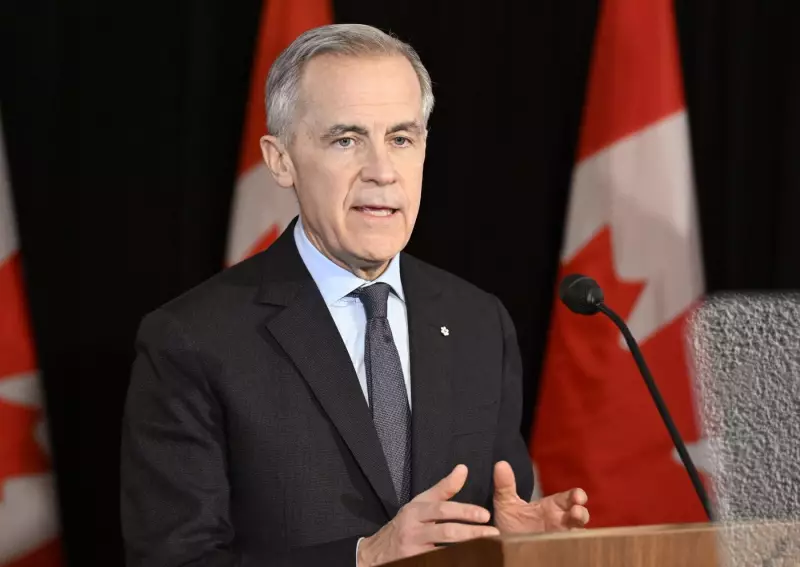
Prime Minister Carney Dismisses Prospects of Canada-China Free Trade Pact
Prime Minister Mark Carney has firmly stated that Canada has no intention of seeking a free trade deal with China, putting to rest speculation about such an agreement in the near future. This declaration came during a cabinet planning forum held at the historic Citadelle in Quebec City on January 22, 2026, where Carney outlined the government's trade priorities.
Strategic Focus on Diversified Global Trade
In his remarks, Carney emphasized that Canada's trade strategy is centered on building and strengthening partnerships with a diverse range of countries, rather than pursuing a bilateral free trade agreement with China. This approach aligns with broader efforts to reduce economic dependencies and navigate the complex geopolitical landscape that has seen increasing tensions between Western nations and China.
The Prime Minister highlighted that while China remains an important trading partner, the focus is on multilateral engagements and existing frameworks that support Canadian interests without compromising on values such as human rights and environmental standards. This stance reflects a cautious and calculated foreign policy, particularly in light of recent global trade disruptions and protectionist measures from other major economies.

Context of International Trade Dynamics
Carney's comments come at a time when international trade is under significant strain. Notably, former U.S. President Donald Trump has recently threatened to impose 100% tariffs on Canadian goods, referring to Carney as "governor" in a contentious statement. Such threats underscore the volatile nature of current trade relations and the need for Canada to adopt a resilient and adaptive strategy.
Experts have warned that aggressive tariff actions could harm both Canadian and American economies, with potential impacts on sectors ranging from agriculture to manufacturing. In this context, Carney's rejection of a China free trade deal may be seen as a move to avoid further complicating Canada's trade relationships, especially with key allies like the United States.
Implications for Canadian Economy and Policy
The decision not to pursue a free trade agreement with China has several implications:
- Economic Diversification: It reinforces Canada's commitment to diversifying its trade portfolio, reducing reliance on any single market to mitigate risks.
- Diplomatic Relations: It signals a careful balancing act in diplomacy, maintaining engagement with China while avoiding agreements that could draw criticism from other international partners.
- Domestic Industry: It may provide stability for Canadian industries that are wary of increased competition from Chinese imports under a free trade framework.
Carney is set to spend much of 2026 traveling globally to seek new trade opportunities, indicating a proactive approach to expanding Canada's economic horizons beyond traditional partnerships. This global outreach aims to secure deals that align with Canada's strategic interests and values, fostering sustainable growth.
As Canada navigates these complex trade waters, Carney's stance on China reflects a broader trend of cautious pragmatism in foreign policy, prioritizing long-term stability over short-term gains. The government's focus remains on building resilient trade networks that can withstand geopolitical shifts and support the Canadian economy in an uncertain world.






