

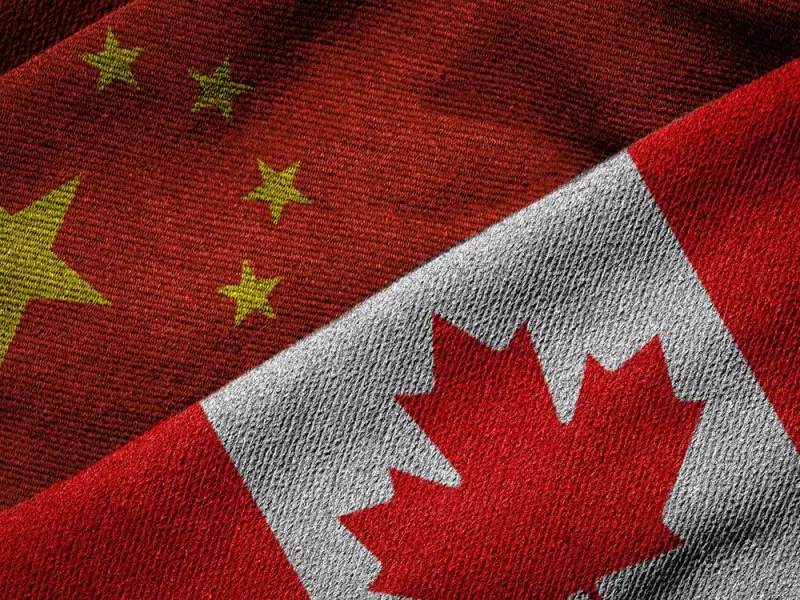
Prime Minister Mark Carney is set to embark on a significant diplomatic mission to China next week, marking the first face-to-face meeting between a Canadian leader and President Xi Jinping in over eight years. The high-stakes visit, centered on trade and energy discussions, underscores Canada's complicated push to diversify its export markets while carefully managing a historically strained bilateral relationship.
A Delicate Balancing Act for Canadian Trade
The trip is a cornerstone of the Carney government's strategy to double Canada's non-United States exports. This push comes amid persistent trade tensions with the U.S., Canada's largest trading partner. Pedro Antunes, chief economist at the Conference Board of Canada, highlighted the economic imperative, noting, "At current exchange rates, the U.S. is 26 per cent of the global economy, but China is 17 per cent. It’s a big market for us, an important market, especially for agri-food products."
Despite the potential, the path is fraught with complexity. Canada remains deeply economically intertwined with the United States, making a full pivot impossible. The goal is not to replace U.S. trade but to strategically build other significant partnerships, with China being the most prominent candidate due to its sheer market size.

Thawing Relations After Years of Strain
The diplomatic landscape between Ottawa and Beijing has been frosty for years, primarily due to the 2018 arrest of Huawei executive Meng Wanzhou in Vancouver and China's subsequent detention of Canadians Michael Kovrig and Michael Spavor on espionage allegations. Accusations of Chinese interference in Canadian federal elections have further poisoned the well.
A tentative thaw began in October, when Carney and Xi met on the sidelines of the Asia-Pacific Economic Cooperation (APEC) summit. Xi's invitation for a state visit, which Carney accepted, signaled a mutual interest in resetting the dialogue. Antunes observes that Carney is "focusing on the economics of things and slacking a little bit on the strong stance" previously held against China and other nations like India.
High Stakes and Existing Trade Frictions
The economic ties are substantial but contested. China is Canada's second-largest trading partner, with bilateral merchandise trade reaching $118.7 billion in 2024. Notably, China is the top buyer of crude oil shipped through the expanded Trans Mountain pipeline.
However, recent policy moves have sparked a tariff war. In 2024, Ottawa imposed a 100 per cent tariff on Chinese electric vehicles to shield the domestic auto industry. Beijing retaliated with a 100 per cent levy on Canadian canola oil and a 76 per cent tariff on canola seed imports. The Canola Council of Canada has stated that resolving this issue requires a political solution, expressing encouragement about Carney's upcoming trip.
"Reopening this market to smoother, more predictable canola trade between Canada and China is a priority," said council spokesperson Caroline Traweger. Further friction exists in the steel sector, where Canada's 25 per cent surtax on products containing Chinese steel and reduced tariff-free import quotas prompted China to file a challenge with the World Trade Organization (WTO).
As Carney prepares for this critical engagement, the challenge is clear: advance Canadian economic interests in a vital market while navigating a web of geopolitical sensitivities, human rights concerns, and retaliatory trade measures. The outcome will significantly shape the future of Canada's trade diversification agenda and its complex relationship with the Asian superpower.






