

Carney's Leadership Could Protect Canada from Chinese Dumping, Ease U.S. Trade Tensions
Prime Minister Mark Carney has a critical opportunity to bolster Canada's economic resilience and address mounting concerns from the United States regarding trade vulnerabilities. By implementing robust measures to combat non-market dumping practices from China, Carney could help safeguard domestic industries and strengthen North American supply chains.
The Non-Market Economy Challenge
Both the United States and Canada officially designate China as a non-market economy, a classification that reflects Beijing's significant control over production and pricing mechanisms rather than allowing market forces to operate freely. Since China's accession to the World Trade Organization in 2000, it has enjoyed substantial access to Western markets without offering reciprocal opportunities for foreign competitors.
This imbalance has created persistent trade distortions that now threaten specific Canadian sectors. A compelling case currently before Finance Minister François-Philippe Champagne illustrates the urgent need for policy intervention to protect domestic industries from unfair competition.

The Tire Industry Under Siege
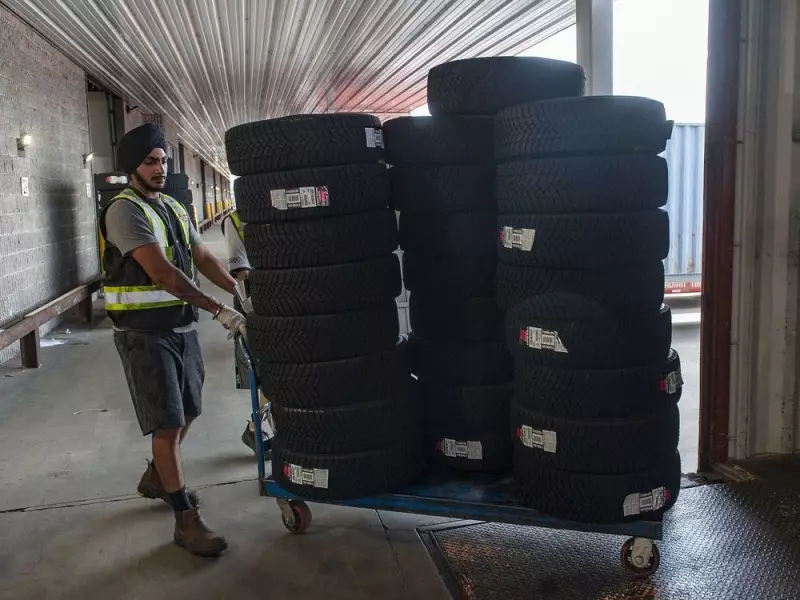
Corey Parks, president of British Columbia-based Kal Tire, presented alarming testimony to the House of Commons trade committee in late 2024 regarding the $2.3-billion truck and bus retread industry. This sector specializes in adding new tread to used tire casings, significantly extending their lifespan and promoting sustainability through circular economy principles.
Parks detailed how Chinese manufacturers are flooding the Canadian market with cheap, single-use tires that cannot be retreaded. These imports sell for approximately $141 per tire, which is less than the material costs for Canadian retreads that average $294. The price differential stems from non-market practices including:
- Government subsidies that distort production costs
- Weaker environmental standards reducing compliance expenses
- Lower labour standards decreasing manufacturing overhead
The quality implications are substantial. While Chinese tires may initially appear economical, Parks emphasized that one retread tire can cover the same distance as twelve single-use Chinese tires, making the domestic product significantly more cost-effective over its lifecycle despite the higher upfront price.
International Responses and Canadian Inaction
Other Western nations have already taken decisive action against this trade imbalance. The United States has imposed 90 percent duties on Chinese tires, while the European Union and United Kingdom have implemented similar countervailing measures. Parks warned that Canada remains the only major Western nation where dumping of these Chinese tires continues unabated, and the problem is gaining momentum.
Without intervention, Parks predicts the Canadian retread industry will disappear entirely, forcing the transportation sector to rely exclusively on Chinese imports for tire supplies. This would create dangerous vulnerabilities in national supply chains and eliminate thousands of skilled jobs across the country.
Political Support for Protective Measures
Parks has advocated for a 109 percent surcharge on Chinese tires to level the competitive playing field. His proposal has gained bipartisan support from trade committee chair Liberal MP Judy Sgro and Conservative MPs Marc Dalton and Tako Van Popta, both representing British Columbia constituencies.
Sgro wrote to Finance Minister Champagne ahead of last year's budget, expressing concerns that Canada's supply chains are becoming increasingly vulnerable to foreign influence and urging immediate government action. While Champagne has yet to implement protective measures, the political momentum for intervention continues to build.

U.S. Trade Threats and Carney's Opportunity
Former President Donald Trump recently amplified American concerns through social media posts threatening 100 percent tariffs on all Canadian imports if Prime Minister Carney allows Canada to become a drop-off port for Chinese goods destined for the U.S. market. Trump warned that China will eat Canada alive, completely devour it if trade arrangements with Beijing proceed without adequate safeguards.
These threats, while characteristically hyperbolic, underscore genuine American anxieties about trade vulnerabilities. Carney now faces a pivotal moment where decisive action against non-market dumping could simultaneously protect Canadian industries and reassure U.S. trading partners about the integrity of North American supply chains.
By implementing the recommended surcharges and strengthening trade enforcement mechanisms, Carney could demonstrate Canada's commitment to fair market principles while preserving domestic manufacturing capabilities. Such measures would address both the immediate threat to industries like tire retreading and the broader strategic challenge of maintaining economic sovereignty in an increasingly competitive global marketplace.





