

Canada's Global Ambitions Face Trump's Trade Ultimatum
Prime Minister Mark Carney's recent address at the World Economic Forum in Davos positioned Canada as a beacon of stability in an increasingly fractured global landscape. Speaking to international leaders, Carney emphasized Canada's commitment to building domestic strength while serving as a trustworthy middle power that champions values like human rights and national sovereignty. His vision called for similar nations to develop resilience within the new world order, presenting Canada as a responsible diplomatic leader.
The China Partnership That Triggered Controversy
Just days before this significant speech, Carney's government forged what it termed a "strategic partnership" with Chinese President Xi Jinping. This agreement substantially reduced Canada's tariffs on Chinese electric vehicles from 100 percent to just 6.1 percent, while China reciprocated by cutting its canola tariffs from 85 percent to 15 percent. Initially, U.S. President Donald Trump appeared supportive of this arrangement, describing it as a positive development in international trade relations.
Carney's Davos message resonated strongly both internationally and domestically, particularly among Canadians expressing growing anti-American sentiment fueled by Trump's rhetoric. The U.S. president has repeatedly referred to Canada as the "51st state" and has taken to calling Prime Minister Carney "governor" in public statements, further straining diplomatic relations between the neighboring nations.

Trump's Escalating Response and Tariff Threat
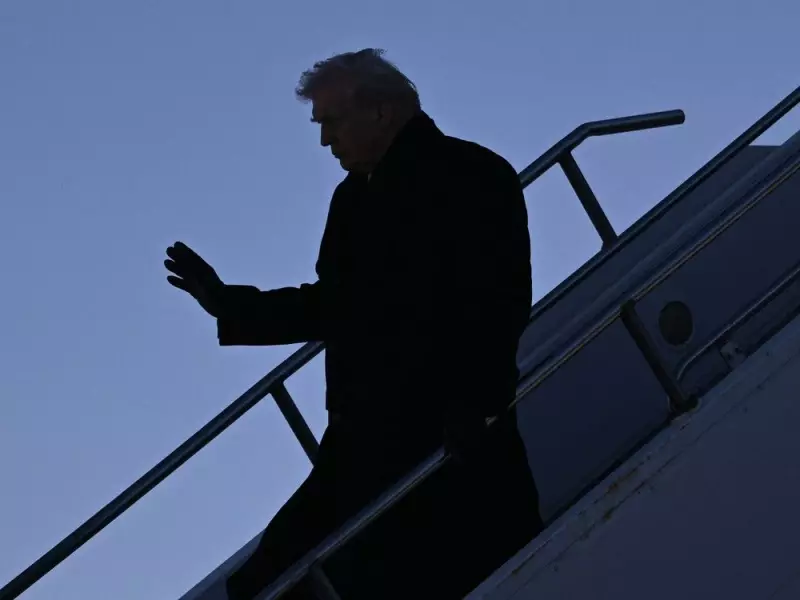
The carefully crafted Davos speech appears to have provoked a strong reaction from the American president. During his own address at the international forum, Trump publicly criticized Carney's approach. The situation escalated over the following weekend when Trump took to social media to issue a stark warning: "Should Canada finalize a deal with China, it will face an immediate 100% tariff on all Canadian goods and products entering the U.S."
This threat represents a significant escalation in trade tensions between the two countries and places the Canada-U.S.-Mexico Agreement (CUSMA) in potential jeopardy. Trump's first administration had previously hailed CUSMA as the "gold standard" of trade agreements, making his current position particularly noteworthy.
Analyzing the Credibility of Trump's Warning
Trade experts are divided on how seriously to take Trump's latest tariff threat. Inu Manak, senior fellow for international trade at the Council on Foreign Relations, suggests that Canada faces a critical decision in determining which threats warrant serious concern and which might represent temporary posturing. "The question for Canada is which threats do you take seriously and which do you sit out," Manak stated, characterizing Trump's reaction as potentially "a bit of a tantrum" in response to Carney's Davos speech rather than a carefully considered policy shift.
From a legal perspective, Trump's options for implementing such drastic tariffs appear limited. The primary mechanism available would be the International Emergency Economic Powers Act, but legal experts anticipate the Supreme Court will rule against this authority in the coming weeks. Thomas Duesterberg, a trade expert and senior fellow at the Washington-based Hudson Institute, confirms this assessment, noting that "any other attempt to impose those sorts of tariffs will have to go through some process that will take time."
The Complex Path to Implementing Tariffs
Duesterberg points to Section 301 of the Trade Act of 1974 as the most likely alternative pathway for Trump to pursue tariffs against Canada. This provision allows the White House to investigate suspected unfair foreign trade practices and respond with tariffs, but the process is neither quick nor simple. "It normally takes nine to 12 months to even bring a case, then do the background study, and take testimony from interested parties, including foreign parties that are affected," Duesterberg explained.

This timeline suggests that even if Trump were serious about implementing the threatened tariffs, the procedural requirements would create significant delays, providing opportunities for diplomatic resolution. The pattern of Trump's previous trade threats—often followed by international concern and eventual de-escalation—adds another layer of complexity to assessing the current situation's seriousness.
Canada's Delicate Balancing Act
For Carney's government, the challenge involves navigating between pursuing independent trade relationships while preserving the vital economic partnership with the United States. The potential imposition of 100 percent tariffs would indeed prove catastrophic for Canadian exports and the broader economy, making the preservation of CUSMA a paramount concern for Canadian officials.
As the situation develops, Canadian trade negotiators must carefully weigh their options, considering both the potential benefits of strengthened ties with China and the risks of provoking their largest trading partner. The coming weeks will reveal whether Trump's threat represents genuine policy direction or political theater, and how Canada will respond to this latest test of its global strategy.





