

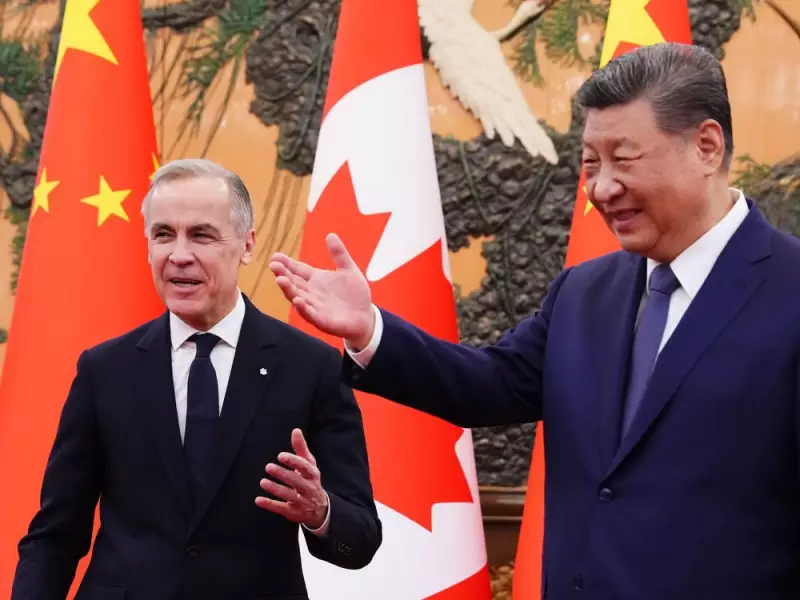
Canada's China EV Deal: Navigating New Trade Realities and Strategic Challenges
In a rapidly shifting global trade landscape, Canada finds itself at a critical juncture with its economic relationship with China. As Prime Minister Mark Carney emphasized recently at Davos, the world of international trade has undergone radical transformation in recent months. With two-thirds of Canada's economy dependent on import and export activities, the nation cannot afford to remain stagnant. Instead, it must actively navigate the complex waters of contemporary trade relations, adapting to new realities while protecting national interests.
The Strategic Imperative of Engagement
Canada is correct to re-engage with the world's second-largest market, but this renewed relationship presents significant dilemmas and questions that demand careful consideration. The country must be willing to adapt its approach, potentially trading somewhat less in traditional values while extracting greater value from the strategic trade-offs that will inevitably be required. This represents a fundamental shift in how Canada approaches international commerce in an increasingly competitive global environment.
Cybersecurity Concerns in Electric Vehicles
One of the most pressing issues in the Canada-China trade relationship centers on electric vehicles. Chinese EVs have been described as roaming surveillance devices, containing hundreds of monitoring components both inside and outside the vehicles. The potential for these systems to be accessed, monitored, compromised, or even weaponized remains largely unknown and represents a significant security concern.

Canada has an opportunity to play a leadership role in developing common North American data standards and cyber safeguards for the EV sector. This recommendation, first proposed in a Senate report back in 2018, has taken on renewed urgency as electric vehicles become increasingly integrated into transportation systems.
Affordability Versus Environmental Standards
The argument for Chinese EVs often centers on affordability, presenting them as cheaper options for eco-conscious consumers. However, this perspective overlooks important factors. These vehicles are broadly subsidized, and their raw materials—including steel and aluminum—are manufactured using some of the world's most carbon-intensive coal-fired production methods.
Meanwhile, Canada's domestic automotive players rank among the greenest globally. To maintain balance and protect domestic industry, the government may need to consider implementing carbon border adjustment mechanisms or tariffs on products that appear cheaper because they don't meet equivalent environmental standards.
Employment Implications and Manufacturing Concerns
The impact on Canadian jobs remains unclear. Will opening the market to Chinese EVs mean primarily finished goods arriving on Canadian shores, or will it involve new entrants into the manufacturing sector under Chinese ownership? If the relationship focuses solely on finished products, Canadian workers in aluminum, steel, and automaking could face deteriorating conditions unless the government introduces new requirements.
Potential measures could include mandating investment in local manufacturing for Chinese companies seeking access to the Canadian market, ensuring that trade relationships benefit domestic employment and industrial development.
Trade Relationships and Continental Considerations
Any closer integration between China and Canada raises legitimate concerns in the United States regarding how rules of origin are applied to parts and materials used in North American products under the Canada-U.S.-Mexico Agreement (CUSMA). Canada must ensure it doesn't become a backdoor for Chinese products entering the U.S. market, potentially jeopardizing the country's most important trade relationship.
Given that the United States remains and will continue to be Canada's largest trading partner, with significant stakes in a shared continental future, Canadian policymakers must carefully consider American concerns while pursuing relationships with other trading partners.

Internal Unity and Strategic Positioning
Underlying these specific concerns lies a broader question: Can Canada succeed in international trade if it remains divided against itself? The country faces challenges of provincial disagreements, regional competition, and sectoral conflicts that can undermine its negotiating position.
International actors understand these divisions. China demonstrates strategic awareness when applying pressure to Canada's agricultural sector during disputes over manufactured goods. Similarly, U.S. Treasury Secretary Scott Bessent's references to separatist sentiment in Alberta reflect an understanding of Canada's internal dynamics.
As Canada navigates these complex trade waters, the nation must develop both leverage and options. The changing global landscape requires adaptive strategies that balance economic opportunity with security concerns, environmental standards with affordability, and international engagement with domestic priorities. The path forward demands careful navigation of competing interests while maintaining focus on long-term strategic positioning in an increasingly competitive world.





