

The Canadian automotive sector finds itself in a precarious position, squeezed by competing pressures from its largest trading partner and a rising global competitor. As former U.S. President Donald Trump reiterates his desire to pull auto manufacturing jobs from Canada to the United States, China is simultaneously executing a strategic plan to flood international markets, including Canada's, with subsidized vehicles.
A Two-Front Challenge for Canadian Auto
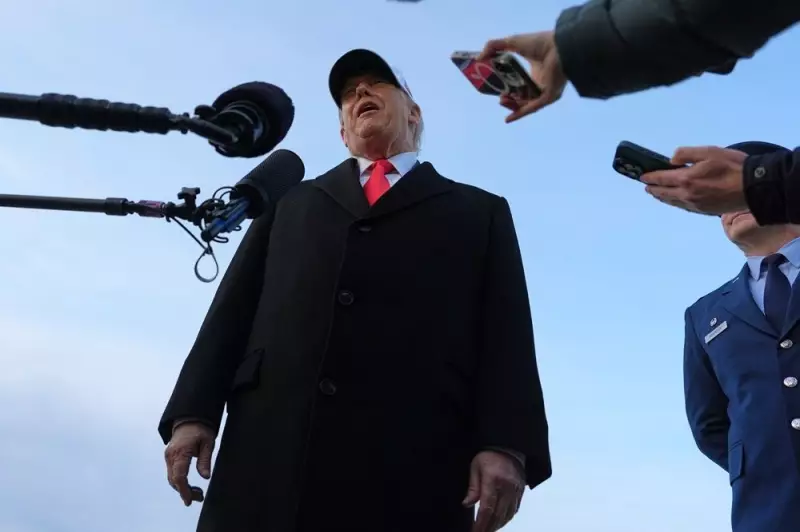
The threat is not hypothetical. On Tuesday, January 13, 2026, while speaking in Detroit, Trump was blunt about his intentions. "I want to build the cars here, not in Canada. We used to build cars in Canada. Now the Canada cars … the Canadians are moving here to build cars," he stated. He further expressed indifference about renewing the Canada-United States-Mexico Agreement (CUSMA), the foundational trade deal for North American industry.
Concurrently, as Bank of Canada Governor Mark Carney engages with Chinese leaders in Beijing, analysts warn that President Xi Jinping's ambitions align, albeit through different tactics, in challenging Canada's automotive foothold. China's strategy isn't limited to competing in the electric vehicle (EV) space; it is a calculated push for total automotive market domination.

China's Rapid Global Ascent in Auto Sales
The scale and speed of China's automotive export strategy are staggering. Just a quarter-century ago, China produced fewer than two million vehicles annually, lagging behind Canada's output of nearly three million. Today, the landscape is inverted. Last year alone, China exported over five million automobiles, and its market share is swelling globally.
Robin J. Brooks, an economist and senior fellow at the Brookings Institute in Washington, D.C., has been tracking this trend. "China is plowing massive resources into becoming a global player in cars," Brooks notes, emphasizing the threat extends beyond EVs to the entire auto market.
The evidence is in the numbers across continents:
- In Europe: Chinese vehicle imports surged from 4% to 14% of all imports in a single year. By the end of 2025, Chinese brands accounted for over 10% of all new car sales in some European markets, a dramatic rise from less than 3% at the start of the year.
- In Brazil: The share of Chinese vehicles in the country's imports exploded from about 10% in 2019 to 36% by October 2025. In Brazil's EV sector, Chinese manufacturers command an astonishing 80% market share.
"This is where the competitive threat for European automakers lies. China is flooding these markets with cars," Brooks wrote. The same pattern poses a direct risk to North American manufacturers, including Canada's.
Divergent Tactics, Convergent Threat
While Trump's approach is overt—directly stating a goal to relocate production and jobs—China's stated rationale is one of offering "quality, affordable vehicles." However, the underlying objective, experts argue, is a form of economic reliance. The endgame is creating dependence on the Chinese automotive industry, dismantling the benefits of the integrated North American supply chain that has sustained Canadian manufacturing for decades.
This dual pressure creates a complex policy dilemma for Canada. On one flank, it must defend the integrity of CUSMA and its integrated production rules against American political pressure. On the other, it must develop a coherent strategy to address the influx of state-subsidized vehicles that could undermine domestic automakers and parts suppliers, without resorting to pure protectionism that might violate trade rules.
The central question, as posed by industry observers, is stark: Will Canada let this happen? The future of one of the nation's most critical industrial sectors may hinge on the response to this two-pronged challenge from both a traditional ally and a strategic competitor.






