

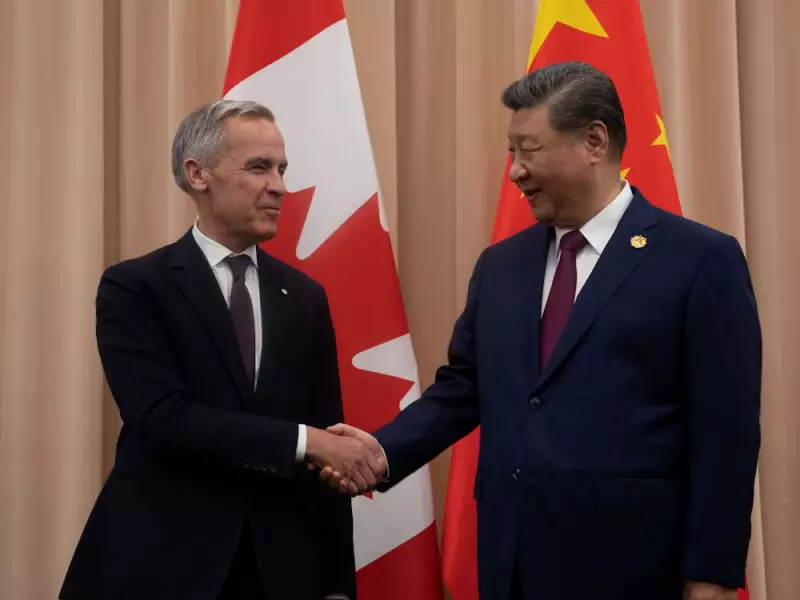
In a significant strategic shift, Canada is actively deepening its economic ties with China, a move framed as a response to aggressive trade policies from the United States. This recalibration of trade priorities comes as Prime Minister Mark Carney engages with Chinese leadership, seeking to reduce Canada's reliance on its southern neighbour.
A Strategic Pivot Amidst American Pressure
The driving force behind this diplomatic outreach is the confrontational trade stance of U.S. President Donald Trump. Canadian officials view closer engagement with the Chinese market as a necessary diversification to escape American economic coercion. However, this strategy carries its own profound risks, as it involves partnering with a global power whose own record of using trade as a political tool is extensive and well-documented.
Beijing has a decades-long history of employing tariffs and import bans to compel political compliance and silence criticism from its trading partners. This pattern of economic statecraft presents a complex dilemma for Ottawa as it navigates between two powerful nations with assertive trade agendas.

China's History of Economic Coercion
The tactics used by China are not theoretical. In 2010, Beijing abruptly halted salmon imports from Norway. This action came shortly after the Nobel Peace Prize was awarded to Chinese dissident Liu Xiaobo. While Chinese authorities cited food safety concerns about Norwegian salmon, the timing directly followed explicit warnings from Beijing about consequences if Liu received the award.
A more recent example unfolded in 2021 against Lithuania. The small European nation faced a comprehensive Chinese embargo on exports including peat, lumber, and alcohol. This retaliation was triggered solely by Lithuania's decision to open a diplomatic office in Taiwan. Once again, the bans were officially justified by suddenly discovered product defects, claims later rejected by European Union investigators.
The Australian Precedent: A Cautionary Tale
Perhaps the most stark warning for Canada comes from China's actions against Australia. In 2020, after then-Prime Minister Scott Morrison called for an independent inquiry into the origins of COVID-19 in Wuhan, Beijing launched a sweeping campaign of economic pressure.
China swiftly imposed bans on Australian beef and barley, citing technical violations. State media then encouraged Chinese consumers to boycott Australian wine and universities. "We are an open-trading nation, mate, but I’m never going to trade our values in response to coercion from wherever it comes," Morrison declared in a radio interview, framing the actions as blatant political coercion.
This was not an isolated incident but part of a long-standing pattern. South Korea has faced similar pressure for years, culminating in a major 2016 trade war. China retaliated against Seoul's deployment of a U.S. missile defense system by organizing consumer boycotts of Hyundai and Kia vehicles, cancelling visas for K-Pop stars, and blocking a range of Korean goods at the border under the guise of safety checks.
Canada's Calculated Gamble
Prime Minister Carney's current outreach to Beijing represents a calculated, high-stakes gamble. The objective is clear: to forge alternative economic pathways and leverage China's massive market to gain bargaining power vis-à-vis the United States. The risks are equally clear: entering a partnership with a nation that has consistently demonstrated a willingness to weaponize trade for political ends.
This pivot forces Canada to walk a delicate tightrope. It must secure economic benefits and diversification while safeguarding its political values and sovereignty against a form of coercion that may be even more systematic and potent than what it seeks to escape. The coming months will reveal whether this strategic realignment can secure Canada's prosperity without compromising its principles.






