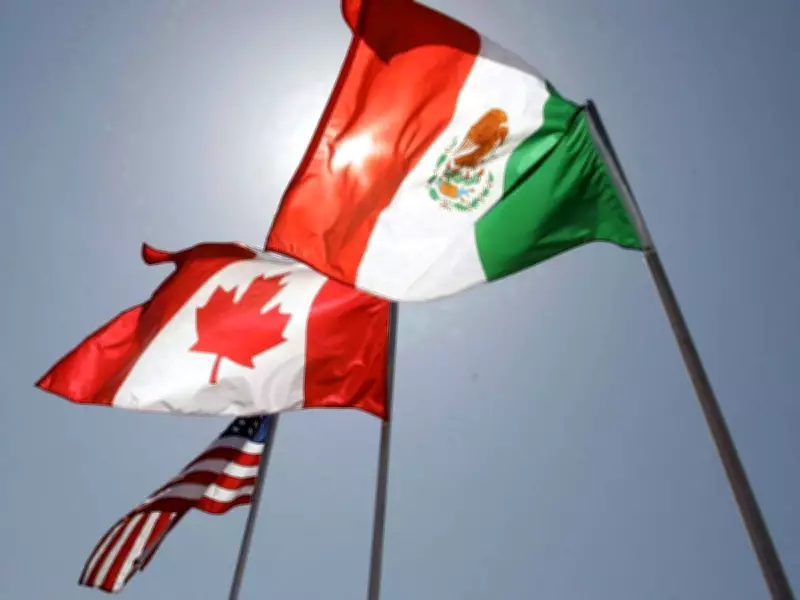
Canada's Strategic Approach to CUSMA Review: Confidence Over Anxiety
As Canada prepares for what could be a challenging review or potential reopening of the Canada-United States-Mexico Agreement (CUSMA), former Deputy Prime Minister John Manley emphasizes the critical importance of projecting confidence rather than desperation. In a detailed analysis, Manley argues that Canada's position in upcoming negotiations must be grounded in calm realism, not anxiety about the trade pact's future.
The Power of Unity and Stability
Manley stresses that Canada's greatest strength in trade negotiations comes from presenting a unified front. "At moments of external pressure, Canada is strongest when it speaks with a single voice," he writes, endorsing the "Team Canada" approach advocated by Prime Minister Justin Trudeau and several premiers. This unity becomes particularly crucial as the United States demonstrates increasing unpredictability in trade policy.
Canada has an opportunity to distinguish itself as a country that means what it says and honours its commitments, Manley notes. This reputation for reliability represents a significant asset that must not be compromised through internal discord or separatist rhetoric from provinces like Alberta or Quebec. Such domestic debates, while potentially appealing to narrow audiences, undermine Canada's international standing as a stable, dependable partner.

Avoiding the Language of Dependence
Manley warns against the reflexive Canadian tendency to declare that the country "must" have CUSMA. This language of dependence plays directly into the hands of transactional negotiators who believe leverage flows from perceived need. The former Liberal cabinet minister argues that such rhetoric is strategically unhelpful and fails to reflect Canada's actual position in North American trade.
The reality, according to Manley, is more balanced. Canada was a successful trading nation long before the Canada-U.S. Free Trade Agreement came into force in 1989, he reminds readers. While trade liberalization has unquestionably benefited Canada, it does not follow that the nation's prosperity hinges on a single agreement—particularly one that the United States has periodically questioned or ignored when convenient.
The Enduring Logic of Canada-U.S. Trade
Manley presents a straightforward economic reality: Americans will continue to buy what they need from Canada regardless of formal agreements. Geography, infrastructure, and market logic ensure that trade in energy, critical minerals, agricultural products, and manufactured goods will persist with or without CUSMA.
The agreement provides valuable structure, predictability, and dispute-resolution mechanisms, but it is not existential to Canada's economic survival. "The world will not reward self-inflicted uncertainty," Manley cautions, emphasizing that Canada must approach negotiations from a position of strength rather than perceived weakness.
Navigating Political Realities
Manley acknowledges that CUSMA negotiations will be shaped as much by politics and perception as by pure economics. In this context, Canada must be careful not to talk itself into a corner or signal desperation to maintain the agreement. Such signals would only strengthen the hand of negotiators who view trade through a purely transactional lens.
The former deputy prime minister concludes that Canada's approach should reflect the nation's historical trading success and current economic strengths. By projecting confidence, maintaining unity, and keeping options open, Canada can navigate the CUSMA review process from a position of strength rather than vulnerability.