

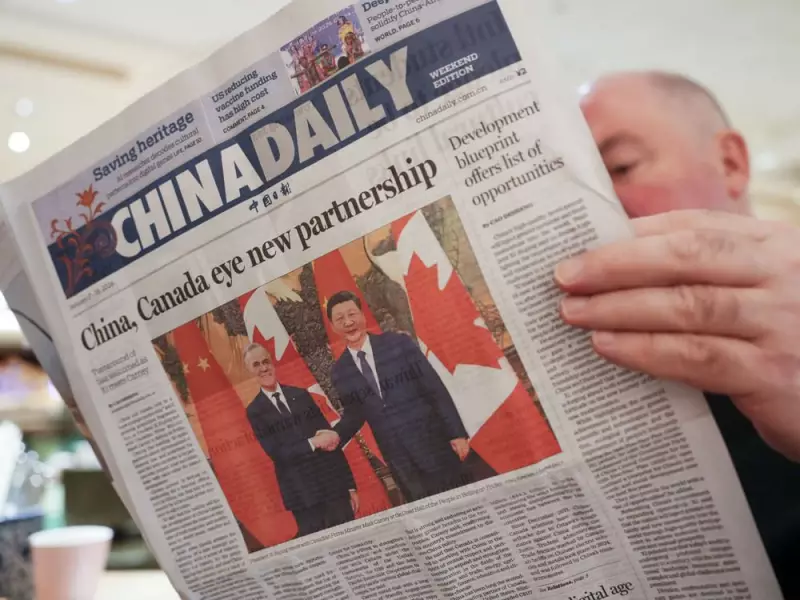
Canada Stands Firm on Trade Diversification Strategy
Canadian Foreign Minister Anita Anand has declared that Canada will not be deterred from its efforts to diversify trade away from the United States, despite recent threats from the Trump administration. This announcement comes as Energy Minister Tim Hodgson prepares for a significant diplomatic mission to India, highlighting Canada's strategic pivot toward expanding international partnerships.
U.S. Tariff Threats and Canadian Response
President Donald Trump recently took to social media to warn that he would impose a 100 percent tariff on all Canadian goods if Canada becomes a "drop off port" for Chinese exports to the United States. This threat was a direct response to Canada's recent agreement with China, which reduces tariffs on Chinese electric vehicles in exchange for trade concessions on agricultural products like canola and beef.
Minister Anand emphasized in an interview with the Canadian Broadcasting Corporation that Canada is not negotiating a comprehensive free trade deal with China. However, she stressed that the country must continue its strategy to double non-U.S. exports within the next decade. "We need to protect and empower the Canadian economy and trade diversification is fundamental to that," Anand stated. "That is why we went to China, that's why we will be going to India and that is why we won't put all our eggs in one basket."

Energy Minister's Mission to India
Energy Minister Tim Hodgson is scheduled to travel to Goa in western India, where he will participate in an energy conference and hold meetings with Indian industry officials and members of Prime Minister Narendra Modi's government. The discussions are expected to focus on potential cooperation and deals involving critical minerals, uranium, and liquefied natural gas—resources that Canada possesses in abundance.
Prime Minister Mark Carney is also planning visits to India and Australia in the coming months, further underscoring Canada's commitment to strengthening trade relationships beyond North America.
The U.S.-Canada Trade Relationship
Despite the current tensions, Minister Anand highlighted that Canada and the United States maintain a strong bilateral relationship that she expects will continue. The economic ties between the two nations remain substantial, with the U.S. exporting approximately US$280 billion worth of goods to Canada in the first ten months of last year—more than to any other country—while importing US$322 billion from Canada during the same period, according to U.S. Commerce Department data.
The automotive industries of both countries are particularly interconnected, which explains why Canada's limited agreement with China—allowing just 49,000 Chinese electric vehicles annually—has raised concerns in the United States. U.S. Treasury Secretary Scott Bessent commented on this integration, noting, "We have a highly integrated market with Canada. The goods can cross across the border during the manufacturing process six times. And we can't let Canada become an opening that the Chinese pour their cheap goods into the U.S."
Broader Implications and Future Outlook
The Chinese Foreign Ministry has responded to the developments by stating that Beijing and Ottawa have "established a new type of strategic partnership, and made some specific arrangements on properly handling the economic and trade issues between the two countries." Meanwhile, U.S. officials have warned that China could face additional penalties, including tariffs, if any agreements extend beyond what has already been announced.
As Canada forges ahead with its trade diversification strategy, the balancing act between maintaining robust ties with the United States and exploring new economic opportunities with partners like India and China will be crucial for the nation's economic resilience and growth in the coming years.






