

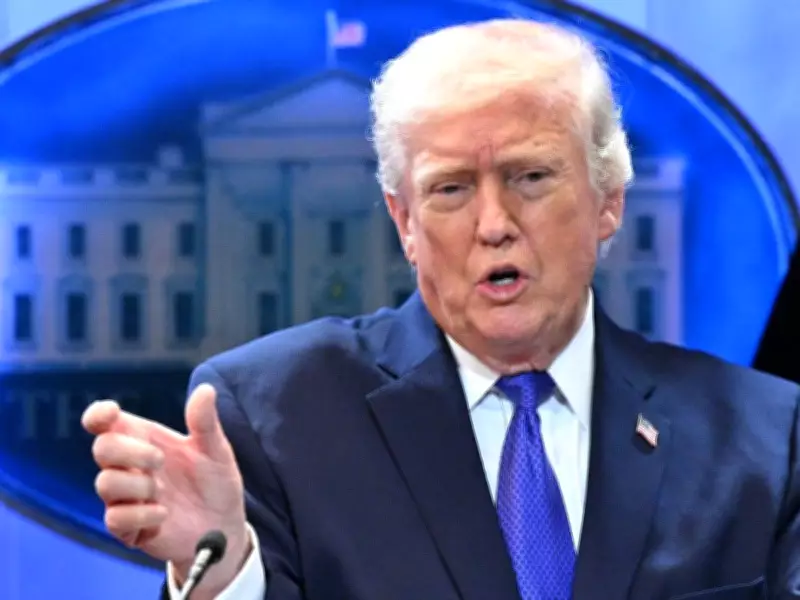
Canada Exempt from Trump's Global Tariffs, Yet Trade Tensions Persist
The U.S. Supreme Court's recent decision to invalidate numerous tariffs imposed by former President Donald Trump has provided a measure of relief to Canada and Mexico. However, substantial risks continue to threaten the trade relationships that bind the three North American nations together.
Tariff Exemptions and Ongoing Threats
Following the Supreme Court ruling, the White House clarified that Canada and Mexico would maintain their exemption from a new 10 percent levy on foreign goods under the U.S.-Mexico-Canada Agreement (USMCA). This exemption means the effective tariff rates for Canadian and Mexican products will decrease significantly. Previously, goods not qualifying for USMCA protection faced taxes of 35 percent from Canada and 25 percent from Mexico.
Despite this exemption, punishing tariffs remain in place on critical categories including steel, aluminum, automobiles, and other industrial sectors. The president's frustration with the court's decision raises concerns that he may attempt to radically alter or even dismantle the USMCA agreement entirely in pursuit of desired tariff revenues.

Presidential Response and Escalating Measures
President Trump announced on social media that the global tariff would be increased to 15 percent, though the White House and U.S. Trade Representative's office have not provided immediate commentary on this development. The new tariff order is scheduled to take effect on February 24, coinciding with Trump's State of the Union address to Congress.
U.S. Trade Representative Jamieson Greer emphasized that the administration seeks "continuity" with the new tariff order while maintaining existing exemptions. The USMCA carve-out allows the United States to continue importing oil and other resources from Canada and Mexico without tariffs, while avoiding greater disruption in the trade of essential manufacturing inputs such as automotive parts.
International Reactions and Strategic Concerns
Both Canadian and Mexican officials responded cautiously to the Supreme Court's decision. Canadian Minister for U.S. Trade Dominic LeBlanc stated that the ruling reinforced Canada's position that tariffs under the U.S. International Emergency Economic Powers Act were "unjustified," though Ottawa provided limited additional commentary.
Mexican Economy Minister Marcelo Ebrard announced plans to contact counterparts in Washington and travel to the United States to address ongoing trade concerns. Officials from both nations recognize that even with the IEEPA pathway closed, the Trump administration may employ alternative tactics to gain economic advantages.
Expert Analysis and Future Implications
Trade lawyer Barry Appleton, who has advised governments including the Canadian provinces of Ontario and British Columbia, observed that "the president didn't lose his leverage, he just lost a lever." Appleton warned that "we're going to see weaponizations of a variety of different tools that were never, ever conceived of in that way, utilized in that fashion, because the president does not want to go to Congress."
The recent developments underscore the continued value of the tripartite trade agreement signed during Trump's first term, while simultaneously highlighting the persistent volatility in North American trade relations. As the February 24 implementation date approaches, businesses and governments across the continent remain vigilant about potential economic disruptions and policy shifts that could reshape cross-border commerce.






