

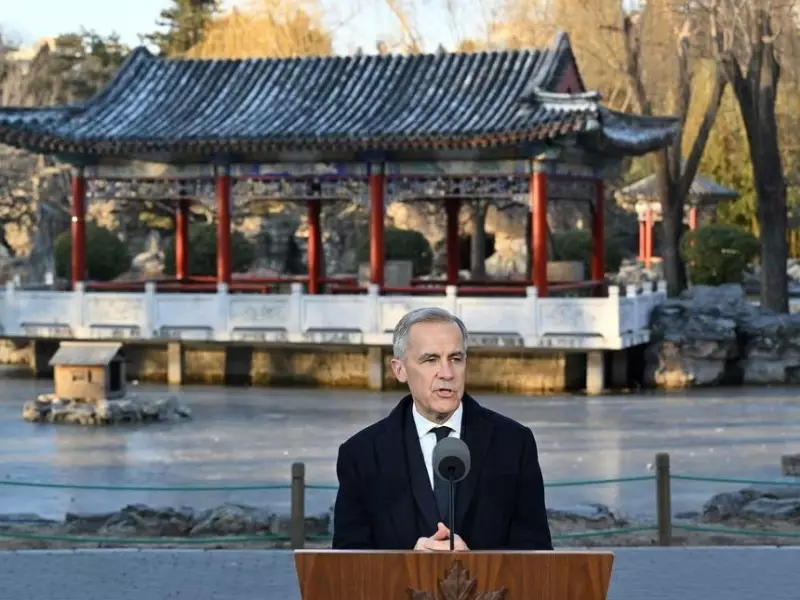
A significant thaw in Canada's protracted trade dispute with China was confirmed this week, marking a pragmatic shift in Ottawa's approach to global commerce and a crucial win for the nation's agricultural sector.
A Long-Standing Feud Finally Ends
The rupture in trade relations began in 2018 with the arrest of Huawei executive Meng Wanzhou in Vancouver. In the years that followed, China imposed punitive measures that specifically targeted Canadian agricultural exports. Key industries, including canola, pork, and lobster, faced steep tariffs and informal barriers, causing economic pain across rural Canada.
This week's announcement, stemming from Prime Minister Mark Carney's meetings in Beijing on January 16, 2026, effectively ends that standoff. The core of the new agreement sees China reducing tariffs on Canadian rapeseed to 15% and suspending duties on canola, lobster, and other products. In a reciprocal move, Canada will permit the importation of 49,000 Chinese electric vehicles at a reduced tariff rate of 6%. These changes are scheduled to take effect on March 1, 2026.

Pragmatism Over Ideology in a Shifting World
Analysts view this deal not as a perfect solution, but as a necessary and functional one. It represents a clear choice of economic reality over political ideology. For years, Canadian farmers absorbed the brunt of geopolitical tensions while the federal government pursued other industrial strategies, such as building a domestic electric vehicle supply chain.
Prime Minister Carney's recent comments about a "new world order" are seen as a direct acknowledgment of growing uncertainty with Canada's largest trading partner. The agreement signals that Ottawa is actively preparing for a scenario where the Canada-United States-Mexico Agreement (CUSMA) could become unstable or collapse, especially under a potential second Trump administration that views trade deals as transactional.
"This was not about choosing China over the U.S.," explains Dr. Sylvain Charlebois, Director of the Agri-Food Analytics Lab at Dalhousie University. "It was about choosing reality over ideology." The deal acknowledges that while EV manufacturing is a future ambition, agriculture is a present-day economic engine supporting tens of thousands of jobs that cannot wait indefinitely for market access.
Consequences and Calculated Risks
The decision to allow a quota of Chinese EVs has drawn criticism, particularly in Ontario, where it is seen as undermining protective tariffs enacted in 2024. However, the federal calculus appears to weigh immediate, tangible benefits for an existing industry against the slower development of a new one. The recent decision by automaker Stellantis to concentrate future investments in the U.S. further underscored the fragility of Canada's EV industrial dreams.
This agreement does not ignore the complex nature of the Canada-China relationship, which includes legitimate concerns over human rights and foreign interference. Instead, it frames the move as essential risk management in an increasingly unpredictable global trade environment. Ottawa is betting that securing diverse market access for foundational industries like agriculture is a responsible strategic move, even if it displeases Washington.
The deal ultimately highlights Canada's vulnerability due to over-reliance on a single trade partner. By mending fences with Beijing, Ottawa has provided a critical lifeline to its agri-food sector while acknowledging that in today's fractured global economy, pragmatic adaptability may be the most valuable policy of all.






