B.C. Appeal Court Overturns ICBC Denial in Hit-and-Run Case
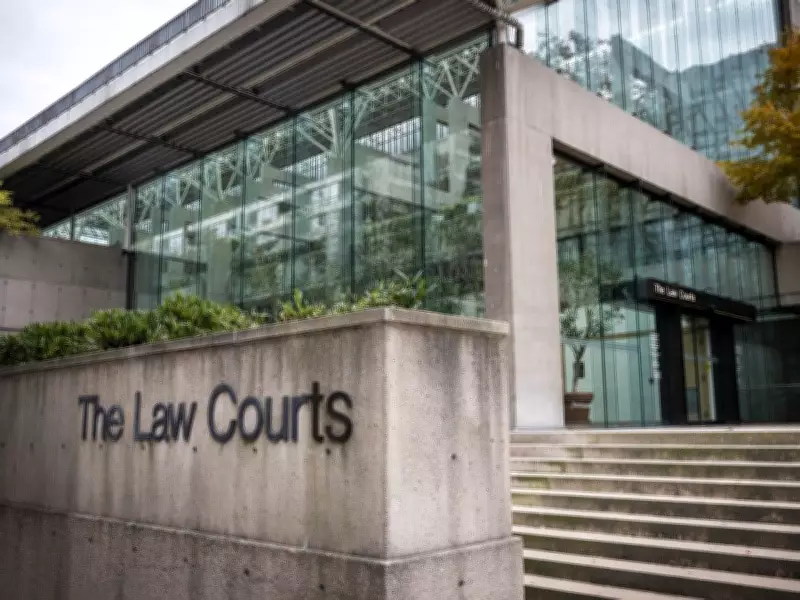
In a significant legal reversal, the British Columbia Court of Appeal has ordered the Insurance Corporation of British Columbia (ICBC) to accept a lawsuit from three individuals injured in a hit-and-run accident. The decision overturns a lower court ruling that had dismissed their claim for damages, marking a pivotal moment in insurance law interpretation.
The Accident and Initial Denial
The case stems from a traumatic incident that occurred in Burnaby on February 3, 2019, at approximately 4 a.m. A stolen truck ran a stop sign and T-boned a car carrying driver Larissa Fearon, her brother Duwayne Fearon, and passenger Shawayne Powell. The perpetrator fled the scene and was never located by the Royal Canadian Mounted Police (RCMP), despite an extensive criminal investigation.
Following the accident, all three occupants were transported by ambulance to hospital for treatment. During police interviews at the hospital, officers informed them that their only responsibility was to report the incident to ICBC, which they promptly did. The police assured them they would be contacted if additional information was needed for the criminal investigation, but no further communication occurred.

ICBC's Argument and Lower Court Ruling
ICBC successfully argued in the B.C. Supreme Court that the claimants were not insured for damages because they failed to make "all reasonable efforts" to identify the driver, as required under British Columbia's Insurance Act. This legislation mandates that hit-and-run victims must exhaust all reasonable avenues to locate the at-fault driver before pursuing ICBC for compensation when the driver cannot be found.
In his 2024 ruling, Justice David Crerar expressed regret but concluded that the injured parties had not met this legal threshold. He noted that they took no investigative steps to find the driver and waited a full year before posting signs requesting witnesses, which he deemed an unreasonable delay. Justice Crerar suggested that immediate action might have prompted the stolen truck's owner or neighbors to recall seeing the vehicle, or possibly encouraged family members of the fugitive driver to come forward if they remembered him behaving strangely after the incident.
Appeal Court's Groundbreaking Decision
The three-judge Appeal Court panel, with Justice Christopher Grauer writing the decision, found that Justice Crerar had erred fundamentally in his interpretation of the "all reasonable efforts" requirement. Justice Grauer ruled that the lower court had imposed an unreasonable burden on the injured parties by expecting them to undertake investigative steps that "would almost certainly have been futile."
"The court cannot require claimants to accomplish on their own what the police could not achieve despite conducting an extensive criminal investigation," Justice Grauer emphasized in the decision. The Appeal Court recognized that the injured individuals had followed precisely the guidance provided by both law enforcement and ICBC itself, reporting the accident as instructed without receiving any subsequent direction about additional steps.
Broader Implications for Insurance Claims
This ruling establishes an important precedent regarding the responsibilities of accident victims in hit-and-run cases. While previous claims have been dismissed when claimants merely reported incidents to police and ICBC "without more," this decision clarifies that victims cannot be expected to conduct investigations that duplicate or exceed professional law enforcement efforts.
The case has been sent back to the B.C. Supreme Court for reconsideration in light of the Appeal Court's findings. Legal experts anticipate this decision will influence how ICBC handles similar claims in the future, potentially making it more difficult for the corporation to deny coverage based on victims' perceived investigative shortcomings when police investigations have already proven unsuccessful.
The ruling arrives amid ongoing public scrutiny of ICBC's claims handling practices and British Columbia's insurance framework, highlighting the delicate balance between preventing fraudulent claims and ensuring legitimate victims receive fair compensation for their injuries and losses.