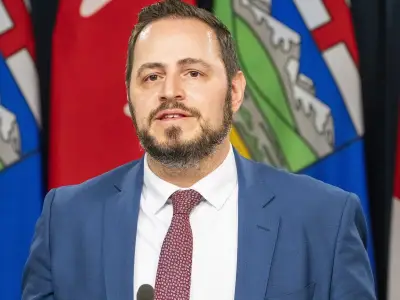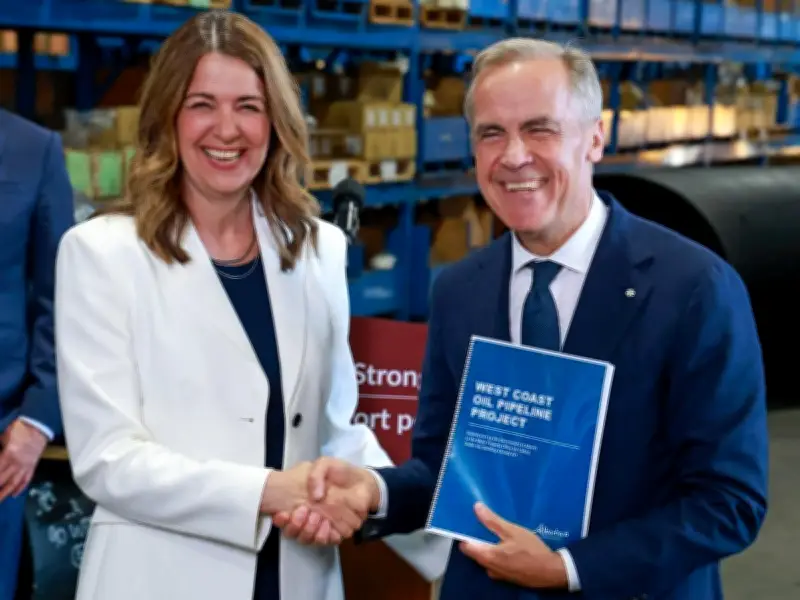
Alberta Premier Danielle Smith submitted the West Coast Pipeline Project to Prime Minister Mark Carney on Thursday, July 2, 2026, at Trans Am Piping Products in Calgary. The submission marks a significant step forward for a second bitumen pipeline from Alberta to the West Coast, though the proposal remains preliminary with many details unresolved.
Project Details and Cost Estimates
The submission lacks detailed cost estimates for what would be one of the most expensive capital projects in Canadian history. Construction costs are estimated at upwards of $35 billion, with no private investors yet committed. Pembina Pipeline Corporation has signed on to manage construction, while Trans Mountain Corp. and the Alberta Petroleum Marketing Commission—both Crown entities—are involved in oversight.
Additionally, oilsands companies have not yet signed onto the Pathways carbon capture and storage scheme, a mandatory prerequisite from Ottawa. That initiative could cost an additional $20 billion to $30 billion. RBC Capital Markets has provided a preliminary cost estimate per barrel per day, comparable to Trans Mountain, but this does not include side projects like Pathways.

Federal Support Announced
Prime Minister Carney announced $17 billion in federal assistance for infrastructure construction in British Columbia, little of it directly related to the pipeline. Notably, Carney agreed to contribute $3 billion to complete the $4.2-billion George Massey Tunnel replacement—an eight-lane tunnel under the Fraser River between Richmond and Delta, replacing a 67-year-old, four-lane tunnel.
According to the article, Carney has been more receptive and offered more concrete help than the author anticipated. Smith has moved the project along farther than predicted, though the author remains skeptical due to the lack of private investment and unresolved Indigenous participation.
Indigenous and Environmental Considerations
The proposed route has been changed from B.C.'s north coast to use the existing Trans Mountain right-of-way, reducing potential objections from First Nations. However, guarantees of jobs for Indigenous workers and annual payments to First Nations across whose territory the line will cross are still needed, representing costs not yet factored in.
No First Nations have yet agreed to become equity partners. The article notes that while the route change reduces objections, additional costs for Indigenous engagement remain uncalculated.
Outlook and Skepticism
The author, Lorne Gunter, who has long been cynical about a second bitumen pipeline, now moves from cynic to skeptic. He acknowledges progress but highlights significant hurdles: no private investors, no oilsands company sign-on for carbon capture, and no First Nations equity partners. The cost overruns of Trans Mountain—which cost taxpayers at least $30 billion, triple original projections—serve as a cautionary tale.
Despite these challenges, the submission and federal support represent the most concrete steps yet toward the West Coast Pipeline Project.