In a significant legal challenge to U.S. energy policy, Dominion Energy Virginia has taken the federal government to court. The utility giant is seeking an immediate block against an administrative order that suddenly halted construction on its major offshore wind project and four others along the Eastern Seaboard.
Lawsuit Targets "Arbitrary and Capricious" Federal Order
Dominion Energy filed its lawsuit in a U.S. district court late on Tuesday, December 9, 2025. The company argues that the order from the Interior Department's Bureau of Ocean Energy Management (BOEM) is "arbitrary and capricious" and unconstitutional. The order, issued on Monday, stopped all work on five wind projects citing unspecified national security concerns.
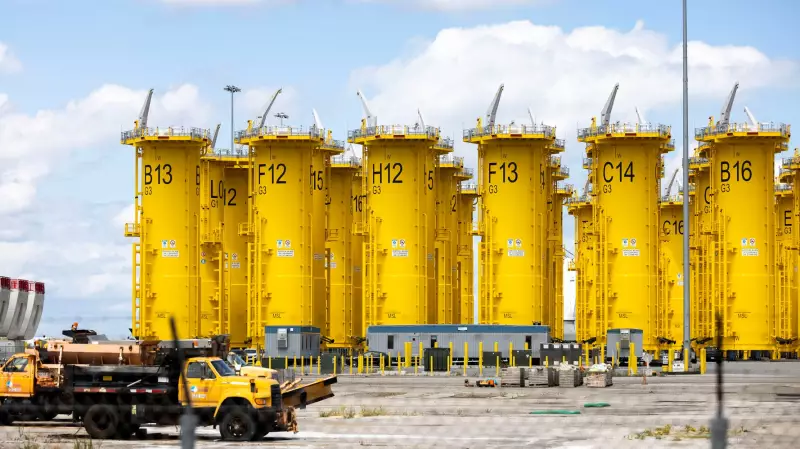
The Richmond-based company is developing the Coastal Virginia Offshore Wind (CVOW) project. Dominion states this project is critical for meeting surging electricity demands, largely driven by the proliferation of new data centers in the region. The lawsuit represents a direct confrontation with the Trump administration's efforts to slow the expansion of renewable energy sources.

Widespread Impact and Mounting Financial Losses
The federal halt affects a significant portion of the U.S. offshore wind pipeline. The other projects impacted include:
- Vineyard Wind in Massachusetts
- Revolution Wind serving Rhode Island and Connecticut
- Sunrise Wind and Empire Wind in New York
Democratic governors in the affected states have pledged to fight the order. For Dominion, the stakes are immediate and financial. Construction on the CVOW project began in early 2024, with operations scheduled to start early next year. Once complete, it will generate enough power for approximately 660,000 homes.
The company revealed the stoppage is causing staggering losses. Dominion is losing more than $5 million per day just for the idled specialized construction vessels operating around the clock. The lawsuit warns that these costs will ultimately be borne by electricity customers or the company itself.
Unclear Security Concerns and Pending Court Decision
The Interior Department has not publicly detailed the specific national security threats prompting the 90-day (or longer) review period. In a letter to developers, BOEM stated it needs time "to determine whether the national security threats posed by this project can be adequately mitigated."
Dominion's legal filing criticizes the move as "the latest in a series of irrational agency actions attacking offshore wind." The Bureau of Ocean Energy Management did not immediately respond to requests for comment on the lawsuit.
The legal process is moving quickly. U.S. District Judge Jamar Walker has scheduled a hearing for 2 p.m. on Monday, December 15, to consider Dominion's request for a temporary restraining order that would allow construction to resume immediately. The outcome will have profound implications for the future of offshore wind energy and the Biden administration's clean power goals in the United States.