Venezuelan Oil Expatriates in Canada Face Uncertainty as U.S. Pushes for Venezuela's Oil Revival
In the spring of 2006, Arnoldo Soto's life changed irrevocably when soldiers marched into Chevron Corp.'s offices in western Venezuela. They handed the young engineer an empty box and ordered him to pack his belongings. This occurred during Hugo Chávez's government's seizure of Venezuela's oil fields, which forced foreign companies into joint ventures with the state oil company or faced outright expropriation. A purge followed, with employees deemed disloyal fired en masse.
Soto knew his name was on a list of political dissidents and employees with "unsuitable" views. Escorted through the lobby past rows of national guards while insults were hurled at him, he recalled, "The idea was to put shame on you." This blacklisting meant he would never work as an engineer in Venezuela again, prompting him and his wife to leave. In early 2007, just months after their daughter was born, they moved to Calgary with only $100 to their name, leaving behind their home, friends, family, and history to start from zero.
A New Life in Canada's Oilpatch
Now, almost two decades later, another geopolitical shift threatens to alter global oil markets with far-reaching implications for Canada. The shocking ouster of Chávez's successor, Nicolás Maduro, in a nighttime raid by U.S. forces has signaled Washington's intent to bring more Venezuelan crude back onto world markets. Venezuelans like Soto, who fled Chávez's regime and rebuilt their lives in Canada's oilpatch, are watching anxiously. They worry about what this could mean for both the country they left behind and the one they now call home.

In the mid-2000s, the timing of Venezuela's crisis coincided with unprecedented growth in Canada's oilsands, fueled by a multi-year bull run in oil prices. Canadian energy companies were scrambling for skilled workers, and Venezuelan professionals, often dispossessed, found opportunities in Alberta. Despite unfamiliar climate and culture, the oil was not foreign; Venezuela's heavy crude closely resembles the thick, high-density oil from Alberta's oilsands, both requiring blending with diluent for pipeline transport.
Soto, a mechanical engineer with a decade of experience, initially worked under supervision in Canada but found his expertise translated well to projects at companies like Encana Corp. (now Ovintiv Inc.) and TransCanada Corp. (TC Energy Corp.). After three years, he gained professional engineering status in Alberta, making sacrifices to save for his daughter's education and activities. "For her, it was a normal life," he said. "For us, it was a luxury."
Venezuela's Decline and Canada's Surge
While Venezuelans rebuilt their careers in Alberta, Canada's oil production surged, more than doubling from 2.1 million barrels per day in 2000 to about 5.2 million barrels per day in early 2025, driven by oilsands growth. Conversely, Venezuela's oil industry declined steeply under Chavista governance, with production falling from roughly 3.5 million barrels per day in the late 1990s to under one million today due to nationalization, corruption, and the exodus of experienced professionals.
As Venezuelan supplies dwindled, U.S. Gulf Coast refiners, configured for heavy, sour crude, turned north, allowing Canada to capture market share. U.S. sanctions in 2019 further hammered Venezuela's exports, forcing sales at steep discounts to China. This pattern seemed set to continue until recent U.S. intervention.
Geopolitical Shifts and Concerns
For Leonardo, an industrial engineer from Punto Fijo now working at Canadian Natural Resources Ltd., the first sign of change came in early January 2026 with messages about explosions and helicopters in Caracas. He saw images of a handcuffed Maduro in U.S. custody, initially disbelieving it after 26 years under Chávez and Maduro. His family exchanged messages of excitement and relief, but doubts soon emerged when Donald Trump announced a deal with Venezuela's vice-president.

What became apparent was that despite Maduro's removal, key figures from his inner circle, like acting president Delcy Rodríguez, remained in control, leading some to describe it as "decapitation without regime change." For expatriates, initial relief has given way to confusion and alarm, fearing U.S. officials may work too closely with Maduro loyalists, stalling democratic transition. Soto emphasized, "Whoever was part of the old regime cannot be part of the new Venezuela. We cannot go back. That would be a mistake. That would be suicide."
Implications for Canada's Oil Sector
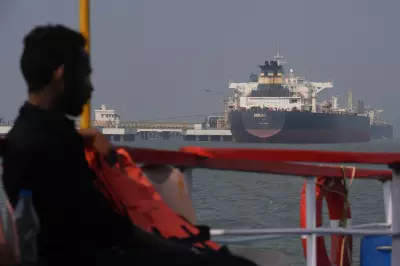
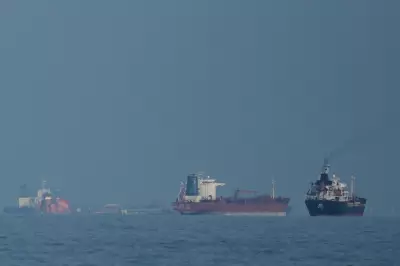
Washington's focus on Venezuela's oil is central, with the U.S. seizing tankers, negotiating supply deals, and declaring intent to control oil sales. Trump has called for U.S. companies to invest $100 billion to repair Venezuela's dilapidated infrastructure, but analysts warn of high costs and risks. Executives from major oil companies have tempered expectations, citing volatile security and unresolved debts.
If Venezuela increases production, it could challenge Canada's margins in the U.S. Gulf Coast. Bob McNally, president of Rapidan Energy Advisors, noted, "No question. It'll challenge Canada's margins in the Gulf." Markets have reacted, with Canadian oil stocks falling and heavy crude losing ground against U.S. prices post-intervention. TD Economics warned that relaxed U.S. sanctions could weaken Canadian heavy oil prices by up to $3 a barrel, partly reversing gains from the Trans Mountain pipeline expansion.
Adam Waterous of Strathcona Resources Ltd. likened it to "a massive earthquake off the coast of Venezuela. The tidal wave takes time to reach Canada, but make no mistake, it's coming." This has sharpened Canada's awareness of vulnerabilities, adding urgency to diversify trade, including pipeline and LNG projects, and re-engage China, as seen in recent bilateral meetings.
Looking Ahead
Nearly two decades after leaving Venezuela, Soto believes his gamble on Canada was worth it, but he worries about the country's division at a critical juncture. "Canada is fragile, which is concerning," he said, emphasizing the need for strategic resource development. He fears U.S. intervention will prioritize Venezuelan oil, given Gulf Coast refineries' historical design for it, warning, "This isn't an anaconda that bites you today. It bites you tomorrow."
As Venezuelan expatriates in Canada navigate this uncertainty, their stories highlight the interconnectedness of global energy markets and the personal toll of geopolitical shifts, with implications for both their homeland and adopted country.