Venezuela Enacts Historic Law to Privatize Oil Sector, Reversing Socialist Legacy
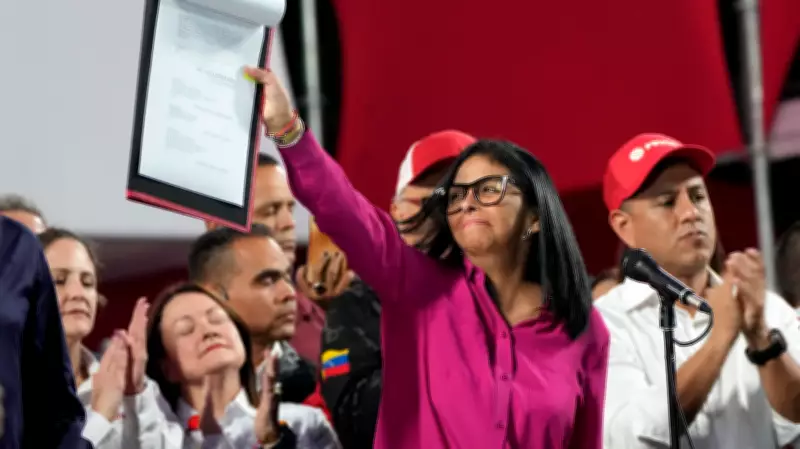
In a landmark move that signals a dramatic shift in economic policy, Venezuela's acting President Delcy Rodríguez signed a law on Thursday to open the nation's oil sector to privatization. This decision overturns a core tenet of the self-proclaimed socialist movement that has governed the country for over two decades, marking a pivotal moment in its turbulent history.
Legislative Approval and U.S. Sanctions Relief
Lawmakers in Venezuela's National Assembly approved the overhaul of the energy industry law earlier in the day, less than a month after the brazen seizure of then-President Nicolás Maduro in a U.S. military attack in the capital city of Caracas. As the bill was being passed, the U.S. Treasury Department officially began to ease sanctions on Venezuelan oil that had previously crippled the industry. This move expands the ability of U.S. energy companies to operate in the South American nation, following plans outlined by Secretary of State Marco Rubio the day before.
The simultaneous actions by both governments on Thursday are paving the way for a radical geopolitical and economic transformation in Venezuela. "We're talking about the future. We are talking about the country that we are going to give to our children," Rodríguez stated, emphasizing the long-term vision behind these changes.

Key Provisions of the New Legislation
The legislation promises to grant private companies control over the production and sale of oil and allows for independent arbitration of disputes. Rodríguez's government anticipates that these changes will provide assurances for major U.S. oil companies that have hesitated to return to the volatile country. Many of these firms lost investments when the ruling party enacted the existing law two decades ago, which favored Venezuela's state-run oil company, Petróleos de Venezuela SA (PDVSA).
Key modifications in the revised law include:
- Setting a royalty cap rate of 30% for extraction taxes, with the executive branch empowered to adjust percentages per project based on capital investment needs, competitiveness, and other factors.
- Removing the mandate for disputes to be settled exclusively in Venezuelan courts, which are controlled by the ruling party. Foreign investors have long viewed independent courts as crucial to protect against future expropriation.
Economic Impact and Political Reactions
Ruling-party lawmaker Orlando Camacho, head of the assembly's oil committee, declared that the reform "will change the country's economy." Meanwhile, opposition lawmaker Antonio Ecarri urged the assembly to incorporate transparency and accountability provisions into the law, such as creating a website to publicize funding and other information. He argued that the current lack of oversight has fostered systemic corruption and that these provisions could serve as judicial guarantees sought by foreign investors. "Let the light shine on in the oil industry," Ecarri remarked.
Some oil workers, dressed in red jumpsuits and hard hats, celebrated the bill's approval, waving Venezuelan flags inside the legislative palace and joining lawmakers in demonstrations with ruling-party supporters.
Historical Context and Economic Crisis
The law was last altered two decades ago under the late Hugo Chávez, Maduro's mentor and predecessor, who made heavy state control over the oil industry a pillar of his socialist-inspired revolution. During the early years of his tenure, a massive windfall from record-high global oil prices transformed PDVSA into the primary source of government revenue and the backbone of Venezuela's economy.
Chávez's 2006 changes to the hydrocarbons law required PDVSA to be the principal stakeholder in all major oil projects. By tearing up contracts signed with foreign companies in the 1990s, Chávez nationalized significant assets belonging to American and other Western firms that refused to comply, including ExxonMobil and ConocoPhillips, which are still awaiting billions of dollars in arbitration awards.

From those days of lavish state spending, PDVSA's fortunes declined alongside the country's as oil prices dropped and government mismanagement eroded profits and hurt production, first under Chávez and then Maduro. Venezuela, home to the world's largest proven crude reserves, experienced a dire economic crisis that drove over 7 million Venezuelans to flee since 2014. Sanctions imposed by successive U.S. administrations further crippled the oil industry, setting the stage for this recent policy reversal.