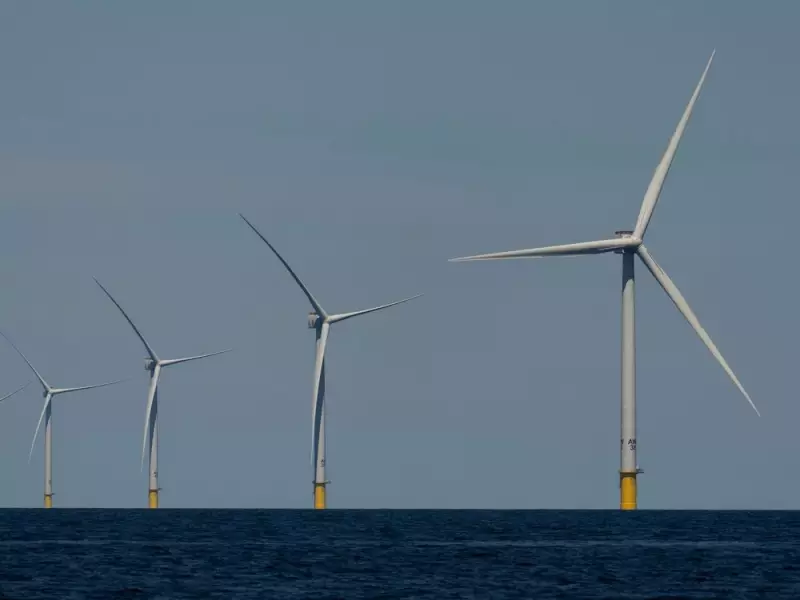
In a significant setback for the renewable energy sector, the United States government has suspended leases for all five major offshore wind farms currently under construction along the East Coast. The decision, announced on Monday, December 22, 2025, by the U.S. Interior Department, cites unresolved national security concerns, specifically the potential for massive wind turbines to interfere with military radar systems.
Security Concerns Halt Major Projects
The suspension order represents the latest in a series of challenges for the nascent U.S. offshore wind industry, which has been repeatedly targeted by the Trump administration. The affected projects include Vineyard Wind 1 off Massachusetts, Revolution Wind off Rhode Island, Coastal Virginia Offshore Wind, and the Empire Wind 1 and Sunrise Wind projects off New York.
Interior Secretary Doug Burgum emphasized the scale of the issue in an interview, stating, "These towers are gargantuan. One can understand how they would create issues for radar." The department's official statement explained that the movement of turbine blades and the reflective nature of the towers create radar interference known as "clutter," prompting the need for a pause to work with developers on mitigation strategies.

Market Reaction and Industry Skepticism
The announcement triggered an immediate sell-off in related stocks. Shares of Danish developer Orsted A/S, a co-developer of Revolution Wind, plunged by 13%. Turbine maker Vestas Wind Systems A/S and utility Dominion Energy, leading the Virginia project, both fell as much as 5.8%.
Analysts expressed skepticism about the timing and rationale behind the decision. Pavel Molchanov, an analyst at Raymond James, noted that the effect of offshore wind on radar has been a known issue for years. "I’m skeptical that there is any new information about the military concerns all of a sudden that singlehandedly warrants projects being halted," Molchanov said. "We know the administration is not a fan of offshore wind, to put it mildly."
This move follows a recent federal court ruling that found President Trump's earlier, broader ban on new wind projects to be illegal. The current suspension, framed under national security, raises the question of whether this justification will prove more durable in facing legal challenges.
Developers Respond and Warn of Consequences
Dominion Energy confirmed it received a 90-day suspension order for its Coastal Virginia project. The company warned that the halt "will threaten grid reliability for some of the nation’s most important war fighting, AI, and civilian assets." Other developers, including Equinor, said they were evaluating the order and seeking clarification from the government.
It is important to note that national security concerns around offshore wind are not new. The Defense Department under the previous Biden administration also pushed for and secured changes to proposed lease sales off the West Coast to address similar radar and operational issues.
While the administration states the suspension is to enable risk mitigation, analysts from Jefferies offered a sliver of hope, suggesting in a research note that "the language used by the administration and prior experience on stop orders should bring some optimism projects could restart quickly." For now, the future of these multi-billion-dollar clean energy projects hangs in the balance, awaiting further government review and potential legal battles.