Iran Conflict Tests Trump's Oil Market Pain Threshold Amid Policy Swings
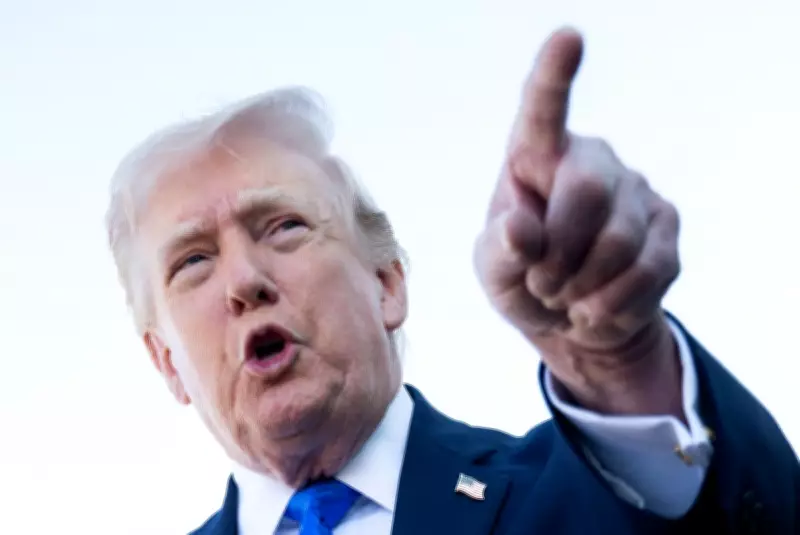
Investors are actively searching for the precise "pain point" that triggers President Donald Trump's policy reversals concerning the ongoing war in Iran, as the U.S. leader's social media activity continues to provoke significant turbulence in global oil markets. This pattern of behavior highlights the administration's delicate balancing act between geopolitical objectives and domestic economic concerns.
Weekend Threats and Market Manipulation
Since initiating military engagement in the Middle East, President Trump has demonstrated a consistent pattern of escalating rhetoric against the Iranian regime during weekends when oil markets remain closed, while simultaneously suggesting potential peace overtures when crude prices experience upward pressure. This strategic timing appears calculated to minimize immediate market reactions while maintaining political leverage.
The administration's messaging forms part of a broader effort to suppress gasoline price inflation in the crucial months preceding midterm elections, when economic affordability concerns are expected to dominate voter priorities. This approach underscores the fundamental connection between oil market dynamics and the trajectory of the ongoing conflict, while revealing the White House's current success in preventing crude prices from entering an uncontrollable spiral.

Political Calculations and Market Realities
"It has become increasingly evident that President Trump harbors significant concerns regarding elevated prices at the gasoline pump," observed Jorge Montepeque, oil analyst at Onyx Capital Group. "Prices exceeding four dollars per gallon represent a substantial political liability. Conversely, his personal reputation remains equally important—he cannot afford to be perceived as having suffered a defeat in this conflict."
Brent crude oil reached a peak above $119 per barrel on March 9, experiencing violent fluctuations throughout subsequent weeks as Iran conducted strikes against commercial vessels navigating the Strait of Hormuz and targeted energy infrastructure across the Gulf region. These developments have produced tangible consequences for American consumers and businesses, with gasoline prices surging more than thirty percent to approach four dollars per gallon, while diesel fuel—critical for industrial operations—has surpassed the five-dollar threshold.
Market Intervention Patterns Emerge
One senior energy trader identified a distinct correlation between price levels and administration rhetoric. Whenever U.S. oil prices—currently trading approximately ten dollars below Brent crude—approached the $95 to $100 per barrel range, the White House noticeably intensified its de-escalatory language, simultaneously amplifying market speculation about potential government intervention in oil markets.
To date, this "jawboning" strategy has effectively contained price increases, though traders caution that physical supply shortages could trigger dramatic market breakouts. Several market participants expressed belief that oil prices should theoretically be higher given the substantial disruption caused by the Iran conflict, yet few possess sufficient courage to trade against President Trump's interventions through social media posts and television interviews specifically designed to suppress prices.
Administration Response and Historical Context
White House spokesperson Taylor Rogers addressed these observations directly, stating: "These claims represent complete falsehoods. President Trump has maintained absolute transparency with American citizens regarding these temporary, short-term market disruptions. His primary focus remains executing appropriate actions to eliminate the Iranian terrorist regime's threat to the United States and our international allies."
Investors have developed familiarity with President Trump's unpredictable policymaking approach since his fluctuating tariff positions approximately one year ago—a period when his numerous reversals inspired the phrase "Trump Always Chickens Out" (TACO). However, the past week's contradictory messaging has elevated this unpredictability to unprecedented levels, creating additional uncertainty in already volatile energy markets.

The administration's delicate dance between military objectives and economic considerations continues to shape both the conflict's progression and global energy market stability, with midterm election pressures adding further complexity to an already volatile geopolitical landscape.