

Some forces are undeniable, like gravity — or U.S. President Donald Trump backing more oil infrastructure. On Thursday, the inevitable pull and push of Canadian crude into the orbit of the United States appeared to prove that point, as the American president signed off on a permit that could lead to a proposed cross-border pipeline.
Pitched by Bridger Pipeline LLC, the development would take oil from Western Canada at the border — moved through pipe built in Canada for the ill-fated Keystone XL system — and ship it to Guernsey, Wyo. If Bridger makes a positive final investment decision, it’s anticipated the line would initially ship about 550,000 barrels per day (bpd). Oil would reportedly be transported to the U.S. border through South Bow Corp.’s pre-invested KXL infrastructure in Canada, if the Calgary-based company moves forward with its Prairie Connector project.
If the broader export project proceeds, the pipeline could arrive at a key moment for Canada’s energy sector as production increases. Existing oil pipelines are expected to be running full later this decade, depending on the timing of planned optimization efforts of the Trans Mountain network and Enbridge’s Mainline system. By 2030, Canadian oil production is expected to grow by about 500,000 bpd above last year’s levels, topping 5.8 million bpd by decade’s end, according to S&P Global Energy.

“Any takeaway capacity from the Canadian market, whether it’s gas or oil, is positive for the industry here in Canada,” Precision Drilling CEO Carey Ford told Postmedia on Thursday.
However, what does the Bridger proposal mean for Ottawa’s efforts to find new customers for Canadian products and become less reliant on U.S. trade flows? And in Alberta, what could it ultimately mean for the UCP government’s proposal to develop a new greenfield bitumen pipeline, capable of moving one million bpd to the West Coast for export to growing markets in Asia?
“Any movement forward on the development of market access related to oil is going to be positive ... it sort of leads to the fact that the United States, over time, is going to continue to need access to Canadian oil,” Tristan Goodman, president of the Explorers and Producers Association of Canada, said Friday. “We’re a natural place for them. Now, we would also like to diversify into other markets, so hopefully that isn’t the only situation that’s going to be happening — and we can actually move forward on some West Coast access.”
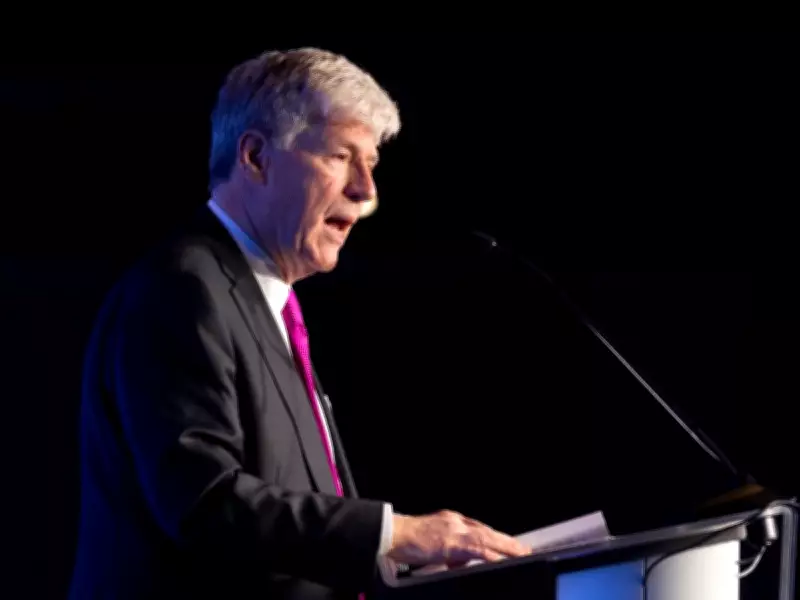
Goodman made the comments after the annual spring luncheon hosted by the Canadian Association of Energy Contractors (CAOEC), following a fireside chat with federal Natural Resources Minister Tim Hodgson. In order to diversify Canada's market reach, West Coast access is needed, he emphasized.
Industry Perspectives on Market Diversification
The Bridger pipeline proposal underscores the enduring strength of the Canada-U.S. energy relationship. Premier Danielle Smith noted in a social media post that “the U.S. is our most important trading partner and we will continue to deliver energy to help secure North American energy dominance.” Yet industry leaders caution against over-reliance on a single customer. The push for West Coast access remains a strategic priority to tap into Asian markets and reduce vulnerability to U.S. policy shifts.
Production Growth and Infrastructure Needs
With Canadian oil production set to rise significantly, additional pipeline capacity is critical. The Bridger project could provide an outlet for growing output, but it does not replace the need for a West Coast pipeline. The Alberta government’s proposed bitumen pipeline to the coast would open new markets and enhance energy security. As Goodman stated, “We would also like to diversify into other markets, so hopefully that isn’t the only situation that’s going to be happening.”
In summary, while Trump’s permit opens a door for more Canadian oil exports to the U.S., the long-term goal of reaching Asian markets via the West Coast remains unfinished business for Canada’s energy sector.






