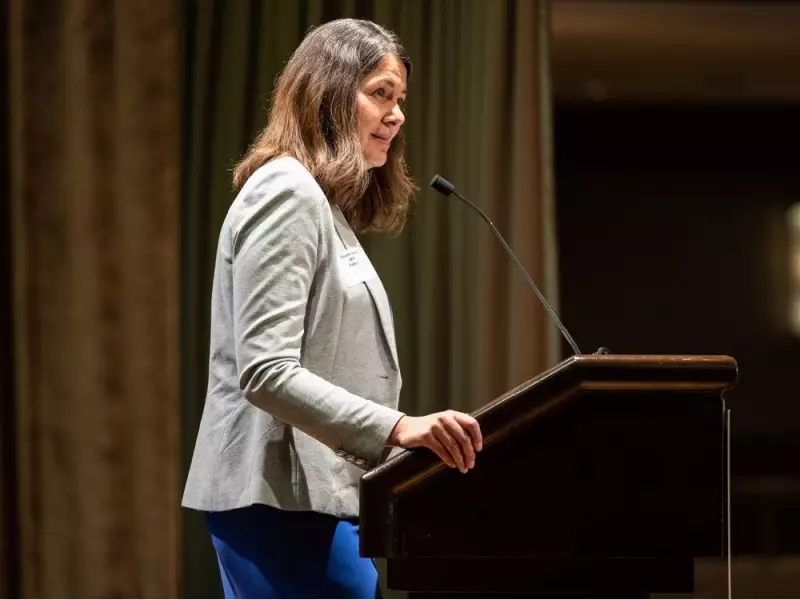
Multiple complex factors are creating turbulent conditions within Canada's oil and gas industry, making it challenging to predict the sector's immediate future. Premier Danielle Smith of Alberta recently addressed these swirling dynamics during a detailed discussion in Calgary.
A Critical Year for Energy Infrastructure
During an hour-long fireside chat at the Calgary Petroleum Club with Tracey Bodnarchuk, CEO of Canada Powered by Women, Smith characterized 2026 as shaping up to be another roller-coaster year for the energy sector. The premier fielded numerous questions about Alberta's recent energy memorandum of understanding with the federal government under Prime Minister Mark Carney.
Pipeline Proposal Faces Multiple Hurdles
The provincial plan includes a proposed bitumen pipeline to the Pacific Coast, a project that faces significant opposition from British Columbia Premier David Eby. Despite this resistance, Smith remains optimistic about the proposal's viability. Alberta's pitch is scheduled to be submitted to the federal government's Major Projects Office in June for review and potential designation as a development of national significance.

"We hope to get a decision by the end of this year, and then the clock starts ticking," Smith told the audience of more than 300 people at the EnergyNow event titled Beyond the Pipeline MOU.
The premier outlined a potential timeline that includes a two-year period for determining the route and ownership structure, with construction possibly beginning in the early 2030s. Smith emphasized that a new pipeline transporting Alberta oil to the Port of Prince Rupert for export would represent the safest available route, addressing both safety concerns and geographical challenges while seeking social acceptability.
Global Trade Factors Complicate Landscape
Beyond domestic opposition, several international developments could significantly impact Alberta's energy sector:
- Ongoing trade negotiations between Canada and China
- The scheduled review of the Canada-United States-Mexico Agreement (CUSMA)
- Uncertainty surrounding Venezuela's oil industry following U.S. involvement
- Potential discussions during upcoming meetings between Prime Minister Carney and provincial premiers
These international factors create additional layers of complexity for Alberta's energy ambitions, particularly as the province conducts early planning and examines possible routes for a project that currently lacks private-sector backing.
Opposition and Alternative Proposals
Public opinion polls indicate majority support for such pipeline projects among Canadians, but significant opposition remains. Premier Eby has characterized the proposal as a "fantasy bitumen pipeline" and rejects any oil pipeline to northern B.C. that would override the existing federal oil tanker moratorium.
Instead, Eby has recently suggested building an oil refinery within Canada and has expressed support for optimizing the existing Trans Mountain pipeline system. This alternative approach represents a fundamentally different vision for Canada's energy future, setting the stage for continued interprovincial debate.
As Alberta navigates these domestic and international challenges, the coming months will prove crucial for determining whether the province's pipeline ambitions can overcome both political opposition and global economic uncertainty.