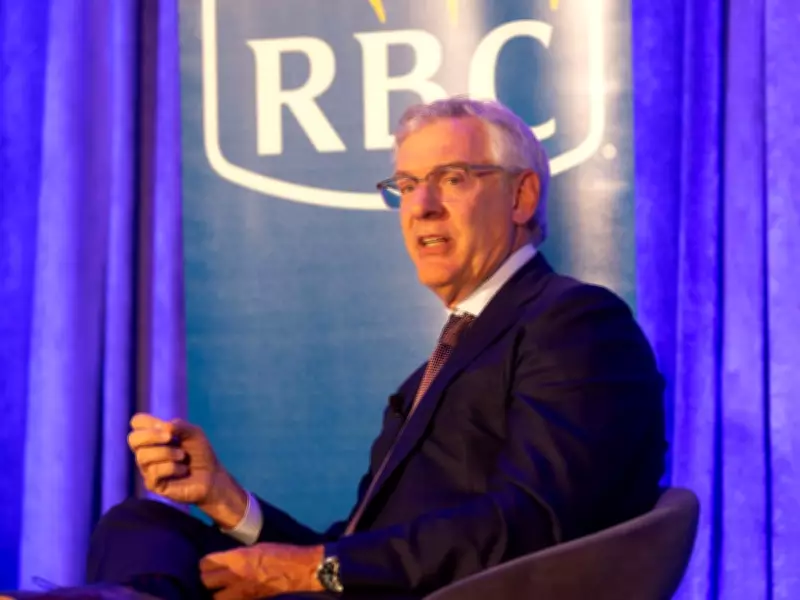
RBC CEO Dave McKay Highlights Canada's Energy Opportunities Amid Global Upheaval
Royal Bank of Canada's chief executive, Dave McKay, has emphasized that Canada is well-positioned to benefit from global energy disruptions, as the government shifts focus back to natural resources after years of neglect. Speaking at an RBC Capital Markets conference on Tuesday, McKay noted that demand for Canada's liquefied natural gas and minerals is robust in Asia and Europe, driven by geopolitical tensions.
Global Energy Market Volatility
Oil prices have surged by more than 50 percent this year, as fears of supply constraints from the Middle East materialize due to conflicts involving the United States and Israel with Iran. This has led major oil-producing nations like Saudi Arabia, Iraq, the United Arab Emirates, and Kuwait to reduce their collective output by up to 6.7 million barrels per day. The war has effectively closed key export routes, causing storage tanks to fill up and prompting precautionary shutdowns, such as the UAE's largest oil refinery after a nearby drone attack.
Canada's Strategic Advantage
McKay highlighted that under Prime Minister Mark Carney's leadership, Canada is on a mission to leverage its resources again, following a decade of overlooking them. He described this as an unprecedented opportunity for the country to capitalize on its energy assets amid global upheaval. The increased demand from international markets positions Canada to strengthen its economic foothold through exports of liquefied natural gas and critical minerals.

RBC's Financial Performance and Risks
Despite these opportunities, Royal Bank is facing some credit risks, with subprime loans showing weakness on both sides of the U.S.-Canada border, as noted by McKay. The bank posted record earnings in fiscal 2025, becoming the first Canadian lender to earn over $20 billion in a single fiscal year. However, in the fiscal first quarter, provisions for possible loan losses were slightly higher than Wall Street analysts had anticipated. Additionally, the firm recently lost several high-yield credit analysts and traders following losses linked to the collapse of First Brands Group.
In summary, while global energy disruptions present significant opportunities for Canada to boost its resource sector, financial institutions like RBC must navigate associated credit risks and market volatility to maintain stability and growth.